






Why the Squat Is a Fitness Staple
The bodyweight squat is celebrated in fitness circles for a reason. It's a compound exercise, meaning it works multiple muscle groups at once. Primarily, squats target the large muscles of your lower body, including the quadriceps (front of the thighs),
hamstrings (back of the thighs), and glutes (your buttocks). But the benefits don't stop there. To perform a squat correctly, you must also engage your core and back muscles to maintain stability and proper posture. This makes it an incredibly efficient movement for building foundational strength. Regularly incorporating squats into your routine helps with everyday functional movements like sitting down, standing up, and lifting objects, ultimately supporting better balance, mobility, and independence.
Your Step-by-Step Guide to a Gentle Squat
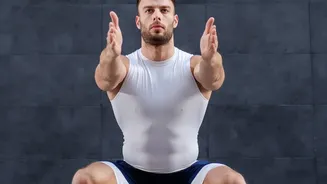
Proper form is crucial to get the benefits and avoid injury. Forget about going super low or fast; the focus here is on a gentle, controlled movement. Stand with your feet slightly wider than your hips, with your toes pointing slightly outward—find a stance that feels natural and comfortable. Keep your chest lifted and your back in a neutral position. Initiate the movement by pushing your hips back as if you're about to sit in a chair. Bend your knees and lower yourself down, keeping your weight primarily in your heels and mid-foot. Hold your arms out in front of you for balance. Lower yourself only as far as you can comfortably go while maintaining good form, aiming for your thighs to become parallel to the floor over time. Then, press through your feet to return to the starting position, squeezing your glutes slightly at the top.
Common Mistakes to Watch For
As you practice, watch out for a few common errors. The most frequent is letting your knees cave inward. To correct this, actively think about pushing your knees out so they track in line with your toes. Another issue is lifting your heels off the ground. This often happens if you lack ankle flexibility or shift your weight too far forward. Focus on keeping your feet flat on the floor. Finally, avoid rounding your back or dropping your chest forward. Keeping your chest up and your core engaged will help maintain a safe, neutral spine throughout the movement. It can be helpful to practice in front of a mirror or record yourself to check your form.
Creating Your Five-Minute Routine
The beauty of a five-minute routine is its simplicity and flexibility. One effective method is the 'Every Minute on the Minute' (EMOM) approach. Set a timer for five minutes. At the start of each minute, perform a set number of squats—say, 8 to 12 reps—with good form. Rest for the remainder of that minute. When the next minute starts, you begin your next set. This structure ensures you get work done while also having built-in recovery time. Alternatively, you could simply do as many controlled reps as you can for 45 seconds, followed by 15 seconds of rest, and repeat that cycle five times. The goal is consistency, not exhaustion.
Easy Modifications and Progressions
If a full bodyweight squat feels too challenging at first, start with a chair squat. Stand in front of a sturdy chair and perform the squat motion, lightly tapping the chair with your hips before standing back up. This helps you master the hip-hinge movement safely. As you get stronger, you can make the exercise more challenging without adding weights. Try pausing for a few seconds at the bottom of the squat to increase time under tension, or add a small pulse by coming up a quarter of the way and then lowering back down before standing up completely.