








The Sweeping Proposal
In a letter to the Department of Environment and Climate Change, Goa's Forest Department has sought to formally designate 24 beaches—10 in the north and 14 in the south—as turtle nesting sites under the Coastal Regulation Zone (CRZ) Notification of 2019.
The list is extensive, covering not only well-known nesting grounds like Morjim and Galgibaga but also some of the state's most commercially active beaches. The North Goa list includes Morjim, Mandrem, Vagator, Ashvem, Arambol, Keri, Miramar, and, most surprisingly, the major tourist magnets of Candolim, Calangute, and Baga. In the south, the proposal covers Agonda, Galgibag, Rajbag, Palolem, and several others. Currently, only four beaches are officially notified for turtle nesting.
Why Now? The Conservation Context
The proposal is driven by a sense of urgency. It comes amid growing concerns over a decline in Olive Ridley turtle nesting numbers in Goa. Data from the Forest Department showed that the 2026 nesting season yielded fewer nests and eggs compared to 2025, which itself followed a stronger season in 2024. By classifying these beaches under CRZ-I, the most ecologically sensitive category, authorities hope to provide a legal framework for stricter protection. This designation could empower them to enforce tighter controls on activities that threaten nesting turtles, such as artificial lighting, vehicle movement on the sand, loud events, and the operation of beach shacks, particularly during the nesting season from October to May.
The Olive Ridley's Fragile Existence
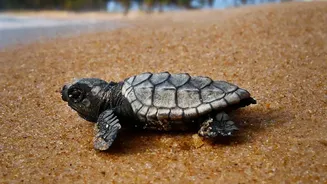
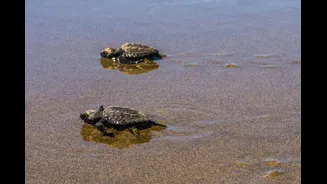
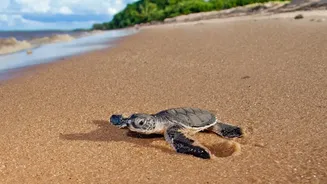
Olive Ridley turtles, the smallest of the sea turtles, are classified as a 'Vulnerable' species. They undertake incredible migrations to return to the very beaches where they were born to lay their eggs. This instinct, however, brings them into direct conflict with human activity. Artificial lights from shacks and resorts can disorient nesting females and lure hatchlings away from the sea, while noise and crowds can deter nesting altogether. With studies suggesting that as few as one in a thousand hatchlings survive to adulthood, the protection of their nesting habitats is considered critical for the species' survival. The overlap of the peak tourist season with the turtle nesting season in Goa has created a long-standing conflict.
Fears for Livelihoods and Tourism
The proposal has triggered alarm among Goa's tourism stakeholders, who fear for their livelihoods. The President of the All Goa Private Property Shacks and Huts Owners Association, Dharmesh Saglani, has strongly opposed the plan, warning that it could 'kill tourism business' on a large scale. Shack owners and fishermen argue that while they support turtle conservation, declaring so many economically vital beaches as protected zones is impractical. They are seeking clarity on the exact nature of the restrictions and are urging the government to consult with local communities before making a final decision. Many feel that a balance must be struck that protects both the turtles and the thousands of people who depend on beach tourism.
A Difficult Balancing Act
The inclusion of hyper-commercialised beaches like Baga and Calangute is the most contentious part of the plan. These areas, packed with shacks, water sports, and nightlife, are far from the pristine environments typically associated with turtle nesting. However, conservationists argue that sporadic nesting can occur even on these disturbed beaches and that protecting them is a necessary precautionary step. The Forest Department's proposal is not an outright ban on tourism but a move to regulate it in a way that allows for co-existence. The department has stated that a detailed environment management plan would need to be formulated for each area, based on scientific mapping. The debate highlights a fundamental challenge for Goa: how to manage its booming tourism industry without sacrificing the unique natural heritage that makes it so attractive.