


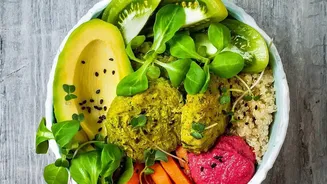

In the world of superfoods, quinoa and lentils are titans. Both are praised for their protein and fibre, but a deeper look at their micronutrient profiles reveals unique strengths. Which one best suits your health goals?
The Protein and Fibre Foundation
Before diving into micronutrients,
it is worth noting the basics. Per cooked cup, lentils generally offer more protein and significantly more fibre than quinoa. A cup of cooked lentils can pack around 18 grams of protein and 16 grams of fibre, while the same amount of quinoa provides about 8 grams of protein and 5 grams of fibre. However, quinoa has a special advantage: it is a 'complete protein', meaning it contains all nine essential amino acids our bodies need. Lentils are close but need to be paired with a grain like rice to achieve the same complete profile.
The Iron and Folate Fight
If you are looking to boost your intake of iron and folate, lentils are the undisputed champion. A 100-gram serving of cooked lentils contains about 3.3 mg of iron, more than double the 1.5 mg found in quinoa. This makes lentils a fantastic choice for plant-based diets where iron can be harder to come by. Similarly, lentils are a folate powerhouse. One cup of cooked lentils can provide up to 90% of the daily recommended value for folate, a crucial B vitamin for cell growth and development. Quinoa contains folate as well, but in significantly smaller amounts.
The Magnesium and Manganese Match-Up
While lentils win on iron, quinoa takes the crown for magnesium and manganese. A 100-gram serving of cooked quinoa offers roughly 64 mg of magnesium, compared to just 36 mg in lentils. Magnesium is vital for over 300 bodily functions, including muscle and nerve function, blood sugar control, and bone health. Quinoa is also richer in manganese, a mineral essential for bone formation and antioxidant function. So, if magnesium is your target mineral, quinoa is the stronger contender.
A Look at Zinc and Potassium
The mineral story continues with zinc and potassium. Both quinoa and lentils are good plant_based sources of zinc, a mineral crucial for immune function and cell repair. While some analyses show quinoa having a slight edge in zinc content, lentils are not far behind. When it comes to potassium, which helps regulate blood pressure, lentils pull ahead, containing more than double the amount found in quinoa per serving.
A Note on Phytic Acid
It is important to understand that the presence of a mineral doesn't guarantee its absorption. Both quinoa and lentils contain phytic acid, an 'anti-nutrient' that can bind to minerals like iron and zinc, reducing their bioavailability. This is a natural compound found in many seeds, grains, and legumes. The good news is that cooking methods like soaking or sprouting before cooking can significantly reduce phytic acid levels, helping your body absorb more of these valuable micronutrients.