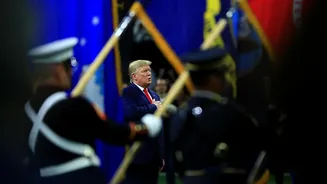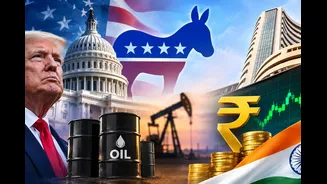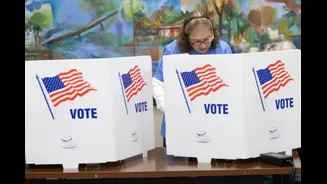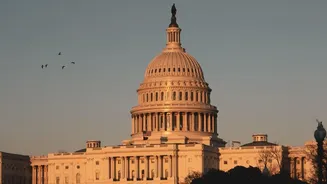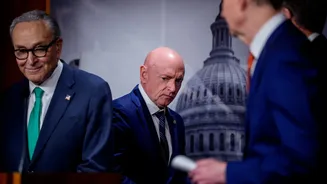


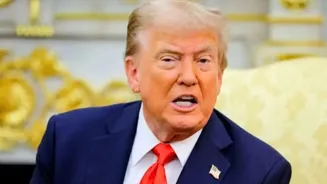
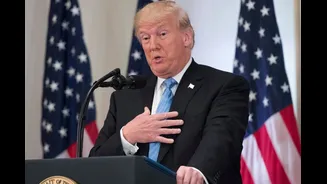
A seismic shift in Washington has left the world watching. After Democrats took control of both the House and Senate in the 2026 midterm elections, US foreign policy has been thrown into a state of profound uncertainty.
A Rebuke for the President
American voters delivered a stunning
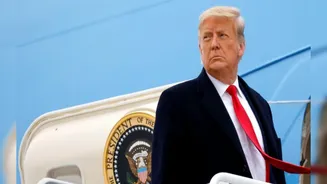
electoral defeat to President Donald Trump’s Republican party, flipping both chambers of Congress to the Democrats. The results are being widely interpreted as a repudiation of the president's agenda, with exit polls showing that voters were motivated by economic anxieties, such as high fuel prices and the rising cost of living, which many linked directly to the administration’s foreign policy—specifically its trade tariffs and the ongoing war with Iran. The scale of the Democratic victory was larger than most polls predicted, with wins in longtime Republican strongholds like Texas, Kansas, and South Carolina, signalling deep voter dissatisfaction.
The End of Unilateral Action?
With Democrats now controlling the legislative branch, President Trump's ability to act unilaterally on the world stage is significantly curtailed. The president retains considerable executive power, especially in his role as commander-in-chief, but Congress holds the 'power of the purse'. The new Democratic majority is expected to use its control over the federal budget, particularly the National Defense Authorization Act, to scrutinise and potentially limit funding for military operations abroad, including the conflict with Iran. Furthermore, Democratic-led committees are expected to launch a series of investigations into the administration's conduct, which could consume the time and attention of top foreign policy officials and create further legislative gridlock.
What This Means for Global Alliances
For US allies, the election results bring both relief and continued apprehension. On one hand, a Congress focused on restoring international norms and cooperation is a welcome sign for partners who have been unsettled by Trump's 'America First' approach. On the other, the prospect of a deeply divided and polarized Washington creates a new kind of unpredictability. Allies in Europe and the Indo-Pacific are questioning the long-term reliability of US security guarantees when its domestic politics are so volatile. This may accelerate a trend of nations forming independent security and economic alliances that are less dependent on Washington's electoral cycles. For India, the changing dynamics could influence everything from trade deal negotiations to its strategic calculations regarding China and Russia.
A 'Wait-and-See' Approach
Faced with an unpredictable US political landscape, many world leaders are adopting a cautious 'wait-and-see' approach. Major strategic agreements may be put on hold until there is more clarity on the direction of American leadership. While the president can still use executive orders and veto power to drive his agenda, these actions are often less durable and can be challenged in court or reversed by a future administration. This environment of confrontation between the White House and Congress means that US foreign policy could become more fragmented and reactive. Countries like China and Russia will be closely watching to see how they might interpret this internal division as a weakness to be exploited on the global stage.