






The Reusability Revolution
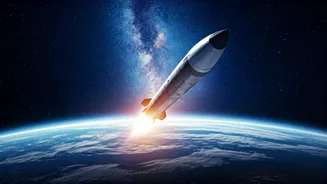
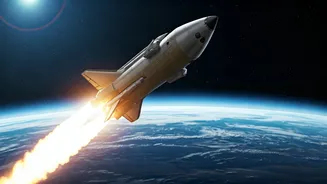
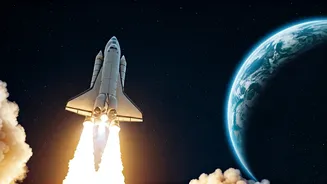
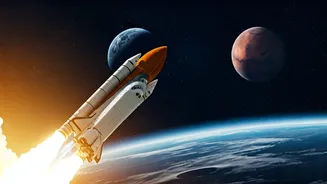
The single most significant change brought by private ventures is the mastery of reusable rockets. [4] For decades, rockets were used once and then discarded, making space launches astronomically expensive. Companies like SpaceX, led by Elon Musk, have
pioneered rockets like the Falcon 9, whose first stages can return to Earth, land autonomously, and be prepared for another flight. [4, 15] This innovation has dramatically slashed the cost of putting a payload into orbit, reducing it from tens of thousands of dollars per kilogram to just a few thousand. [4, 6] By making access to space up to 65% cheaper, reusability has opened the doors for a host of new activities that were previously unfeasible. [4, 15]
More Than Just Billionaire Tourism
While suborbital flights for wealthy tourists from companies like Jeff Bezos's Blue Origin and Richard Branson's Virgin Galactic often grab headlines, the impact of private space ventures goes far deeper. [12, 16] These companies are crucial partners for government agencies like NASA. For instance, private firms are contracted to deliver cargo and astronauts to the International Space Station. [5] They are also playing a pivotal role in NASA's Artemis program, which aims to return humans to the Moon, with companies like SpaceX and Blue Origin developing the landers that will carry astronauts to the lunar surface. [7, 22] This public-private partnership allows government agencies to focus on deep-space exploration while leveraging the innovation and efficiency of the private sector. [10]
India's Startups Reach for the Stars
This global trend is mirrored by a booming private space sector in India. A new generation of Indian startups is making its mark, complementing the venerable efforts of ISRO. [30] Companies like Hyderabad-based Skyroot Aerospace, founded by former ISRO scientists, and Chennai-based Agnikul Cosmos, incubated at IIT Madras, are developing their own launch vehicles. [17, 26, 27] Skyroot became the first Indian private company to launch a rocket in late 2022, while Agnikul has distinguished itself with innovations like 3D-printed rocket engines. [17, 29] These firms are not just building rockets; they are creating a domestic ecosystem for satellite deployment and space-based services, aiming to capture a larger share of the projected $40-45 billion Indian space economy. [30]
New Frontiers, New Problems
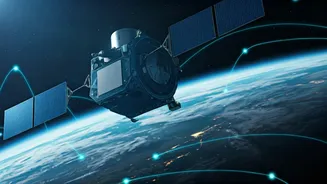
The rapid commercialization of space is not without its challenges. The proliferation of satellite mega-constellations, while promising global internet access, has led to a dramatic increase in the amount of space debris. [24] With thousands of new objects being launched, the risk of collisions in orbit is a growing concern, threatening what is known as a "cascading effect" that could render certain orbits unusable. [11, 24] This has sparked urgent calls for better international regulation and traffic management for space, as the existing legal frameworks, drafted during the state-led Cold War era, are ill-equipped to handle the complexities of a crowded, commercialized orbital environment. [11, 25, 28]