

A Universe of Hidden Worlds
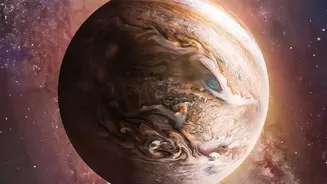
Planets outside our solar system, known as exoplanets, are incredibly difficult to study directly. They are faint, extremely distant, and hopelessly outshone by the glare of their parent stars. For decades, their existence was purely theoretical. Now,
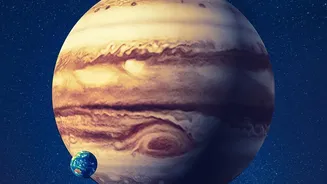
with thousands confirmed, the challenge has shifted from simply finding them to understanding what they are like. Are they rocky, gaseous, or something entirely new? Do they have atmospheres? And the biggest question of all: could they support life? To answer these, scientists needed a reference point, a model of a habitable world to compare against. The only one they have is Earth.
Our Planet, The Perfect Blueprint
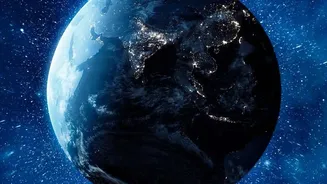
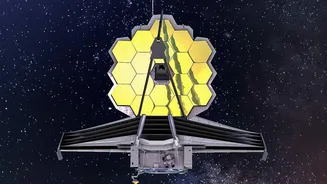
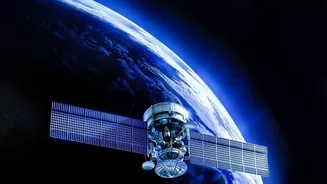
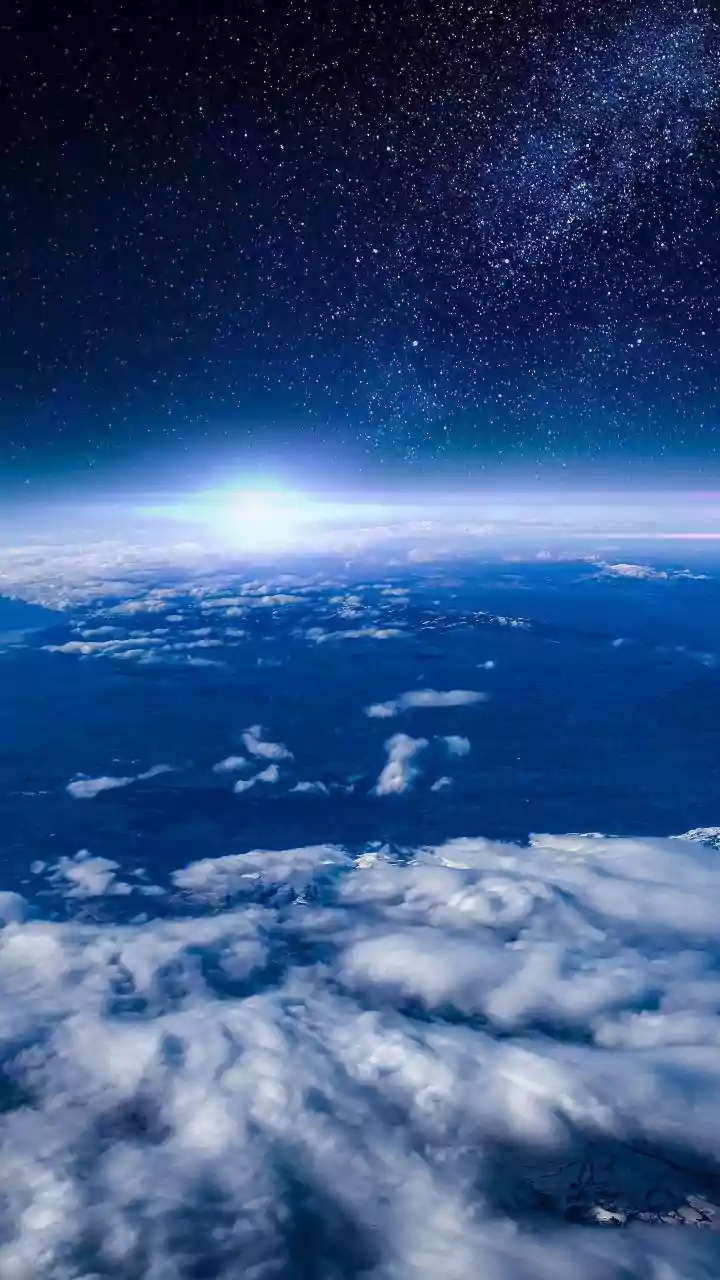
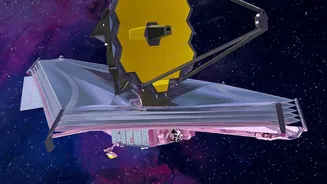
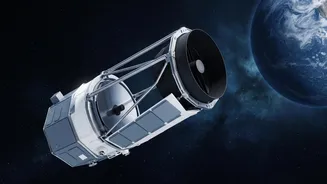
By treating Earth as if it were a distant exoplanet, scientists can test and refine their methods. They use our planet's known atmospheric composition, its oceans, and its life-sustaining environment as a baseline. For instance, researchers can use data from Earth-observing satellites and point them toward our own atmosphere to see what our planet's chemical signature looks like from afar. This provides a crucial template. When a telescope like the James Webb Space Telescope (JWST) captures data from a faraway world, astronomers can compare it to Earth's known profile to make sense of what they are seeing. It’s like having the answer key before taking the test.
The Science of Reading Shadows
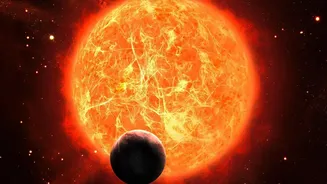
One of the most powerful techniques for studying exoplanet atmospheres is called transit spectroscopy. This method can only be used for planets whose orbits are perfectly aligned to pass in front of their star from our point of view. As the exoplanet transits, a tiny fraction of the star's light filters through the planet's atmospheric rim. Different gases in that atmosphere absorb specific wavelengths, or colors, of light. This leaves a unique chemical fingerprint on the starlight that reaches our telescopes. By analyzing which wavelengths are missing, astronomers can deduce which molecules—like water vapor, methane, or carbon dioxide—are present. Telescopes in space, like JWST, are essential for this because Earth's own atmosphere can block or distort the very light they need to measure.
The Search for Biosignatures
The ultimate goal is to find biosignatures—gases or combinations of gases that indicate the presence of life. On Earth, life has dramatically altered our atmosphere. The high concentration of oxygen, for example, is a direct result of biological processes like photosynthesis. Methane is another key gas, often produced by living organisms. Finding a combination of gases like oxygen and methane existing together in an exoplanet's atmosphere could be a powerful sign of life, as these gases would not naturally coexist in large amounts without a constant source, like biology, replenishing them. However, scientists are cautious, as non-biological processes can sometimes mimic these signs, making confirmation a complex task.
Reflections in a Distant Mirror
This cosmic research is a two-way street. While Earth helps us understand exoplanets, studying other worlds can teach us about our own planet's past and future. Observing young, developing planets can provide insights into how Earth itself formed billions of years ago. Looking at older exoplanets orbiting different types of stars might offer clues about the long-term evolution of planetary atmospheres and what Earth may experience in its distant future. Each new exoplanet atmosphere we characterize adds another data point, helping us understand the full range of what a planet can be and, in turn, what makes our home so special.