



Cosmic Clouds of Creation and Destruction
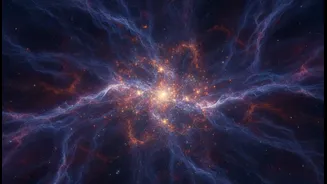
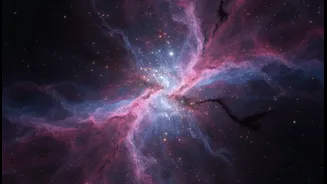
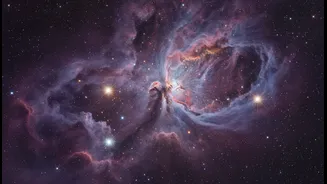
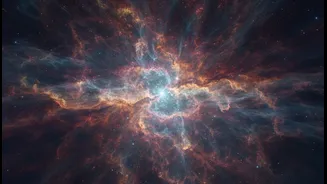
First, what are we even looking at? A nebula is a gigantic cloud of gas and dust floating in space. These are not calm, static objects; they are dynamic cosmic environments. Some, like the famous Orion Nebula, are stellar nurseries where immense gravitational
forces pull gas and dust together to form new stars. Others, known as planetary nebulae or supernova remnants, are the beautiful final acts of dying stars. The iconic 'Pillars of Creation' within the Eagle Nebula are a dramatic example of a star-forming region, while the intricate chaos of the Crab Nebula is the six-light-year-wide debris from a star that exploded in A.D. 1054, an event recorded by astronomers at the time.
Painting with Invisible Light
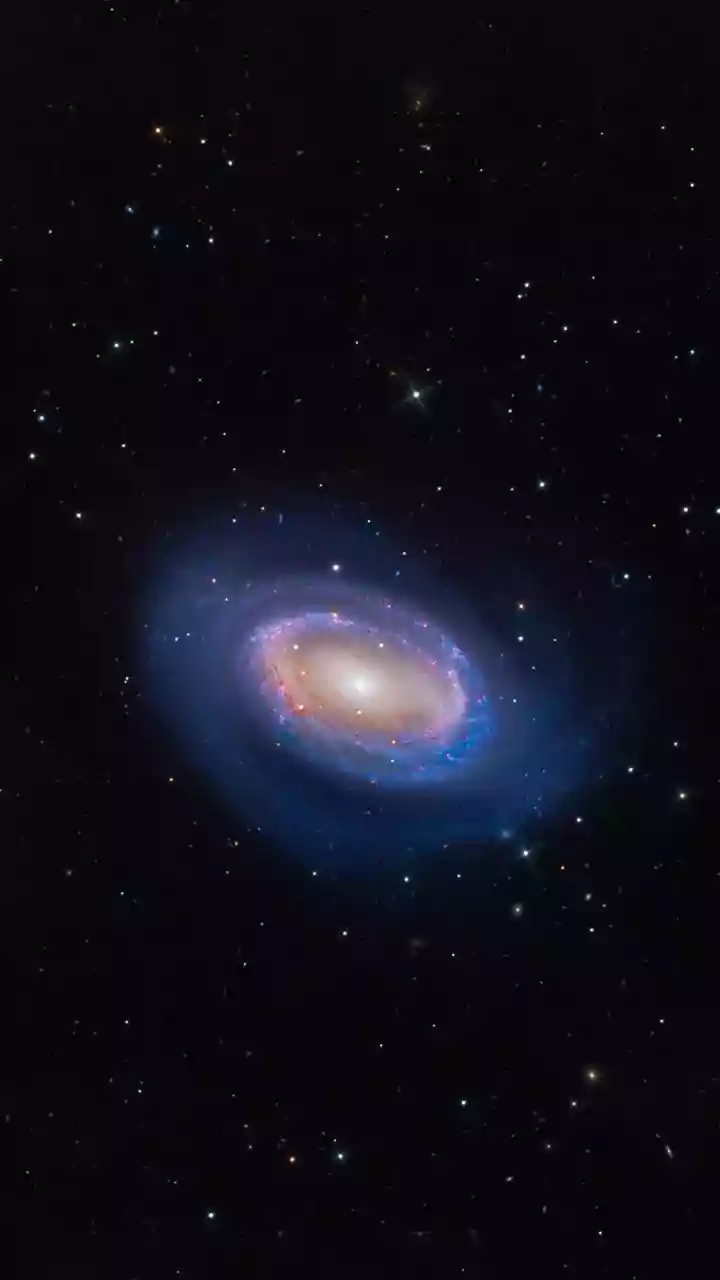
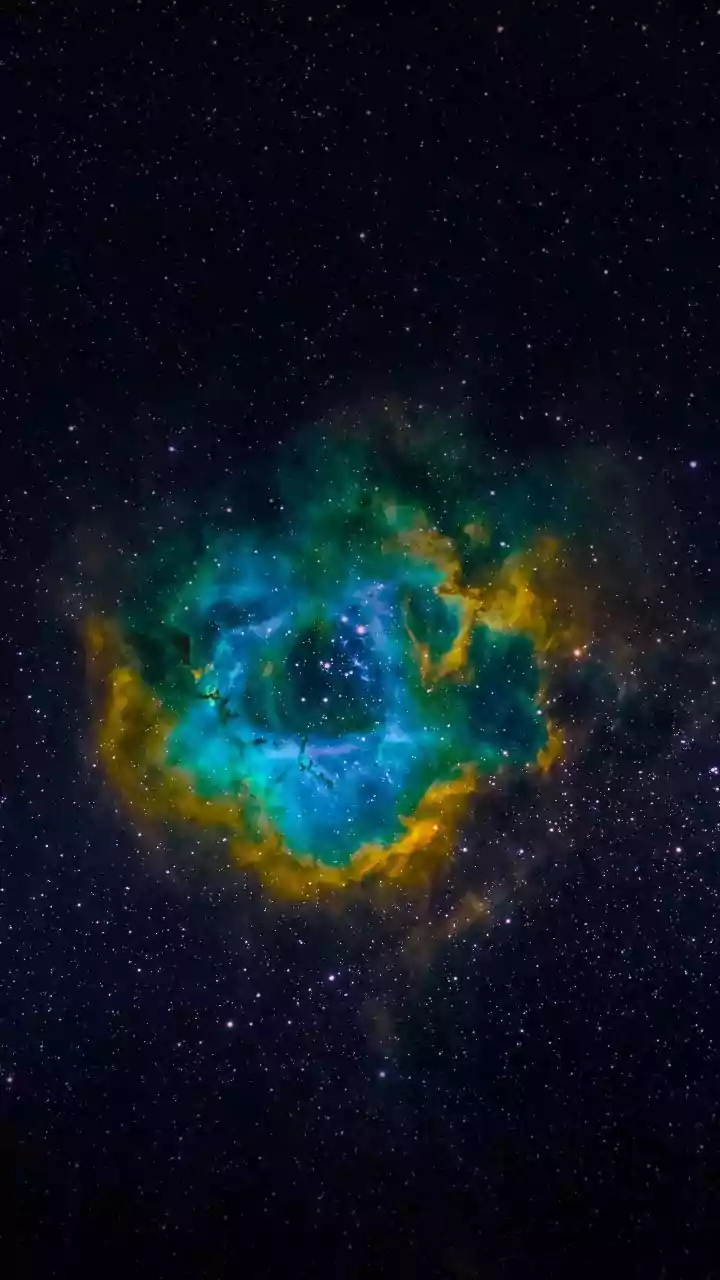
Here’s the secret that makes these images so special: the colours you see are often not what your eyes would perceive if you were somehow floating next to the nebula. Most of these images are 'false-colour' or 'representative-colour' composites. Telescopes like the James Webb Space Telescope (JWST) and Hubble capture light at wavelengths our eyes can't see, such as infrared or ultraviolet. Every astronomical image starts as a black-and-white scientific capture through different filters. Each filter isolates specific wavelengths of light, which often correspond to different chemical elements like hydrogen, oxygen, or sulphur. Scientists and imaging specialists then assign visible colours—typically red, green, and blue—to these different filtered layers. For example, light from hydrogen, which is naturally a deep red, might be assigned a different colour to better contrast with oxygen or sulphur emissions. This process is less about deception and more about translation; it makes invisible data visible, revealing the complex structure, composition, and temperature of the nebula in a way a 'true-colour' image simply could not.
A Universal Language
This act of translation is precisely why these photos are such powerful tools for science communication. A spreadsheet of spectral data or a chart of chemical compositions is meaningless to most people. But a stunning image of the Carina Nebula's 'Cosmic Cliffs' provokes an immediate emotional response: wonder, curiosity, and awe. Images are a universal language, capable of bridging the vast gap between complex astrophysical concepts and public understanding. They serve as a gateway, inviting people to ask questions: What is that? How was it made? What does it mean? This initial spark of curiosity is often the first step toward deeper scientific engagement.
From Data to Dialogue
Science outreach professionals, from organizations like NASA to India's own ISRO, understand the power of a great picture. These images are not just released; they are deployed. They become the centrepieces for news articles, educational programs, museum exhibits, and social media campaigns designed to engage the public with science. They provide a visual anchor for explaining everything from the lifecycle of stars to the very origins of our universe. When people share an image of the Ring Nebula, they aren't just sharing a photo; they are participating in a global conversation about our place in the cosmos. This visual storytelling is crucial for maintaining public support and excitement for space exploration, helping to inspire the next generation of scientists, engineers, and explorers.