






Become a Pre-Monsoon Pro
The best way to handle a monsoon commute is to prepare before the first downpour. Get your car or two-wheeler serviced. Pay special attention to your tyres, brakes, and battery. Tyres with good tread depth are essential for gripping wet roads and avoiding
hydroplaning, where a layer of water builds up between the tyres and the road surface, leading to a loss of traction. Ensure your wiper blades are not cracked or hardened; if they leave streaks, replace them immediately. Finally, check all your lights—headlights, taillights, and indicators. In gloomy, rainy conditions, being visible to others is as important as your own ability to see.
Let Technology Be Your Guide
Don't leave home without checking a reliable app. Google Maps and Waze are popular choices in India for real-time traffic updates, often crowdsourcing information about waterlogging, accidents, and other hazards. Local alternatives like Mappls (formerly MapmyIndia) can also offer detailed, India-specific features like pothole alerts and doorstep navigation. Before you start your journey, check the forecast and route conditions. If severe disruptions are reported, it might be wiser to delay your travel or work from home if possible. Knowing what to expect allows you to make smarter decisions, whether that means leaving earlier, taking an alternative route, or switching to public transport like the Metro, which is often less affected by waterlogging.
The Art of Driving in Downpours
When the rain is lashing down, your driving style needs to adapt. First and foremost, slow down. Your vehicle's braking distance increases significantly on wet roads. Maintain a larger-than-usual gap between you and the vehicle in front to give yourself more time to react. Avoid sudden braking, acceleration, or sharp turns, as these can easily cause a skid. Keep your headlights on, even during the day, to improve your visibility to other drivers. Be especially wary of painted road markings and manhole covers, which become extremely slippery when wet. The first rains of the season are often the most dangerous, as they mix with oil and grime on the road to create a treacherous, slick surface.
Navigating Waterlogged Roads
The biggest monsoon menace in Indian cities is waterlogging. If you can't judge the depth of the water, do not attempt to drive through it. Standing water can hide deep potholes, open manholes, or other debris that can severely damage your vehicle. If you must proceed, do so slowly and steadily. Driving fast through water can cause it to flood your engine, leading to a stall and expensive repairs. A general rule is to avoid water that is higher than the centre of your wheels. After passing through a waterlogged patch, gently tap your brakes a few times to dry them out and ensure they are working correctly.
A Survival Guide for Two-Wheelers
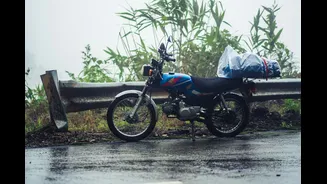
Riders on motorcycles and scooters are far more exposed during the monsoon. Beyond a good quality raincoat and helmet, ensuring your bike is monsoon-ready is critical. Check your tyres for wear, ensure brakes are responsive, and lubricate your chain regularly to protect it from rust. Smooth and steady inputs are key; avoid any aggressive acceleration or hard braking. Always wear all your gear. Bright or reflective clothing can make a life-or-death difference in low visibility. A clear, scratch-free visor, perhaps treated with an anti-fog solution, is essential for vision. Most importantly, know when to stop. If the rain becomes too heavy and visibility drops, find a safe place to pull over and wait it out.
Pack a Commuter Emergency Kit
When you're stuck in a gridlock for hours, a little preparation can go a long way. Keep a 'monsoon kit' in your car or backpack. This should include a power bank for your phone, as delays can drain your battery. A bottle of water and some non-perishable snacks can be a lifesaver. A small towel, an extra pair of dry socks, and a change of clothes kept at your workplace can make the rest of your day much more comfortable. Also, keeping your electronic gadgets like laptops and phones in waterproof bags or pouches is a simple but effective way to prevent costly damage.