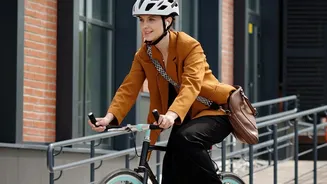









Reclaim Your Commute
Your daily travel is a hidden opportunity for activity. If you drive, resist the urge to circle for the closest parking spot. Instead, intentionally park at the farthest end of the lot. This simple choice can add hundreds of steps to your day without
taking any extra time. For those using public transport, try getting off one bus or metro stop early and walking the final stretch. Studies have shown that people in India who walk or cycle to work are less likely to be overweight or have high blood pressure. This small adjustment not only boosts your step count but also provides a moment to clear your head before and after the workday.
Schedule Walking Meetings
The idea of a “walking meeting,” popularised by figures like Steve Jobs, is more than just a trend; it's a productivity hack. Instead of booking a conference room for a one-on-one catch-up or a small brainstorming session, suggest taking it on the move. Research shows that walking can boost creative output significantly and increase focus and engagement in conversations. It breaks the monotony of the office, gets the blood flowing, and can lead to more open and honest discussions than when sitting across a table. For remote workers, this is even easier: simply pace around your home during calls that don't require you to be on video.
Block 'Micro-Walk' Breaks
The all-or-nothing approach to exercise is what defeats most people. You don’t need a continuous 30-minute block to see benefits. Treat movement like a crucial appointment by scheduling short 5-to-10-minute walking breaks in your calendar. Set an alarm to get up every hour, stretch, and take a quick walk around the office floor, or even up and down a staircase. Studies suggest that even these 'movement snacks' can improve mood, reduce fatigue, and boost productivity without disrupting workflow. This strategy helps combat the negative effects of prolonged sitting, which is linked to a higher risk of heart disease and diabetes.
Activate Your Lunch Hour
Too often, lunch is a rushed affair at the desk. Reclaim this time for your well-being. Even a brisk 10- or 15-minute walk before or after you eat can make a huge difference. It aids digestion, helps control blood sugar levels after your meal, and combats the dreaded afternoon slump, leaving you more energised for the rest of the day. Instead of having lunch delivered, walk to a nearby eatery to pick it up yourself. This not only adds steps but also provides a necessary mental break from your work environment.
Gamify Your Steps
A little friendly competition can be a powerful motivator. Use a smartphone app or a fitness tracker to monitor your daily steps. Many apps allow you to create groups with friends or colleagues to share progress and start challenges. Set a collective goal or compete to see who can be the most active each week. Seeing your progress in numbers can be incredibly satisfying, and the social element adds a layer of accountability that makes you less likely to skip a day.
Walk and Talk Socially
Integrate walking into your social life. Instead of meeting a colleague or friend for chai or coffee at a cafe, suggest a 'walk and talk'. This is an excellent way to catch up while staying active. It fosters a different kind of connection and can feel more relaxed and dynamic than sitting indoors. The same applies after work; a short walk with your partner or a family member can be a great way to decompress and share details about your day, away from screens and other distractions.
The Post-Work Wind-Down
After a stressful day, the instinct is often to crash on the sofa. However, a short 10-minute walk right after you finish work can be a powerful ritual to transition from 'work mode' to 'home mode'. It creates a mental buffer, helping you leave work-related stress behind. This brief period of light exercise can lower stress hormones like cortisol, loosen up stiff muscles from hours of sitting, and improve your mood, setting a better tone for your entire evening.