

Why Venus, Why Now?
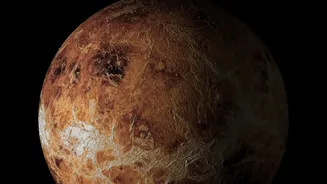
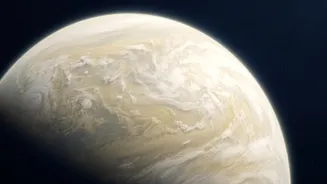
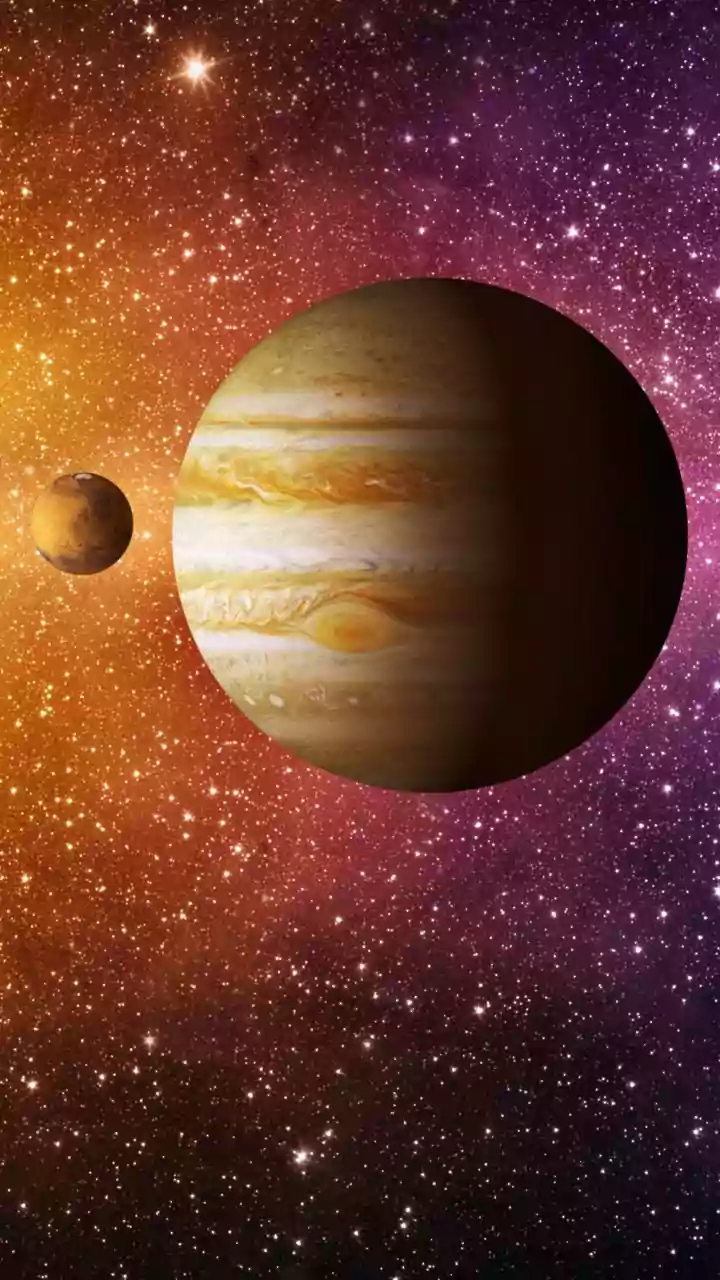
Venus is a planet of extremes. Its surface temperature is hot enough to melt lead, and its atmospheric pressure is over 90 times that of Earth's. The planet is perpetually shrouded in thick clouds of sulphuric acid. So, why would ISRO target such a hostile
world? The answer lies in its dramatic history. Scientists believe Venus may have once been more like Earth, possibly with liquid water oceans. Understanding what caused its runaway greenhouse effect—a process where the atmosphere traps so much heat that the planet becomes uninhabitable—could offer crucial insights into climate change dynamics on our own planet. After the landmark successes of the Chandrayaan moon missions and the Mangalyaan Mars orbiter, Shukrayaan represents the next logical step in India's interplanetary exploration, showcasing its growing capabilities.
Shukrayaan's Core Objectives
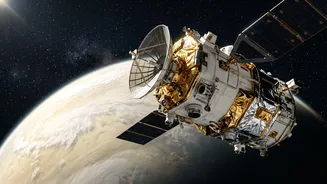
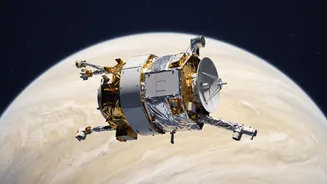
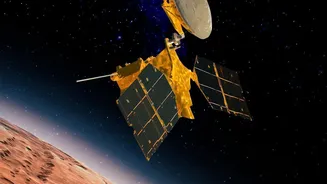
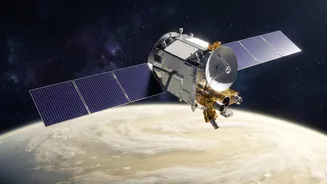
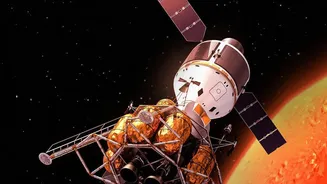
The Shukrayaan-1 mission is designed as an orbiter, meaning it will not land on the surface but will study the planet from above for over four years. Its primary goals are ambitious and multi-faceted. The first is to perform high-resolution mapping of Venus's surface and subsurface geological structures. Secondly, the mission will conduct a detailed investigation of the complex and dynamic Venusian atmosphere, studying its composition and circulation. A third key area of focus is the interaction between the solar wind—a constant stream of charged particles from the Sun—and Venus's ionosphere. By tackling these objectives, ISRO aims to build a comprehensive picture of how Venus evolved into the planet it is today.
The High-Tech Eyes on the Planet
At the heart of the mission is a suite of sophisticated sensors, many developed in India, with some contributions from international partners. The flagship instrument is a high-resolution Synthetic Aperture Radar (SAR). Unlike a regular camera, radar can penetrate Venus’s dense cloud cover to map the surface in incredible detail, searching for evidence of volcanic and geological activity. Shukrayaan will also carry a ground-penetrating radar, making it the first mission ever to map Venus’s subsurface. To study the atmosphere, the orbiter is equipped with thermal cameras and various spectrometers. These tools will analyse the chemical makeup of the atmosphere, measure thermal emissions, and monitor cloud movements. An instrument co-developed with Russia and France, VIRAL (Venus InfraRed Atmospheric gases Linker), will specifically search for trace gases.
Decoding the Sulphuric Acid Clouds
The headline-grabbing part of the atmospheric study involves decoding the secrets of the iconic cloud layers. These clouds are not made of water vapour like Earth's, but of corrosive sulphuric acid. The Venus Thermal Camera (VTC) will map thermal emissions from these clouds to understand their dynamics, while the Venus Cloud Monitoring Camera (VCMC) will observe their structure. Another instrument, the Radio Anatomy of Venus Ionosphere (RAVI), developed with German collaboration, will help estimate the role of sulphuric acid in the atmosphere's energy. These instruments will work in concert to understand the planet's extreme weather, including its 'super-rotating' atmosphere that circles the planet in just four Earth days. This in-depth study of the clouds is vital for piecing together the planet's climate history and its current state.
Timeline and a Leap for Indian Science
While initial launch windows were considered for 2024 and 2026, the mission's Preliminary Design Review was successfully completed in April 2026, putting Shukrayaan on track for a planned launch on March 29, 2028. The mission involves international collaboration, with Sweden also partnering on an instrument to study how solar particles interact with the Venusian atmosphere. Shukrayaan is more than just another space mission; it's a testament to India's rise as a major player in planetary science. It will employ complex techniques like aerobraking for the first time in an ISRO mission, using the planet’s own atmosphere to adjust its orbit and conserve fuel. The insights gained will not only demystify our celestial neighbour but also provide a valuable, cautionary tale about how planetary climates can change dramatically.