
Why Venus? Earth's Twisted Sister
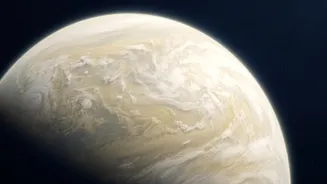
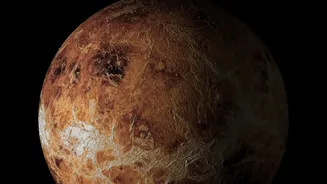
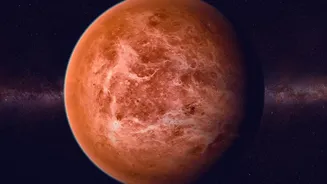
Venus is often called Earth’s “twin” because both planets are similar in size, mass, and density. Yet, the two worlds couldn't be more different. While Earth is a haven for life, Venus is a hellscape with surface temperatures hot enough to melt lead and a crushing
atmosphere over 90 times thicker than our own. Scientists believe Venus may have once been habitable, possibly with liquid water oceans, but a runaway greenhouse effect turned it into the scorching planet we see today. Studying Venus is not just about understanding another planet; it’s a cautionary tale that offers profound insights into climate change, atmospheric science, and what makes a planet habitable. By investigating how Earth's twin took such a dramatically different evolutionary path, we can better understand our own planet's past and future.
Introducing the Shukrayaan Mission
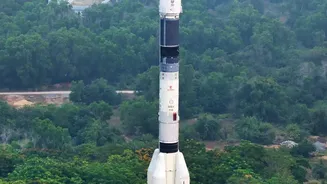
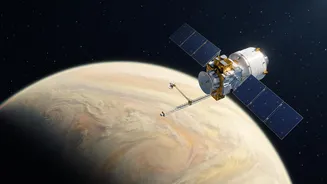
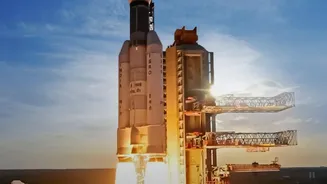
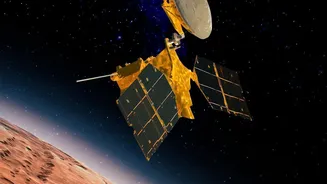
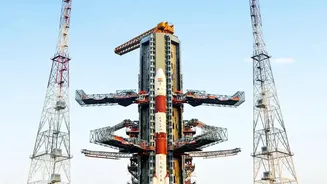
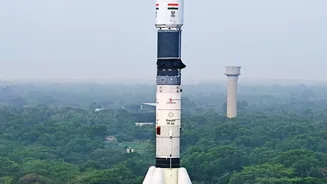
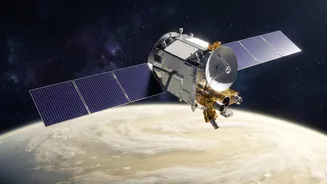
Formally known as the Venus Orbiter Mission (VOM), Shukrayaan is India’s first dedicated mission to the second planet from the sun. Following formal approval from the Union Cabinet in September 2024, the Indian Space Research Organisation (ISRO) is targeting a launch date of March 29, 2028. The spacecraft will be launched aboard the powerful LVM-3 rocket. After a journey of about four months, it is scheduled to enter a highly elliptical orbit around Venus on July 19, 2028. Over the following months, the orbiter will use a technique called aerobraking—skimming the planet’s upper atmosphere to gradually reduce its speed—to settle into a more circular science orbit of approximately 200 km by 600 km. From this vantage point, the mission is planned to study Venus for four to five years.
A Toolkit for a Toxic World
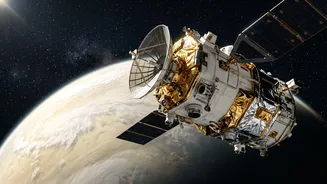
To peer through the dense, opaque clouds of Venus, Shukrayaan will carry a suite of 19 advanced scientific instruments, or payloads. The headliner is a high-resolution Synthetic Aperture Radar (SAR), which can map the planet’s surface in incredible detail, day or night, regardless of cloud cover. This will help scientists search for active volcanoes and understand the geological processes that have shaped Venus. Another groundbreaking instrument is a ground-penetrating radar, a first for any Venus mission, designed to study the planet's subsurface. The mission also features significant international collaboration. Payloads developed with Russia, France, Sweden, and Germany will be onboard. One such instrument, the Venus Infrared Atmospheric Gases Linker (VIRAL), will study the composition of the atmosphere, while another, the Venusian Neutrals Analyser (VNA), will investigate the interaction between Venus and the solar wind.
Decoding the Sulphuric Acid Clouds
A primary focus of the Shukrayaan mission is to understand the complex and dynamic atmosphere of Venus, particularly its thick clouds made of sulphuric acid. These clouds permanently shroud the planet and are key to its extreme climate. Several instruments are specifically designed to study these atmospheric cycles. The orbiter will carry a cloud monitoring camera (VCMC) and thermal instruments to measure emissions and map the structure of the clouds. Scientists want to understand the mysterious “super-rotation” of Venus's atmosphere, where the winds whip around the planet much faster than the planet itself rotates. The mission will also investigate the chemistry of the atmosphere, looking for clues about its evolution. For instance, the VIRAL instrument can detect specific gases like phosphine, which, although contested, has been suggested as a possible, faint indicator of biological activity in the upper cloud layers where temperatures are less extreme.
India’s Next Leap in Space
Shukrayaan represents another major step in ISRO’s ambition to become a global leader in planetary science. Following the stunning successes of Chandrayaan-3 on the Moon and the Mars Orbiter Mission (Mangalyaan), this mission to Venus solidifies India’s position as a key player in deep space exploration. The mission is not just about scientific discovery; it's also a technology demonstrator. For the first time, ISRO will employ aerobraking to finalize a spacecraft's orbit, a fuel-efficient technique crucial for future interplanetary missions. By joining a new wave of Venus exploration alongside missions from NASA and the European Space Agency, India is contributing vital data to the global scientific community. The findings will help create a comprehensive picture of our sister planet and, in doing so, enhance our understanding of our own precious world.