







More Than Just a Number
We all have a chronological age—the number of candles on our birthday cake. But scientists are increasingly focused on our biological age, which measures how old our cells and tissues are at a molecular level. Factors like genetics, diet, and lifestyle
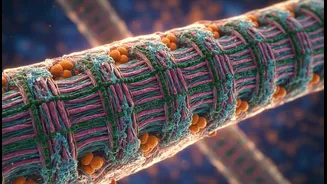
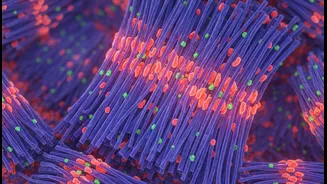
can make our biological age much younger or older than our chronological one. A key area where this is visible is in our skeletal muscles. As we get older, our muscles naturally lose mass and function, a process often accelerated by declines in mitochondrial health—the tiny powerhouses inside our cells. This contributes to weakness, reduced mobility, and a higher risk of metabolic diseases. However, studies now show that this decline isn't inevitable and that exercise can have a profound rejuvenating effect.
A Deep Dive into Our DNA
The complex headline refers to "multi-omics analysis," a cutting-edge approach where scientists study the complete set of our genes (genomics), proteins (proteomics), and other molecular data to get a holistic picture of what’s happening inside our cells. By applying this to human skeletal muscle, researchers can see the precise molecular fingerprints of aging. They can also track how these fingerprints change in response to exercise. Recent findings from the Molecular Transducers of Physical Activity Consortium (MoTrPAC) have used this approach to map out the exact molecular pathways that respond to different types of exercise, like endurance and resistance training. This provides an unprecedented level of detail on how physical activity communicates with our cells to produce health benefits.
How Exercise Rewinds the Clock
Studies have found that consistent exercise can dramatically reverse the age-related decline in muscle tissue. In one landmark study, older adults who started a resistance training program showed a remarkable reversal in their muscle's genetic fingerprint, bringing it closer to that of younger adults. Their mitochondrial function, which had declined with age, was significantly restored. Exercise also helps preserve telomeres, the protective caps at the end of our chromosomes that shorten as we age. Longer telomeres are associated with a younger biological age. Both cardio and strength training have been shown to help maintain telomere length, effectively slowing the aging process at a cellular level.
Building Your Longevity Fitness Plan
This research isn't just academic; it provides a clear roadmap for long-term fitness. The goal is to build a routine that preserves muscle mass, boosts mitochondrial health, and supports cellular repair. Experts suggest a combination of different exercise types. Resistance training, performed at least two days a week, is crucial for building and maintaining muscle mass and strength, which are strong predictors of longevity. It also helps reduce the accumulation of senescent, or 'zombie,' cells that contribute to aging. Endurance or cardio exercise, like jogging, cycling, or brisk walking, is vital for cardiovascular health and has been shown to be particularly effective at increasing the activity of telomere-lengthening enzymes. Aim for at least 150 minutes of moderate-intensity cardio per week. Finally, don't neglect stability and balance work, as this helps prevent falls and maintain functional independence as you age.