



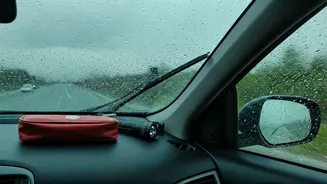



Before You Start the Engine
A safe drive in the rain begins before you even turn the key. Your car’s condition is paramount. First, check your tyres. They are your only connection to the road, and their ability to channel water away is crucial. Ensure the tread depth is adequate—ideally
above 2-3mm—to prevent skidding on wet surfaces. [10, 13, 21, 24] Also, verify that your tyres are inflated to the manufacturer's recommended pressure. [2, 9] Next, inspect your wiper blades. Summer heat can degrade the rubber, causing them to streak or skip. [10, 16] Replace them if they don't clear the windshield cleanly. [2, 24] Finally, test all your lights: headlights, tail lights, and indicators. In a downpour, being visible to others is just as important as seeing the road ahead. [5, 16]
Mastering Visibility: See and Be Seen
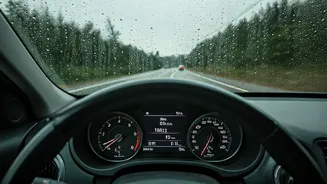
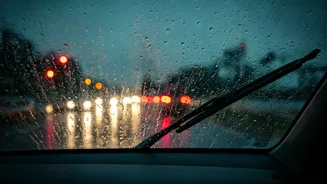
Visibility is the first casualty of a heavy shower. As soon as it starts raining, turn on your headlights, even during the day. [7, 21] This makes you more visible to other drivers and pedestrians. [11] However, avoid using high beams, which can reflect off the rain and dazzle oncoming traffic. It's also a common mistake to turn on hazard lights while moving; they are meant only for stationary vehicles and can confuse other drivers who won't be able to tell if you're braking or turning. [7, 24] Inside the car, fogged-up windows can be a major issue. Use your air conditioner along with the defogger setting to remove moisture from the air and clear your windscreen. [5, 8, 24] Keeping your windshield clean, inside and out, also helps prevent fog from building up. [2]
The Golden Rules: Slow Down and Keep Your Distance
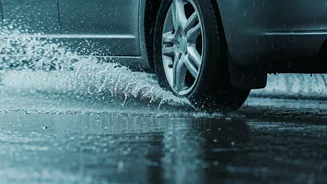
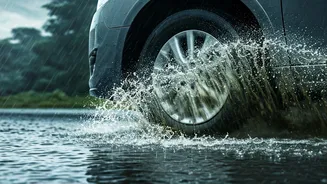
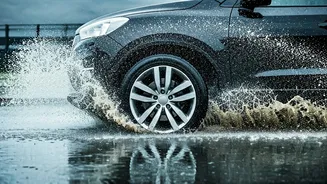
The most critical adjustment when driving in rain is to reduce your speed. [3, 8, 13] Wet roads dramatically increase your vehicle's stopping distance. [5] Slowing down gives you more time to react and helps prevent aquaplaning—a dangerous situation where your tyres lose contact with the road and skim over a layer of water. [3, 9, 14] Aquaplaning can happen at speeds as low as 56 km/h. [19] If you feel the car starting to aquaplane, do not brake or turn suddenly. [9, 14] Instead, gently ease your foot off the accelerator and keep the steering wheel straight until you feel the tyres regain traction. [3, 8, 14] You should also double your following distance from the vehicle in front, giving yourself a buffer of at least four to six seconds. [11, 17]
Navigating Waterlogged Roads
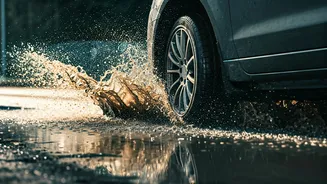
In India, waterlogged streets are a common monsoon hazard. Never drive into standing water if you cannot gauge its depth. [16] A mere 12 inches of rushing water can sweep away a small car. [17] If you must proceed, ensure the water level is no higher than the centre of your wheels. [16] Drive slowly and steadily in a low gear, keeping the engine revs up to prevent water from entering the exhaust pipe. [16] Avoid sudden acceleration or braking. [16] Try to follow the tracks of a vehicle in front of you, as the water will be shallower there. [9, 12] Once you are through the water, gently tap your brakes a few times to help dry them out and ensure they are working effectively. [26]
Beware of Hidden Dangers
Rain conceals many of the road's imperfections. Potholes, open manholes, and debris can be hidden under puddles, posing a significant risk. [11, 16] If you can't avoid a pothole, slow down before you reach it but avoid braking as you go through it, which can cause more damage. [11] Be extra cautious of two-wheelers and pedestrians who may behave unpredictably to avoid puddles or find shelter. Be prepared for sudden stops and give everyone extra space. Remember that your brakes will be less effective in wet conditions, so anticipate the actions of others well in advance. [5, 13]
What to Do If Your Car Stalls in Water
If your car stalls while crossing a waterlogged patch, do not try to restart the engine. [4, 20, 26] Attempting to do so can force water into the engine, causing severe and potentially irreparable damage known as hydrolocking. [26] Turn off the ignition, put on your hazard lights, and assess the situation. [4, 7] If it is safe to do so, exit the vehicle and move to higher ground. [4] Your priority is your safety. Once you are safe, call for a towing service to have your vehicle retrieved and taken to a garage for a professional inspection. [4, 26]