






The Lifeline Under Pressure
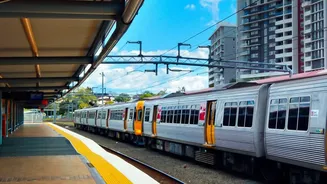
The Mumbai Suburban Railway is often called the city's lifeline, and for good reason. It moves nearly eight million commuters every single day on a network running close to 3,200 services. But this lifeline is under immense strain. The tracks that carry
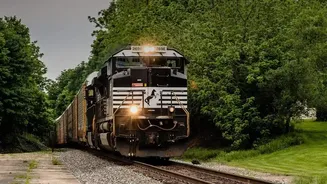
suburban locals also have to accommodate long-distance passenger trains and, crucially, slow-moving goods trains. This mixed traffic is a primary cause of congestion and delays. When a freight train occupies a line, passenger services, especially locals, often have to wait, leading to cascading delays, platform crowding, and the unpredictable schedules that commuters know all too well. The system is operating at well over 100% capacity, meaning there's virtually no room to add more services or recover from disruptions.
A Superhighway for Goods Trains
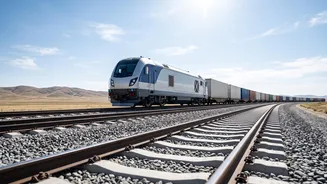
Enter the Dedicated Freight Corridor (DFC), one of India's most ambitious infrastructure projects. The plan involves creating a network of railway lines exclusively for freight. For Mumbai, the key is the Western Dedicated Freight Corridor (WDFC), a 1,506-km route stretching from Dadri in Uttar Pradesh to the Jawaharlal Nehru Port (JNPT) in Navi Mumbai. The final sections of the WDFC were inaugurated in September 2026, marking the full operational launch of this freight superhighway. These are not ordinary tracks; they are built to handle heavier loads, longer trains, and higher speeds, with freight trains expected to run at average speeds of 70 km/h, a significant jump from the 25 km/h on conventional lines.
The Decongestion Effect
The logic is simple but transformative: by creating a separate, parallel network for goods trains, the DFC siphons off nearly all freight traffic from the existing passenger lines. Imagine a busy city street clogged with cars, buses, and slow-moving trucks. Now, imagine a new highway is built just for the trucks. The city street would instantly become clearer, allowing cars and buses to move faster and more freely. That's precisely what the WDFC does for Mumbai's railway network. As freight trains migrate to their dedicated corridor, they free up immense capacity on the lines shared by local and long-distance passenger trains. This separation of traffic is the crucial link between a national freight project and a better commute for Mumbaikars.
More Trains, Better Punctuality
What does this “freed-up capacity” actually mean for the average commuter? First, it allows for a significant increase in the number of suburban services. With freight trains no longer in the way, the railways can run more local trains, especially during peak hours, directly addressing the issue of overcrowding. Second, punctuality is expected to improve dramatically. Without having to wait for goods trains to pass, local services can adhere to a more reliable and predictable timetable. This newfound capacity also opens the door for other improvements planned under the Mumbai Urban Transport Project (MUTP), such as running more 15-car rakes, introducing new air-conditioned locals, and reducing the time gap between services. Ultimately, it translates to shorter waits, less crowded coaches, and a more comfortable journey.
The Road Ahead
With the Western DFC now fully operational, the benefits are expected to become tangible. However, commuters should not expect an overnight transformation. While the freight trains will be diverted, fully realising the potential of the freed-up tracks will require further work. The Mumbai Rail Vikas Corporation (MRVC) is already undertaking several projects under MUTP to upgrade signalling, build new lines, and extend platforms. These upgrades, combined with the capacity unlocked by the DFC, will work in tandem to systematically enhance the suburban network. The completion of the WDFC is not the end of the story, but rather the critical first step that makes all subsequent improvements to Mumbai's local train services possible.