





An Unexpected Scientific Gift
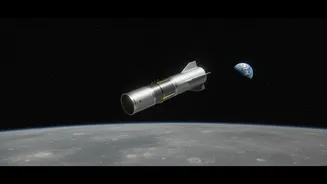
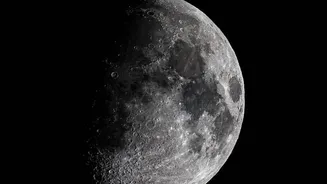
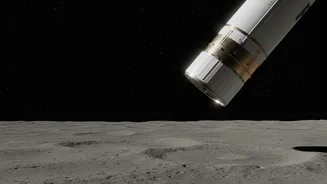
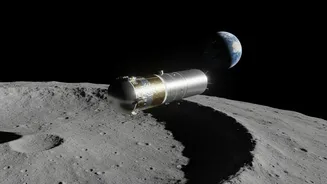
On August 5, 2026, the upper stage of a Falcon 9 rocket slammed into the lunar surface at over 8,700 kilometres per hour. This wasn't a planned demolition. The rocket stage had completed its primary mission back in January 2025, successfully deploying
two commercial lunar landers. Afterwards, it was left in a high orbit where, according to SpaceX and NASA, a combination of solar activity and gravitational forces slowly altered its path, putting it on a collision course with the Moon. While the first stages of Falcon 9 rockets are famously reusable, the smaller second stages are typically disposable. This one, however, turned into a surprise science experiment.
Creating a Crater for Clues
Why get excited about a crash? When the rocket hit, it carved out a new crater estimated to be about 18 metres wide and 4 metres deep. This violent impact blasted a plume of material from beneath the Moon's surface high into its thin atmosphere, or exosphere. This plume is a treasure trove for scientists. By studying the ejected dust and rock with telescopes and orbiting spacecraft, researchers can analyze the composition of the lunar subsurface without ever needing to land a rover and drill. It’s a bit like a geological excavation, but conducted from hundreds of thousands of kilometres away.
Analyzing the Aftermath
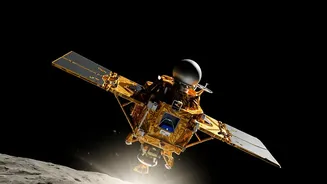
Immediately following the impact, astronomers using the Very Large Telescope in Chile detected a plume of sodium and lithium gas. The sodium is believed to have come from the Moon itself, while the lithium may have been from the rocket's components, offering data on how impact materials mix. The bigger prize is analyzing the crater itself. NASA's Lunar Reconnaissance Orbiter (LRO) and the Korea Pathfinder Lunar Orbiter's ShadowCam are tasked with capturing before-and-after images of the site. These images will help scientists understand crater mechanics, how ejecta spreads, and the properties of the lunar soil, or regolith, in that specific location. This data is crucial for refining models that guide future missions, both robotic and human.
Not the First Cosmic Crash
Human-made objects have hit the Moon before, some by accident and some on purpose. The Soviet Union’s Luna 2 was the first to intentionally impact the Moon in 1959. In 2009, NASA orchestrated a much more deliberate mission called the Lunar Crater Observation and Sensing Satellite (LCROSS). It sent a Centaur rocket stage crashing into a permanently shadowed crater near the south pole, with a second spacecraft flying through the resulting debris plume. That mission famously confirmed the presence of water ice, a discovery that has reshaped plans for future lunar bases. While this Falcon 9 impact was not targeted at a shadowy, ice-rich region, it provides another valuable data point in a different lunar location.
A Future of Lunar Exploration and Debris
This event also highlights a growing issue: space junk. As missions to the Moon from countries like India, the US, and China increase, so does the amount of hardware left behind. The unplanned nature of this impact has sparked renewed conversation about responsible disposal practices for deep-space missions. For now, scientists are focused on extracting every bit of knowledge from this accidental experiment. The insights gained from how the Moon's surface reacts to such a high-speed collision will inform the design of future landers and habitats, contributing to the safety and success of the next generation of lunar explorers as humanity, through programs like Artemis and commercial ventures, prepares to return to the Moon.