


The Growing Peril in Our Skies
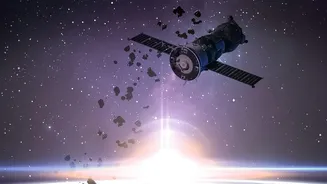
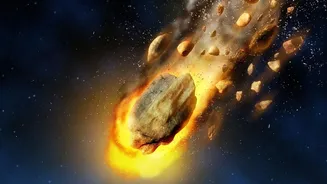
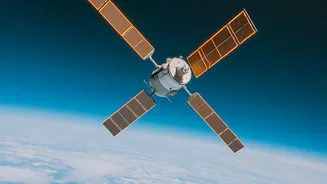
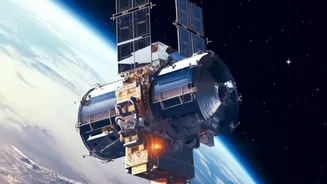
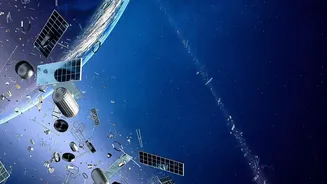
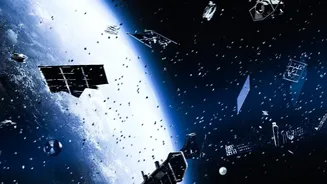
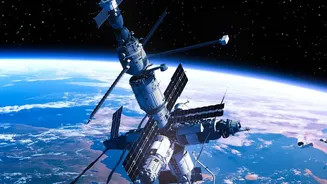
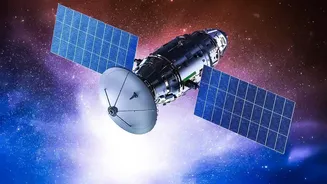
Space may seem vast, but the orbital highways around Earth are dangerously congested. Decades of launches have left a legacy of debris, from entire dead satellites to small fragments of metal, all travelling at speeds over 28,000 kilometres per hour.
Experts warn we are approaching a tipping point known as the Kessler Syndrome, a chain reaction where collisions create more debris, leading to more collisions, until low Earth orbit (LEO) becomes unusable. This isn't just a problem for astronauts; it's a direct threat to the global economy and services we rely on daily, including GPS navigation, weather forecasting, and communications. The urgent need for a cleanup crew has sparked a new wave of innovation aimed at actively removing the most dangerous junk.
Enter the Electrodynamic Tether
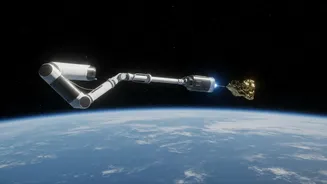
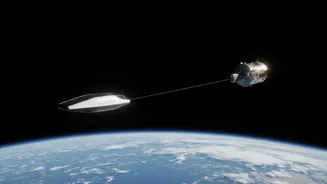
Among the proposed solutions—which include nets, harpoons, and lasers—one of the most promising is the electrodynamic tether (EDT). This isn't a simple rope, but a long, conductive cable, often just a few centimetres wide but potentially kilometres long, that can be unspooled from a satellite. The technology is ingeniously simple in concept: it uses Earth's own magnetic field to generate force without needing propellant. This makes it a lightweight, scalable, and potentially cost-effective solution for dragging debris out of orbit. Companies like Tethers Unlimited and European consortiums are developing these systems, viewing them as a key to making debris removal a sustainable business rather than a series of expensive, one-off experiments.
Harnessing a Planet's Power
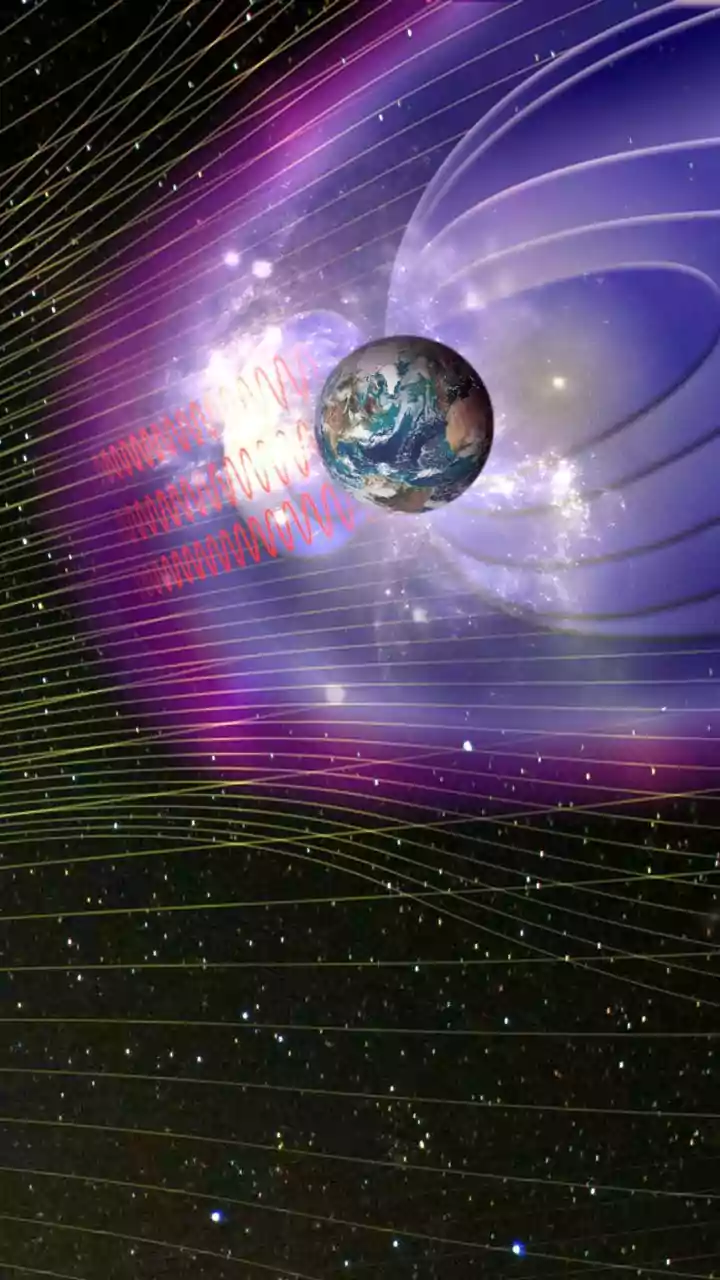
So how does it work? As the conductive tether orbits the planet, it moves through Earth's magnetic field. This motion induces an electric current in the wire, essentially turning the tether into an electromagnetic motor or generator in space. This current interacts with the magnetic field to create a force known as Lorentz drag. This drag acts as a brake, slowing the tether and any debris it's attached to. As the object loses speed, its orbit decays, causing it to descend until it burns up harmlessly in the Earth's atmosphere. Because it doesn't require fuel, an EDT system can theoretically operate for long periods, enabling a single 'tug' vehicle to deorbit multiple pieces of debris. Some advanced concepts even propose using solar cells embedded in the tether to actively control the current and manoeuvre in space.
Why Testing Is So Critical
While the physics are sound, the space environment is an unforgiving laboratory. Tether technology has been discussed for decades, but early experiments have faced challenges, including a tether that snapped during a 1996 NASA mission. Today's challenges are even more complex. A multi-kilometre tether is itself a target for micrometeoroid and debris impacts, which could sever it. Researchers are now testing advanced materials and hollow tether designs to improve survivability. Furthermore, controlling the dynamics of a long, flexible tether as it captures a tumbling, non-cooperative piece of debris is incredibly difficult. In-orbit demonstrations, like the upcoming E.T.PACK-F mission, are essential to validate computer models, test capture mechanisms, and prove the system's reliability and control under real-world conditions before it can be deployed commercially.
The Race to a Cleaner Orbit
The development of magnetic tethers is part of a broader push for active debris removal (ADR). Space agencies and private companies are recognising that simply mitigating the creation of new junk is not enough; we must also clean up the legacy of past decades. The goal is to move from experimental missions to an operational, repeatable service. Innovations in this field aren't just about environmental stewardship; they represent a significant business opportunity. A successful tether system could dramatically lower the cost of debris removal, making orbital cleanup economically viable. By proving their technology in the harsh reality of space, developers hope to provide the tools needed to protect vital orbital lanes and ensure a sustainable future for space exploration and commerce.