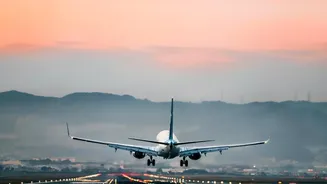





You’ve landed, perhaps even early, but instead of heading to the gate, the aircraft comes to a halt on the tarmac. It’s a common frustration for travellers, but the reasons for this delay are rarely simple and always rooted in safety and logistics.
The Airport Parking Puzzle
The
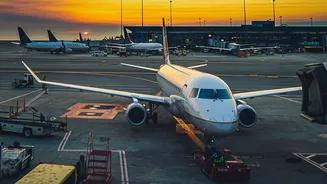
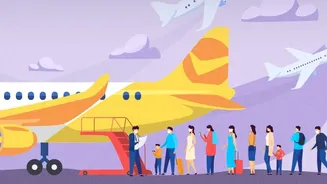
most frequent reason for a delay after landing is straightforward: the gate assigned to your flight is still occupied. Think of airport gates as reserved parking spots. If the previous aircraft hasn't departed due to its own delay, maintenance, or crew issues, there is simply nowhere for your plane to park. Airports are tightly scheduled environments, and a single late departure can cause a domino effect, leaving several arriving flights waiting for their turn. While another gate might look free, switching is a complex process involving ground staff, baggage handlers, and refuelling services, making it a less-than-ideal last-minute solution.
The Invisible Traffic Controller
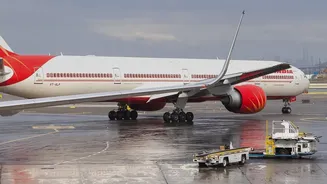
An airport’s surface is a highly controlled network of roads for aircraft, known as taxiways. An aircraft cannot simply make a U-turn or deviate from its assigned path. All ground movements are directed by Air Traffic Control (ATC), specifically the ground controller, who acts like a traffic cop for planes. A 'return to gate' or any deviation from the landing-to-gate path requires specific clearance. This clearance depends on the traffic of other departing and arriving aircraft. If the taxiways are congested, a plane may be instructed to wait in a designated holding area, sometimes called a 'penalty box', until a safe route back to a gate or stand becomes available.
Planes Can't Just Reverse
Unlike cars, commercial passenger jets do not have a reverse gear. Their wheels are not powered; they are pushed forward by the massive thrust from their engines. While jets have a 'reverse thrust' function, this is designed to redirect airflow forward to help slow the plane down dramatically upon landing, not for backing up on the ground. Using reverse thrust to move backwards, a practice known as a 'powerback', is extremely rare and generally avoided because it can blow debris towards the terminal, damage the engines, and is a safety hazard for ground personnel. Therefore, to move backwards, an aircraft requires a pushback tug, the small but powerful vehicle that pushes the plane back from the gate at departure. Arranging for a tug to meet a plane on a taxiway is a significant logistical step that causes delays.
When Caution Calls the Shots
Sometimes, a plane has to return to the gate after it has already pushed back for departure. This is known as a Return to Gate (RTG). The reasons are almost always related to safety and caution. A warning light might appear in the cockpit, a minor technical issue may require an engineer's inspection, or there could be a discrepancy in the passenger count or cargo weight. Other causes include a passenger medical emergency or a disruptive passenger who needs to be deplaned. In these scenarios, the crew will always choose the safest option: to resolve the issue on the ground. This process, while ensuring safety, requires coordinating with ground control to find a path back, arranging for maintenance or medical staff, and can take a significant amount of time.
The Unseen Clock
Two other critical factors are the flight plan and crew duty times. A long delay on the ground, whether waiting for takeoff or after an RTG, might mean the flight has missed its designated departure slot in the ATC sequence. Getting a new slot at a busy airport can add to the wait. Furthermore, flight crews operate under strict regulations governing their maximum daily and weekly working hours, known as Flight Duty Time Limitations (FDTL). If a lengthy ground delay causes the pilots or cabin crew to exceed their legal duty hours, the flight cannot legally proceed until a fresh, rested crew is brought in. This can turn a delay into a cancellation, especially at an airport where the airline has no standby crews available.