



The Challenge of a Veiled Planet
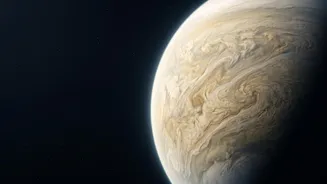
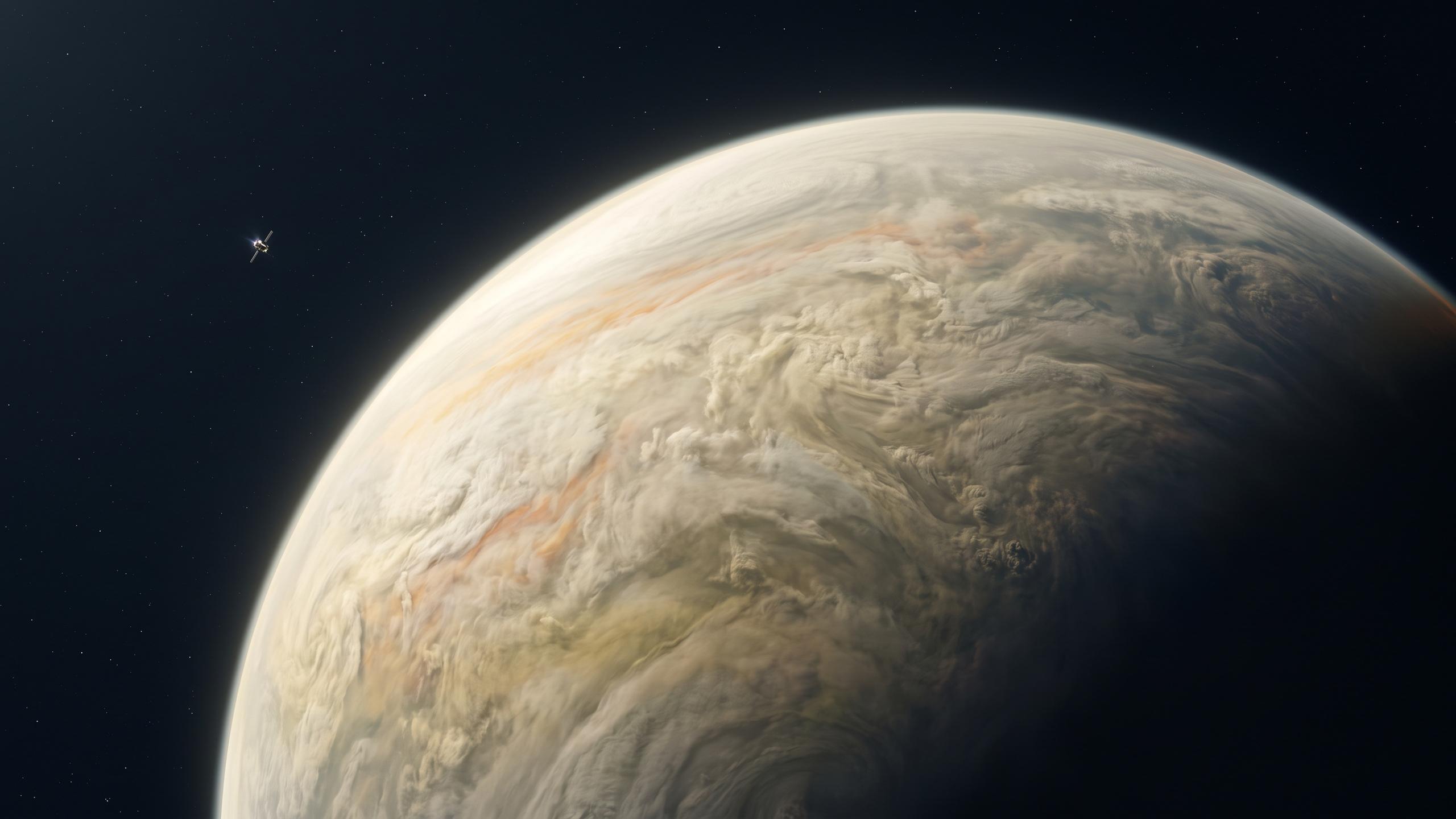
Venus presents a formidable challenge for scientists. Often called Earth's 'evil twin' due to its similar size and mass, it evolved into a hellish world. Its atmosphere is a crushing force, about 93 times denser than Earth's, and consists mainly of carbon
dioxide with clouds of corrosive sulfuric acid. This dense cloud cover creates a runaway greenhouse effect, leading to surface temperatures hot enough to melt lead, around 467 degrees Celsius. This opaque atmospheric blanket has made it impossible for traditional optical telescopes to get a clear view of the planet's surface, leaving its geology and volcanic history largely a mystery hidden beneath the clouds. Early missions gave us glimpses, but a comprehensive map has remained elusive. Understanding why Venus took such a different evolutionary path from Earth is a key scientific question that could offer insights into our own planet's climate.
India's Ambitious Venus Orbiter Mission
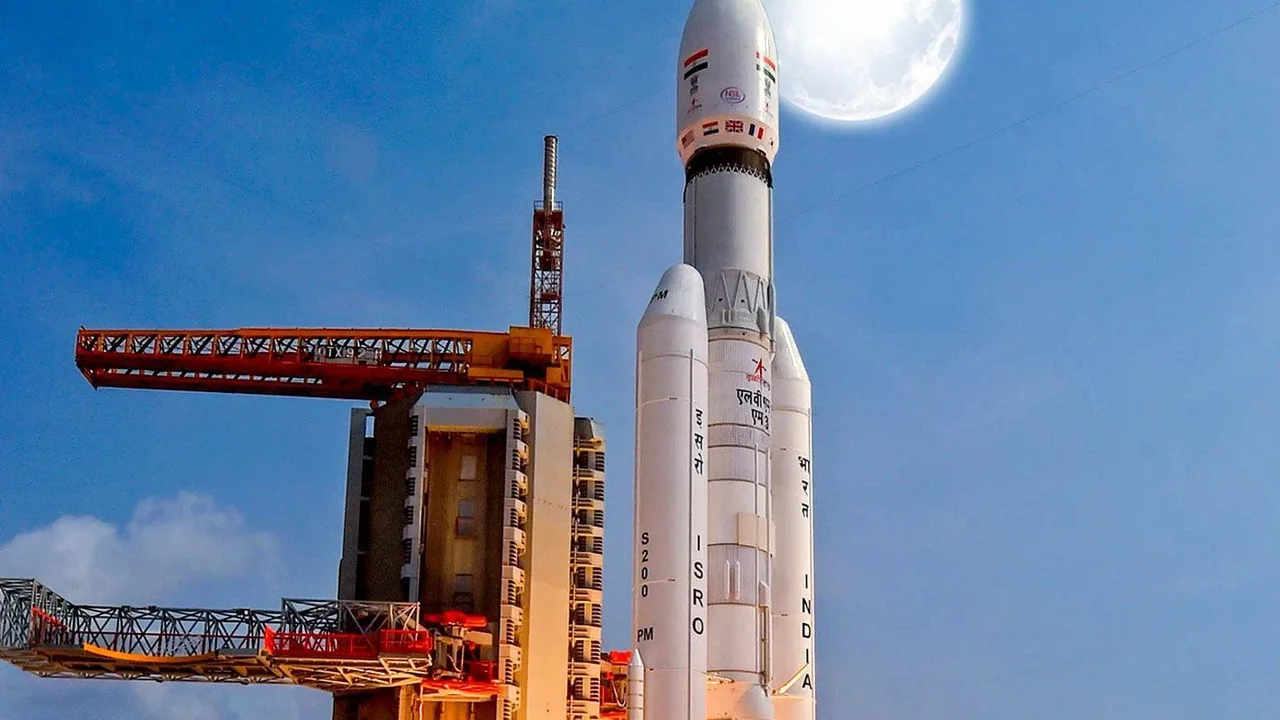
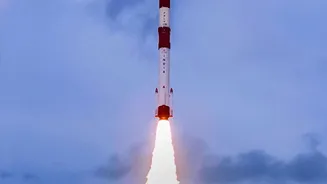
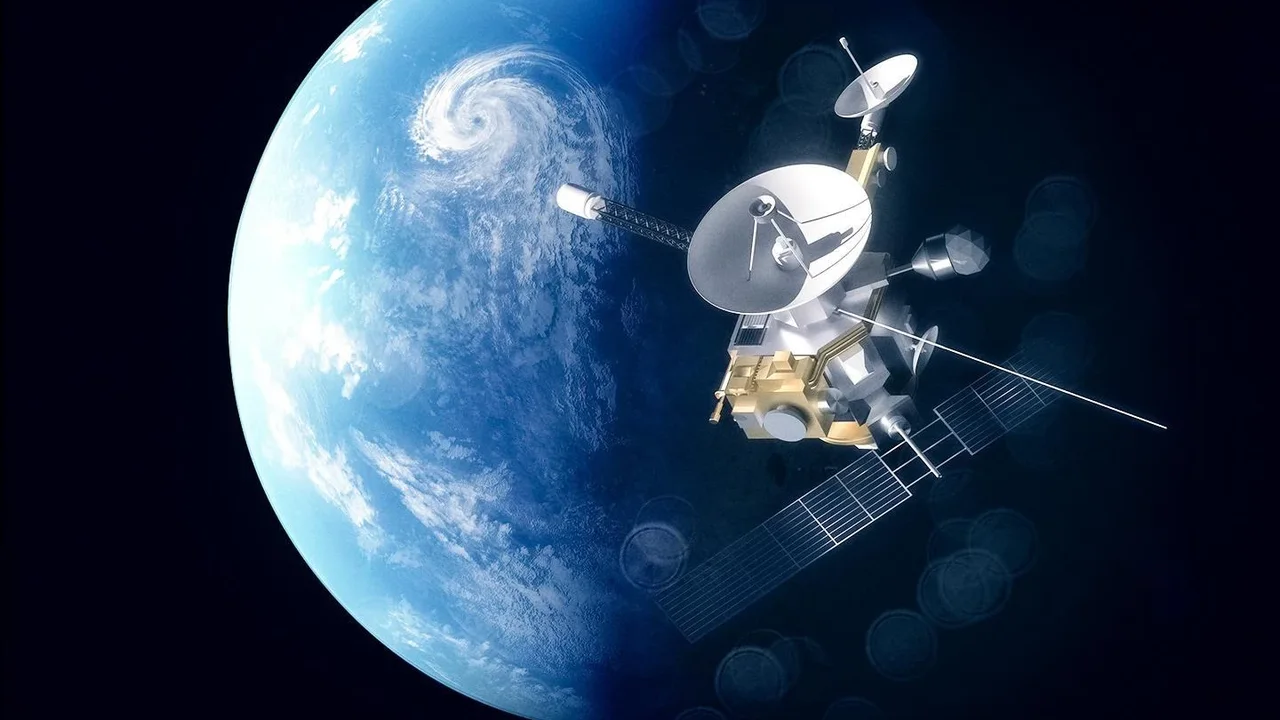
Enter Shukrayaan-1, India’s first dedicated mission to Venus. Officially approved by the Indian government in September 2024, the Venus Orbiter Mission (VOM) is slated for a March 2028 launch. The spacecraft will be launched aboard the powerful LVM-3 rocket. After a 112-day journey through space, it is expected to enter a highly elliptical orbit around Venus in July 2028. Unlike India's first Mars mission, Mangalyaan, which was primarily a technology demonstrator, Shukrayaan-1 is a dedicated science mission. It will carry a payload of approximately 100 kg, comprising a sophisticated suite of 19 scientific instruments designed to conduct a comprehensive study of the planet. The primary objectives include investigating Venus's surface and subsurface, studying its complex atmospheric chemistry, and analyzing the interaction between the planet and the solar wind.
Peering Through the Clouds with Radar
The star of the show among the Indian payloads is the high-resolution Synthetic Aperture Radar (SAR). This instrument is the key to achieving one of the mission's main goals: mapping the Venusian surface. SAR technology does not rely on light like a camera. Instead, it actively sends out radio wave pulses and records the echoes that bounce back. Because these radio waves can penetrate cloud cover, smoke, and darkness, SAR can create detailed, two-dimensional images of a landscape regardless of weather or time of day. By sending and receiving a series of radar pulses as the orbiter moves, it can simulate a much larger antenna, achieving a very high resolution. This will allow Shukrayaan's SAR to map Venus's volcanoes, mountains, and lava flows in great detail, providing crucial data on its geological history and whether it is still active today.
A Suite of Homegrown and Collaborative Sensors
Beyond the flagship radar, Shukrayaan-1 will be equipped with a range of other instruments, many of them developed in India. A ground-penetrating radar will be used to probe beneath the planet's surface for the first time, investigating geological structures. Other Indian instruments will focus on the atmosphere, aiming to study the mysterious super-rotation of its winds, the composition of its clouds, and phenomena like Venusian airglow. The mission also showcases India's growing role in international space science. It will carry collaborative payloads developed with international partners. The Venusian Neutrals Analyzer (VNA), contributed by Sweden, will study how the solar wind interacts with the planet's upper atmosphere, helping scientists understand atmospheric loss. Other collaborations involve Russia and Germany, making this a truly global scientific endeavour led by India.