







Why the Shift to Gentler Cleaning?
The trend towards natural cleaning solutions is driven by a rising awareness of health and environmental concerns. Many conventional cleaning products contain volatile organic compounds (VOCs) and other harsh chemicals like ammonia and chlorine bleach.
These can trigger headaches, irritate the eyes and throat, and worsen respiratory conditions like asthma. Such issues are often magnified during the monsoon when homes are kept closed to keep the rain out, leading to poorer indoor air quality. Families, especially those with young children, pets, or elderly members, are increasingly prioritising a healthier home environment. There's also a growing understanding that these chemicals, when washed down the drain, can pollute water sources. Furthermore, many are discovering that effective, natural alternatives are not only safer but also incredibly cost-effective, using ingredients already present in most Indian kitchens.
The Power Players in Your Pantry
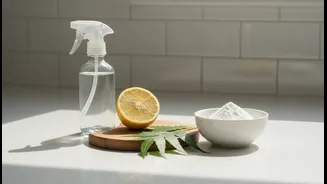
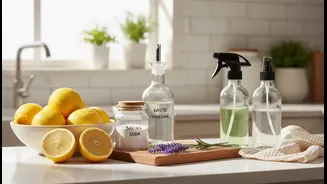
You don’t need an entire cabinet of commercial products to keep your home clean and fresh this monsoon. A few key staples provide a powerful, low-chemical arsenal. White vinegar, with its acidic nature, is a star performer, effective at cutting through grime and inhibiting mould. Baking soda is a fantastic deodoriser and a gentle abrasive perfect for scrubbing surfaces. Lemon, known for its natural bleaching properties and refreshing scent, works wonders on stains and odours. Traditional ingredients like neem leaves, long revered for their potent antibacterial and antifungal qualities, can be boiled in water to create a disinfecting solution for mopping floors. Essential oils such as tea tree, eucalyptus, and lemongrass not only leave behind a pleasant fragrance but also possess natural antibacterial and antifungal properties ideal for a damp environment.
Your Natural Monsoon Cleaning Toolkit
Tackling specific monsoon problems becomes simple with the right approach. For mould and mildew, the season's most unwelcome guests, a spray bottle filled with equal parts white vinegar and water is highly effective. Just spray it on the affected area, let it sit, and then wipe it clean. To combat the musty odours that come with dampness, place open bowls of baking soda or activated charcoal in rooms and cupboards to absorb smells naturally. For floors that see a lot of muddy footprints, mopping with a solution of hot water and a splash of vinegar will clean and disinfect without leaving the sticky residue that chemical cleaners often do in humid weather. An all-purpose surface cleaner for kitchen counters and tables can be made by mixing equal parts vinegar and water, with a few drops of lemon juice for a fresh scent.
Are Natural Cleaners Truly Effective?
A common hesitation in switching to natural cleaners is the question of their effectiveness compared to powerful chemical products. While commercial cleaners may act faster on tough, set-in stains, natural ingredients are highly effective for everyday cleaning and hygiene. The acidity in vinegar has been proven to kill many common strains of bacteria. For routine cleaning, natural alternatives can be just as efficient. They work on the same principle as chemical cleaners by using agents (surfactants) to break down and lift dirt, but they are derived from plant-based sources instead of synthetic ones. While a deep-seated mould issue might require more effort, for daily upkeep and preventative cleaning, natural solutions offer a balance of safety and power that many now find preferable.