



The Silky Secret to Creamy Curries
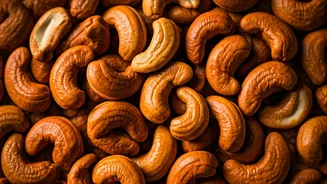
One of the most magical uses of cashew in Indian food is its ability to create exceptionally creamy and thick gravies without heavy reliance on dairy. When raw cashews are soaked and ground into a fine paste, they form the base of many regal dishes. This
paste, when added to an onion-and-tomato base, lends a velvety texture and a subtle, sweet nuttiness that balances the spices. Famous recipes like Shahi Paneer, various Kormas, and even some versions of Butter Chicken owe their signature richness to a cashew paste. Unlike flour or cornstarch, a cashew base thickens a sauce while adding a layer of flavour, creating a gravy that is both opulent and deeply satisfying. This technique is especially prevalent in North Indian cuisine, which is known for its luxurious and aromatic curries that were perfected in royal kitchens.
The Irresistible Spiced Snack: Masala Kaju
Moving from gravies to snacks, cashews take centre stage in the form of Masala Kaju. This popular treat involves roasting or frying whole cashews until they are golden brown and then tossing them in a vibrant blend of Indian spices. The nuts are coated in a mixture that often includes chilli powder for heat, chaat masala and amchur (dry mango powder) for a tangy kick, black salt for a sulphurous note, and other aromatic spices like cumin and black pepper. The result is a crunchy, flavour-packed snack that is utterly addictive. It’s a festive favourite, often prepared during Diwali, but also enjoyed year-round as a sophisticated nibble with drinks or as a crunchy addition to a snack mix. This preparation highlights a different side of the cashew—not as a creamy thickener, but as a crunchy vessel for bold, spicy flavours.
The Diamond of Sweets: Kaju Katli
No discussion of Indian cashew recipes would be complete without mentioning Kaju Katli. Literally translating to 'cashew slice', this is arguably India's most beloved sweet, or 'mithai'. Its origins are often traced back to the Mughal era, where it was considered a delicacy fit for royalty due to the expense of cashews. The process is a testament to culinary artistry: high-quality cashews are ground into a smooth, fine paste, which is then cooked with a carefully prepared sugar syrup until it forms a pliable dough. This dough is rolled thin and traditionally cut into diamond shapes, often adorned with a delicate, edible silver leaf (vark) that signifies prosperity and celebration. Unlike many other Indian sweets that are heavy with ghee and milk, Kaju Katli's beauty lies in its minimalist, cashew-forward flavour and melt-in-the-mouth texture.
A Crown of Golden Jewels in Rice Dishes
In many celebratory and elaborate Indian meals, cashews serve as a final, luxurious flourish, especially in rice dishes like Biryani and Pulao. Sautéed in ghee until they turn a beautiful golden-brown, these cashews add a delightful textural contrast and a rich, nutty aroma. Sprinkled over a fragrant biryani or mixed into a vegetable pulao, they act like little jewels, providing pockets of crunchy, buttery goodness. This simple act of frying enhances their natural sweetness and turns them into a garnish that is as much about flavour as it is about presentation. It's a small touch that signals a special occasion and elevates the dish from everyday fare to something truly memorable, demonstrating once again how a single ingredient can be used in myriad ways to enrich the culinary experience.