


A Sudden, Unprecedented Glow
In late 2019, astronomers noted something strange. A galaxy named SDSS1335+0728, located about 300 million light-years away in the constellation Virgo, began to shine dramatically brighter than ever before. For decades, it had been unremarkable. Suddenly,
its core was radiating immense energy. While cosmic brightenings happen, they are usually fleeting. A supernova explosion or a star being torn apart by a black hole—a Tidal Disruption Event (TDE)—lasts for a few hundred days at most. But this galaxy’s glow has not faded. It has continued to intensify for more than four years, a behaviour described by scientists as completely unprecedented.
Ruling Out the Usual Suspects
The international team of researchers, using data from multiple ground and space-based observatories, including the European Southern Observatory's Very Large Telescope, first had to eliminate other possibilities. The sustained and increasing brightness across multiple wavelengths—ultraviolet, optical, and infrared—didn't fit the profile of a supernova. While a TDE was a possibility, the light curve didn't match. Typical TDEs have a distinct rise and fall in brightness, but SDSS1335+0728 just kept getting brighter, and in February 2024, it even began emitting X-rays. The sheer duration and evolving nature of the event pointed toward something far more fundamental and never before seen in real time.
Witnessing the Birth of an AGN
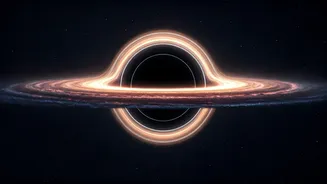
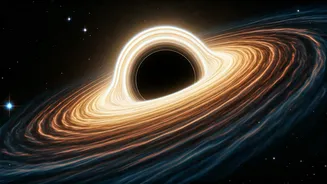
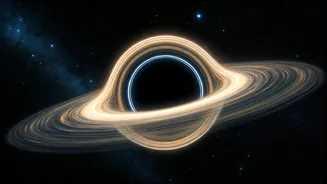
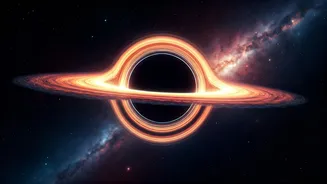
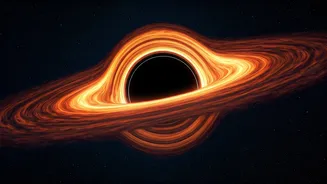
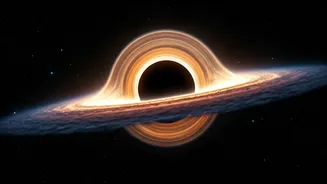
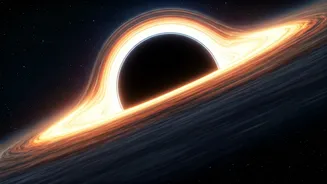
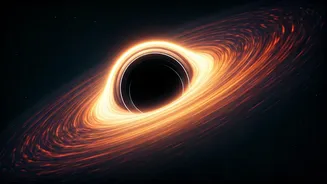
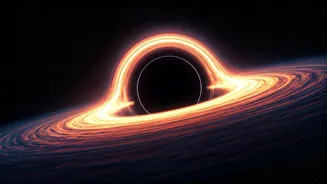
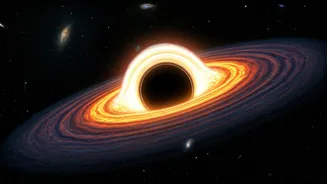
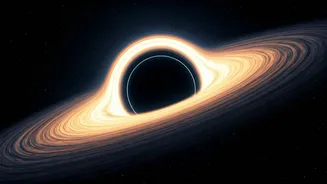
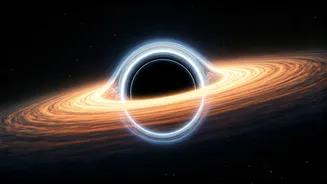
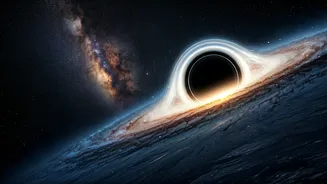
The most compelling explanation is that astronomers are watching the awakening of the supermassive black hole at the galaxy's centre. Most large galaxies, including our own Milky Way, have a dormant giant black hole at their core. These are typically quiet, or 'sleeping', as there isn't much material for them to consume. The theory is that this black hole has suddenly begun feasting on a vast supply of surrounding gas and dust. As this material spirals into the black hole, it forms an intensely hot and bright accretion disk. This process transforms the galactic core into an 'Active Galactic Nucleus' (AGN), one of the most luminous objects in the universe. Scientists believe they are witnessing the activation of an AGN from the very beginning, a process they had only theorized about until now.
Rewriting the Story of Cosmic Growth
This discovery is more than just a cosmic light show; it provides a crucial new dataset for understanding galaxy evolution. A central question in cosmology is how supermassive black holes and their host galaxies grow. Do they grow in lockstep, or does one lead the other? The activity of an AGN is believed to play a regulatory role, with its powerful outflows of energy capable of either triggering or shutting down star formation throughout the galaxy. By observing this process as it happens, scientists can directly test their models of this cosmic feedback loop. This real-time data on how a black hole 'switches on' and interacts with its environment offers a chance to refine, and potentially revise, the fundamental theories that describe how structures in the universe are built.
Could It Happen in the Milky Way?
The event naturally raises questions about our own galactic home. The Milky Way has its own supermassive black hole, Sagittarius A*, which is currently dormant. Researchers have stated that what is happening in SDSS1335+0728 could theoretically happen here if a large cloud of gas were to wander too close to our galactic centre. However, there is no indication that this is imminent. Even if it were to awaken, its vast distance from Earth—about 26,000 light-years—means it would not pose a direct threat to us. The observation instead serves as a powerful reminder that the universe is a dynamic place, and that even the most massive and seemingly stable structures within it are subject to profound change.