





The Frustration of 'Good Enough' Music
Every storyteller who works with video—from YouTubers to indie filmmakers—knows the pain of the stock music library. You have a scene with a specific emotional arc and a precise rhythm, but the music you find is rigid. The climax arrives too early, the intro
drags on, or the tempo is just a little too fast for your visuals. For years, the solution was to either spend hours painstakingly editing a pre-made track or commission an expensive custom score. This left many creators settling for music that was merely 'good enough' instead of perfect, forcing their edits to conform to the music's structure rather than the other way around. This compromise often meant a disconnect between the visual story and its auditory counterpart.
AI as a Composer, Not a Library
Artificial intelligence music generation fundamentally shifts this paradigm. Instead of searching through a finite library of existing songs, creators now use AI as a collaborative composer. Tools from companies like Adobe, Canva, and numerous startups allow users to generate unique, royalty-free music from simple text prompts. A creator can ask for a "slow, melancholic piano track for a rainy day scene" or a "high-energy electronic beat for a product reveal." The AI, trained on vast datasets of musical patterns and styles, composes a new piece of music tailored to that request in seconds, offering a starting point that is already much closer to the creator's vision.
Unlocking True Creative Fluidity
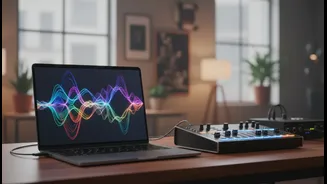
The real magic, and the 'fluidity' mentioned in the headline, lies in the customization that happens after the initial generation. This is where AI music tools truly shine. A track isn't a final, unchangeable file; it's a flexible composition. If the initial version is close but not perfect, a creator can regenerate it with slight changes or use intuitive controls to tweak its elements. They can adjust the tempo (BPM), change the instrumentation by adding or removing instruments like strings or drums, alter the overall energy level, or set a precise duration to match a video clip perfectly. This iterative process empowers creators to fine-tune the music with a level of control that was previously inaccessible without a background in music production.
Matching the Pace of the Story
This brings us to the concept of matching scores to "exact video temples"—or more accurately, the tempo and timing of a video. Modern AI tools can analyze an uploaded video's pacing, cuts, and even on-screen motion. This allows the AI to generate a soundtrack where the musical beats and dynamic shifts align with specific visual events. Imagine a chase sequence where the music's intensity builds with the action, or a product unboxing where a satisfying chord hits the exact moment the item is revealed. This beat-syncing capability ensures that the audio and visuals are perfectly choreographed, enhancing the emotional impact and creating a professional, seamless viewing experience. Some platforms even allow users to manually define where the musical climax should occur, giving them ultimate control over the story's emotional journey.
Beyond Tempo: Crafting the Perfect Mood
The flexibility of AI music extends far beyond just rhythm and timing. Storytellers can dial in the precise mood for every scene. An AI can be prompted to create music that is "tense and suspenseful," "uplifting and inspirational," or "calm and introspective." This is a significant leap from keyword searches in stock libraries, which often yield generic results. With AI, a filmmaker can generate multiple variations of a theme for a character—a hopeful version for one scene and a somber one for another—ensuring musical continuity while reflecting the narrative's evolution. This ability to craft a bespoke emotional texture for every moment helps create a much more immersive and compelling story.