






The Science of Light and Your Internal Clock
Your body runs on an internal 24-hour clock known as the circadian rhythm, and its most powerful cue is light. For millennia, the sun's cycle dictated when we were active and when we rested. Modern life, with its constant indoor artificial light, can
scramble these signals. Exposure to light influences the production of key hormones. Bright, cool-toned light suppresses melatonin (the sleep hormone) and can trigger cortisol, which promotes alertness. In contrast, dim, warm light allows melatonin levels to rise, signaling to your brain that it's time to wind down. Understanding this biological process is the first step to using light to your advantage.
Lighting for Peak Productivity and Focus
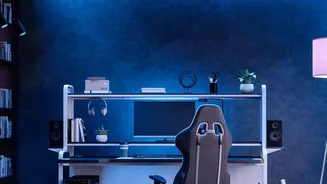
To enhance concentration during work hours, your lighting should mimic a bright, clear day. This means opting for cool-toned light with a color temperature between 4000K and 6500K. This blue-rich light is proven to boost alertness, improve cognitive performance, and reduce errors. A common mistake is relying on a single overhead fixture, which can create shadows and cause eye strain. Instead, designers recommend a 'layered' approach. Start with even ambient light, then add dedicated task lighting, like a desk lamp, to illuminate your specific work surface without causing glare on your screen. This combination ensures your workspace is comfortable and conducive to sustained focus.
The Wind-Down: Shifting to Evening Rest
Just as important as your daytime lighting is how you transition into your evening. About one to two hours before bedtime, it's time to signal to your body that the day is ending. This is done by shifting away from bright, cool overhead lights and embracing warmer, dimmer sources. Switch to lamps with warm-toned bulbs, which have a color temperature under 3000K. Red, amber, and orange hues are considered the best options as they have a minimal effect on your circadian rhythm and melatonin production. The goal is to create a soft, relaxing glow that mimics the sunset, helping your mind and body prepare for a restorative night's sleep.
Practical Tips for Your Strategic Setup
Implementing a strategic lighting plan doesn't have to be complicated or expensive. Smart bulbs are an excellent starting point, as they allow you to easily adjust both the brightness and the color temperature through an app, often with scheduling features. Place task lamps on your desk for focused work and use floor or table lamps with warm bulbs for evening relaxation. Dimmers are also a fantastic tool, giving you precise control over the intensity of your ambient light. In the evening, try to use light sources that are below eye level, as overhead lighting can be more stimulating. Even simply switching from a main ceiling light to a small, warm-toned lamp can make a significant difference in creating a calming pre-sleep environment.