
The Year's Best Meteor Shower: The Perseids
The main event for stargazers in India this August is the Perseid meteor shower, considered one of the best and brightest of the year. The shower will peak on the night of August 12 and into the pre-dawn hours of August 13. What makes this year exceptional
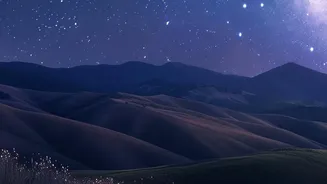
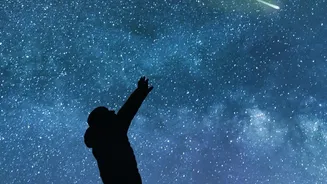
is that the peak coincides with a New Moon. This means the sky will be perfectly dark, without moonlight to wash out fainter meteors, making for a spectacular show. You could see up to 100 meteors per hour streaking across the sky. These meteors are pieces of debris from the comet Swift-Tuttle, and they often leave long, glowing trails. For the best view, find a location away from city lights. The best time to watch in India is between 2:00 AM and 4:30 AM IST on August 13, when the shower's radiant point in the constellation Perseus is high in the northeastern sky. No special equipment is needed; just lie back, let your eyes adjust to the darkness for about 30 minutes, and enjoy the cosmic fireworks.
A Major Global Event: The Total Solar Eclipse
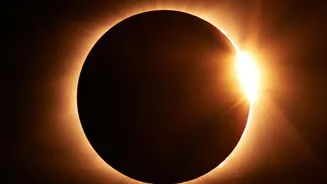
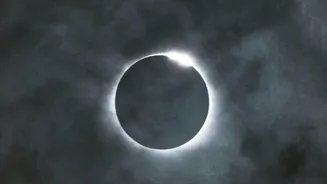
Globally, the biggest astronomical news is the total solar eclipse on August 12. This is when the Moon passes directly between the Earth and Sun, completely blocking the Sun's light and revealing its stunning outer atmosphere, the corona. However, this breathtaking event will not be visible from India. The path of totality, where the full eclipse can be seen, crosses over Greenland, Iceland, and northern Spain. For viewers in India, the entire eclipse happens at night, when the Sun is below the horizon. While you can't see it directly, you can still experience the spectacle online, as organizations like NASA typically provide a high-definition live stream of the event.
A Parade of Planets Before Dawn
Around August 12 and 13, early risers will be treated to a pre-dawn planetary parade. Six planets—Mercury, Jupiter, Mars, Saturn, Uranus, and Neptune—will be spread across the morning sky. Of these, Mars, Saturn, Jupiter, and Mercury should be visible to the naked eye under clear conditions. Mars will appear as a reddish point of light, while Saturn will be a steady, yellowish-white. Jupiter and Mercury will be very low on the eastern horizon, making them a bit of a challenge to spot just before sunrise. To see the faint ice giants, Uranus and Neptune, you will need at least a pair of binoculars and a good sky chart. Venus will be absent from the morning lineup as it will be shining in the evening sky instead.
Full Moon and a Partial Lunar Eclipse
August will close with another significant celestial event. The full moon, known as the Sturgeon Moon, will occur on August 28. This month's full moon is special because it will also feature a partial lunar eclipse. During this event, a portion of the Moon will pass through the Earth's darkest shadow, the umbra. This will cause part of the lunar surface to appear noticeably darker for a period. This eclipse will be visible from India. Later in the month, from August 28 to 31, you can watch the bright Moon approach and pass by the planet Saturn in the sky after sunset and before sunrise.
Simple Tips for Beginner Stargazers
You don't need to be an expert to enjoy the night sky. The most important step is to get away from the glare of city lights. Find a dark spot in a park, on a rooftop, or by taking a short drive out of town. Give your eyes at least 20-30 minutes to fully adapt to the darkness; avoid looking at your bright phone screen during this time. While you don't need a telescope for meteor showers or spotting bright planets, a good pair of binoculars can enhance the view of the Moon's craters and help you find dimmer objects. There are also many smartphone apps that can help you identify constellations, planets, and satellites in real-time by simply pointing your phone at the sky.