





Freedom vs. Fixity: Planes of Motion
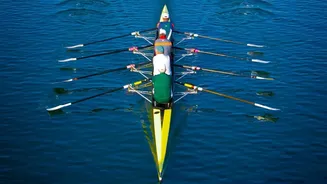
The most fundamental difference lies in how the body moves through space. Human movement is described across three planes: sagittal (forward and backward), frontal (side-to-side), and transverse (rotational). Rowing is a masterclass in the sagittal plane.
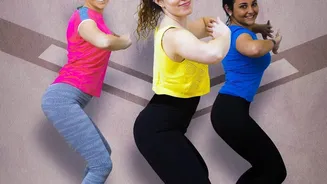
The body moves forward and backward in a powerful, repetitive cycle: the catch, drive, finish, and recovery. This linear path is incredibly efficient for generating force and building cardiovascular endurance. Dance, in contrast, is a three-dimensional conversation. A dancer constantly moves through all three planes, often simultaneously. Think of a salsa dancer's hip rotation (transverse), a ballet dancer's leap to the side (frontal), and a contemporary dancer's forward roll (sagittal). This multi-planar movement demands incredible coordination, balance, and the use of smaller, stabilizing muscles that a fixed-path exercise like rowing might miss.
Muscle Engagement: Full-Body Power vs. Nuanced Control
Both activities are renowned as full-body workouts, but they recruit muscles in distinctly different ways. Rowing is a powerhouse, engaging approximately 85% of the body's musculature with every stroke. The primary force comes from the legs (quadriceps, hamstrings, glutes) during the drive, with the back, shoulders, and arms contributing significantly to the fluid sequence. It builds immense strength in the posterior chain—the muscles on the back of your body. Dance also works the entire body, but with more variety and nuance depending on the style. While a ballet dancer develops incredible leg and core strength for stability in extensions and jumps, a hip-hop dancer utilizes fast-twitch muscles for explosive, isolated movements. Dancers build exceptional muscle endurance, training their bodies to hold strenuous positions for extended periods, which challenges muscles differently than the cyclical exertion of rowing.
The Brain on Dance vs. The Brain on Rowing
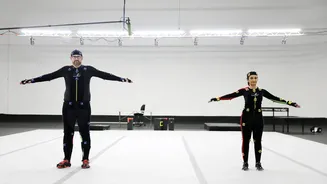
The cognitive demands of these two activities are profoundly different. Rowing fosters a state of focused, rhythmic concentration, often described as a meditative 'flow state'. The challenge is maintaining perfect form and power output, stroke after stroke. Dance, however, is a complex cognitive puzzle. It requires spatial awareness, memory for choreography, musicality, improvisation, and the integration of auditory and motor information. This constant learning and adaptation has been shown to have remarkable effects on the brain. Studies indicate that dancing can lead to significant increases in brain-derived neurotrophic factor (BDNF), a protein crucial for neuron growth and memory, and can increase volume in brain areas associated with cognitive processing and memory. Research comparing dancers to rowers has even found that dancers' brains adapt to suppress feelings of dizziness, a testament to the specific neuroplastic changes driven by rotational movement.
Fitness Goals and Injury Considerations
Choosing between dancing and rowing depends heavily on your goals. For pure, low-impact cardiovascular power and metabolic impact, rowing is one of the most effective exercises available. It provides a higher energy expenditure than many other activities at similar power outputs. Because it is a controlled movement, the risk of acute injury is relatively low, though overuse injuries, particularly in the lower back, can occur with improper form. Dance is excellent for improving agility, balance, coordination, and flexibility. Its high-intensity intervals and varied movements can also burn a significant number of calories, sometimes rivaling running. However, the injury risk profile is different. The high impact of jumps and the repetitive stress of certain techniques, especially in styles like ballet, can lead to a high incidence of overuse injuries in the lower limbs.