




The Purpose of the Twist
Before we talk about how to twist, let's understand why we do it. Standing torso twists are celebrated for their ability to gently increase spinal flexibility, particularly in the thoracic spine (your mid-back). This movement can help relieve stiffness,
improve posture, and enhance body awareness. The twisting motion also engages your oblique muscles, which are crucial for core stability and strength. Furthermore, the gentle compression and release of the abdominal organs can stimulate digestion and increase circulation. When done correctly, it’s a low-impact way to wake up the body and de-stress.
Establishing Your Foundation: Proper Form
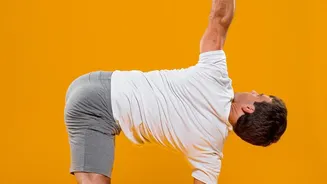
Good form is non-negotiable for both safety and effectiveness. Start by standing with your feet shoulder-width apart and a slight bend in your knees. Engage your core by bracing your abdominal muscles, as if you're about to be lightly punched in the stomach. This stabilises your spine. You can place your hands on your hips, cross them over your chest, or extend them forward. The key is to initiate the movement from your torso, not by swinging your arms. Think of lengthening your spine towards the ceiling first, creating space between your vertebrae before you even begin to rotate.
Finding Your Ideal Range of Motion
The goal of a torso twist is not to see how far you can rotate. It's about a controlled, mindful movement. Your ideal range is one where you feel a gentle stretch, not a pinch or sharp pain. If you feel discomfort in your lower back, you've gone too far. A great way to find your sweet spot is to link the movement with your breath. Inhale to lengthen your spine, and as you exhale, gently twist from your core. Only go as far as you can while keeping your hips relatively stable and facing forward. The twist should primarily come from your mid-back and rib cage, not your lower back or hips.
Common Mistakes and How to Correct Them
Many people make common errors that reduce the effectiveness of the twist and increase the risk of strain. One major mistake is using momentum by whipping the body around. This not only disengages the core muscles but can also lead to lower back pain. To fix this, slow down the movement significantly. Another error is allowing the hips to sway from side to side along with the torso. Keep your hips as steady as possible to isolate the rotation in your spine. Finally, avoid holding your breath. Breathing deeply helps relax the nervous system and can allow for a safer, deeper stretch.
Modifications for Every Body
If you have back issues, are pregnant, or are recovering from an injury, it's crucial to be cautious. For a gentler version, reduce the range of motion significantly, performing a very small, controlled twist. You can also perform the twist while seated in a chair, which provides more stability for the lower body. If you feel any pinching in your hips or back, immediately reduce the depth of the twist. The principle remains the same: listen to your body and prioritise comfort over depth. A smaller, well-executed twist is far more beneficial than a forced, deep one.