








What Exactly is 'Grounding'?
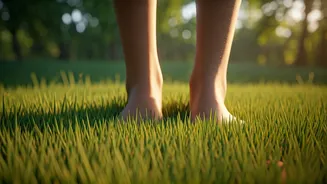
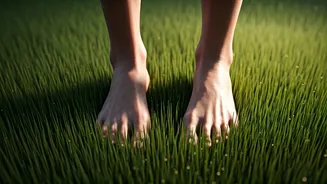
At its core, grounding (or 'earthing') is the simple practice of making direct physical contact with the Earth's surface. Think walking barefoot on grass, sand, or dirt. The idea, popularised in wellness circles, is that our modern, insulated lives—spent
in rubber-soled shoes and high-rise buildings—have disconnected us from a subtle electrical energy from the planet. Proponents believe that by reconnecting, we can tap into a source of natural healing. While it might sound a bit 'out there', the practice is rooted in the belief that the Earth itself has a natural, gentle negative charge. The act of grounding involves allowing your body to absorb these free electrons from the ground, which proponents claim can have profound physiological effects.
The Theory Behind the Trend
So how does this connection supposedly work? The main theory centres on inflammation. Our bodies produce free radicals, which are unstable molecules that can cause cellular damage and inflammation. These free radicals have a positive charge. The Earth's surface, on the other hand, is rich in negatively charged electrons. According to grounding theory, when your bare skin touches the ground, your body absorbs these electrons. These electrons then act as antioxidants, neutralising the positively charged free radicals. The proposed result? A reduction in chronic inflammation, which is a known culprit behind various ailments, including chronic pain, poor sleep, and stress. It is this reduction in inflammation and pain that forms the basis for many of grounding’s health claims, including its effect on posture.
Barefoot Walking and Your Body
Before we even get to the electrical-charge theory, it’s important to separate 'grounding' from the more established science of 'barefoot walking'. For centuries, humans walked without cushioned, supportive shoes. Kinesiologists and physical therapists often point out that walking barefoot can strengthen the small, intrinsic muscles in your feet and ankles. Stronger feet provide a more stable foundation for your entire body. This practice also enhances proprioception—your sense of where your body is in space. When you can feel the texture and contour of the ground beneath you, your nervous system gets more feedback, allowing it to make subtle adjustments to your gait and alignment. This improved stability and alignment from the ground up can have a direct and positive impact on your overall posture, independent of any electrical exchange.
The 'Posture Hack' Connection
This is where the two ideas—grounding and barefoot walking—converge. The claim that it’s a 'posture hack' relies on a combination of these factors. If grounding does indeed reduce systemic inflammation, it could lessen the chronic pain in your back, neck, or hips that causes you to slump or compensate. When you’re in less pain, it’s naturally easier to hold yourself in a more upright, neutral position. Combine this with the biomechanical benefits of walking barefoot—stronger foot muscles, a more stable base, and better body awareness—and you have a compelling case. The 'hack' part of the claim implies a quick and easy fix. While walking barefoot is simple, think of it less as an instant hack and more as a practice that encourages your body to realign itself naturally over time.
What Does the Science Say?
Here's where a dose of healthy skepticism is useful. The science on grounding is still in its infancy and is considered fringe by many in the mainstream medical community. A number of small studies, often published in alternative medicine journals, have suggested that grounding can improve sleep, reduce pain, and lower inflammation markers in the blood. However, these studies are often criticised for having small sample sizes, lacking rigorous control groups, or being funded by companies that sell grounding products. In contrast, the benefits of barefoot walking on foot strength and mechanics are more widely accepted in physiotherapy and sports science. So, while you may feel better after a barefoot walk, it's difficult to prove whether it’s due to the Earth's electrons or simply the physical act of walking naturally.
How to Try It Safely and Simply
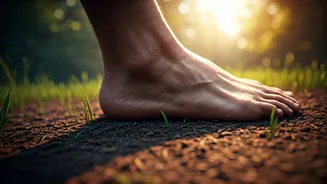
Curious to give it a try? The good news is that grounding is free and generally safe. Start small. Find a clean, safe patch of grass in a park, a sandy beach, or even your own backyard. Aim for 15-30 minutes of direct contact. You can walk, stand, or even sit with your bare feet on the ground. Pay attention to your surroundings to avoid sharp objects, pesticides, or unclean surfaces. Listen to your body. If you’re not used to walking barefoot, your feet might feel sensitive at first. Start on softer surfaces like grass or sand before moving to harder dirt paths. The goal is to reconnect with your environment in a gentle, mindful way.