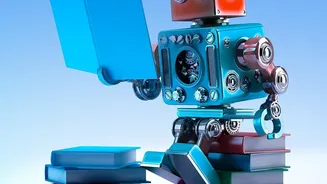








For years, AI models have been graded like university students, tested on their knowledge of law, medicine, and mathematics. Now, OpenAI is asking a different question: Can AI actually help with your life?
What Are AI Benchmarks, Anyway?
In the world of artificial intelligence, a benchmark
is a standardized test. It consists of a set of tasks and a scoring system designed to measure a model's performance in a consistent and comparable way. Think of it like an exam for AI. These tests help researchers track progress and understand a model's strengths and weaknesses. Until now, the most famous benchmarks, like MMLU (Massive Multitask Language Understanding), have focused on academic and expert-level knowledge across dozens of subjects. While useful, critics argue these tests don't reflect how most people will actually use AI. Scoring well on a PhD-level physics test doesn't necessarily mean an AI can help you plan a weekly budget or figure out school enrollment forms.
Introducing LifeVal: A Test for Real Life
In a significant shift, OpenAI has introduced a new benchmark called LifeVal, officially announced on November 2, 2026. Instead of testing abstract knowledge, LifeVal measures how well an AI can assist with the practical, everyday tasks that people actually face. The goal is to move beyond academic metrics and evaluate an AI's real-world utility. To create this benchmark, OpenAI didn't just guess what matters to people. It analyzed data from major time-use studies, like the American Time Use Survey, to see how people spend their days. The company also surveyed nearly 4,000 people to find out where they most wanted help from a personal assistant. The result is a test focused on the 'chores' of modern life.
From Bar Exams to Household Budgets
LifeVal evaluates AI performance across seven key areas: caregiving, health, education, household administration, personal finances, shopping, and government services. The tasks are concrete and relatable. Examples include finding a new kindergarten after a move, creating a meal plan for someone with new dietary needs, organizing a community volunteer group, and navigating complex government paperwork. This represents a major departure from previous benchmarks. Instead of multiple-choice questions, LifeVal assesses an AI's ability to complete multi-step tasks, use a web browser to gather information, and present organized options for a user to review. The agent does the legwork, like shortlisting three daycare options with their enrollment details, but stops before making an irreversible decision, leaving the final call to the human user.
Why This Shift in Focus Matters
The release of LifeVal signals a maturing of the AI industry. For years, the race was about proving raw capability—building the smartest 'brain in a box'. Now, the focus is shifting toward product-market fit and genuine usefulness. By creating a benchmark for everyday tasks, OpenAI is guiding its own research and development toward building a more practical personal assistant for its massive user base. The company noted that it has already been using LifeVal internally for the past year to drive improvements in its models. This move also puts pressure on competitors like Google, Meta, and Anthropic, who are all racing to create AI agents that can do things for you, not just answer your questions. Measuring performance on life tasks could become the new standard for determining which AI assistant is truly the best.
The Future of Helpful AI
While LifeVal is a significant step, it is also a starting point. OpenAI has published scores for its models, showing its latest system, GPT-6 Astra, scoring 80.6% on the benchmark. Interestingly, the gains appear to slow with newer models, suggesting that making AI more helpful in the real world is a complex challenge that isn't solved by simply making the model bigger. As a new benchmark, LifeVal itself is not yet open for others to run independently, meaning the initial results come solely from OpenAI. However, its creation marks a clear strategic direction: the next frontier for AI isn't just about knowing more, but about doing more. The true test of an AI's intelligence may soon be measured not by the exams it can pass, but by the everyday burdens it can help you carry.