
What Am I Looking For?
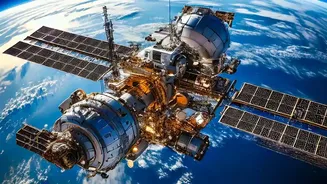
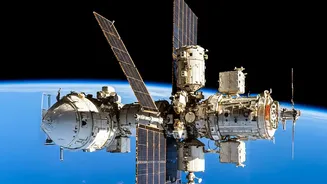
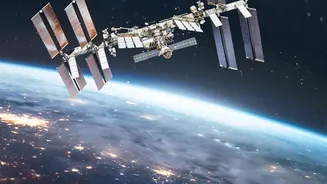
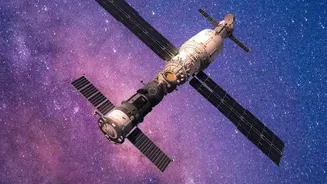
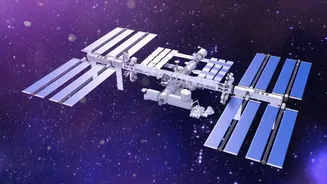
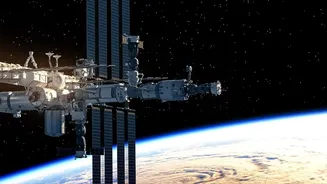
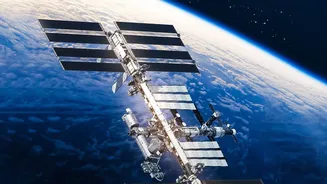
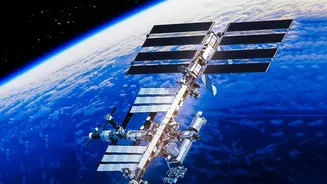
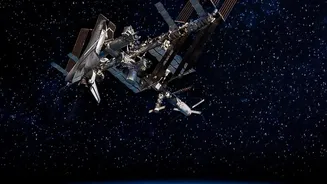
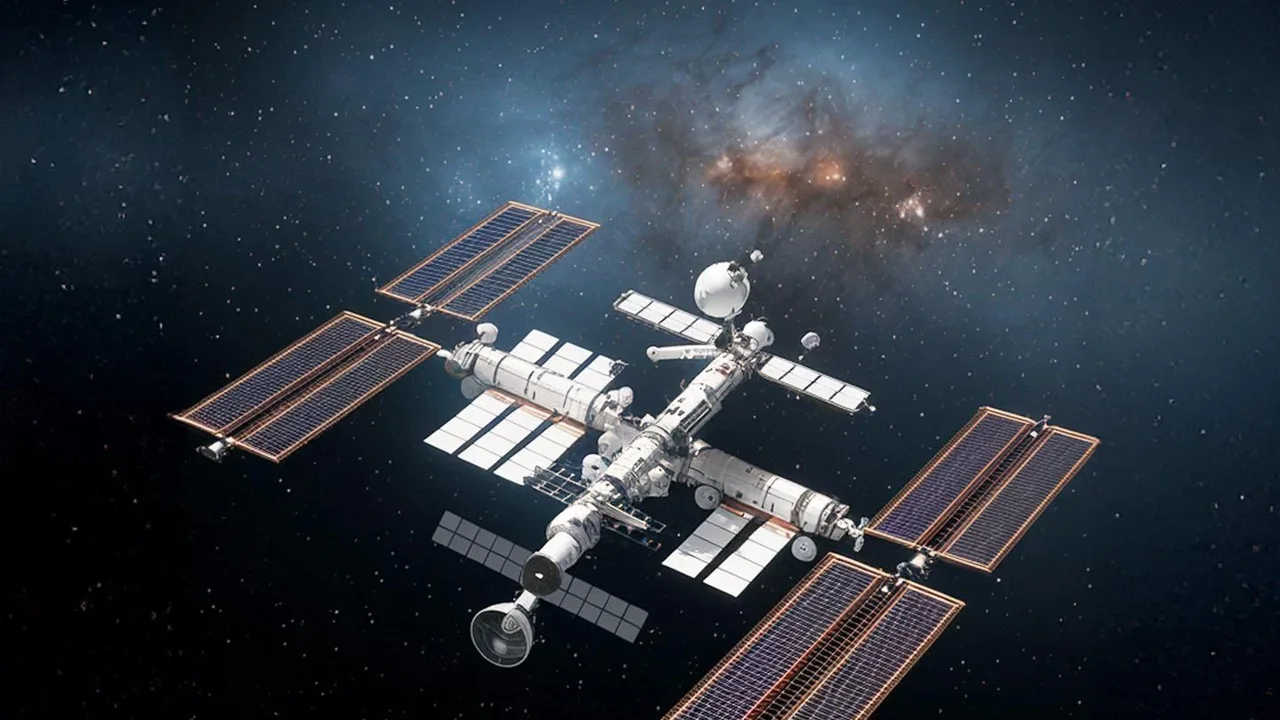
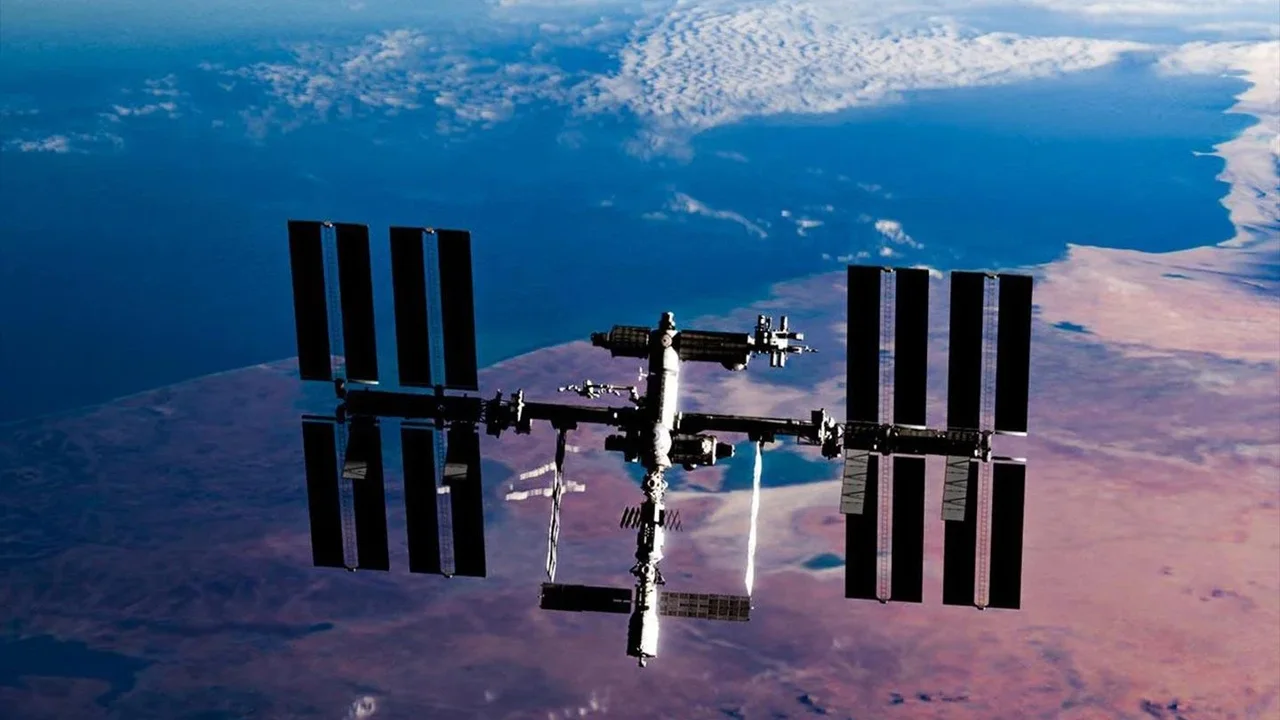
The International Space Station is the largest human-made structure in orbit, roughly the size of a football field. It circles the Earth about 420 kilometres above us at a staggering speed of 28,000 kilometres per hour, completing an orbit every 90 minutes.
You don't need a telescope to see it. To the naked eye, the ISS looks like a very bright, fast-moving star or an airplane without flashing lights. Its brightness comes from sunlight reflecting off its massive solar arrays and modules. In fact, aside from the Moon, it can be the brightest object in the night sky. Because it relies on reflected sunlight, it doesn't twinkle like a star; it shines with a steady, constant light.
The Best Times to Watch
Timing is crucial for a successful sighting. The best opportunities to see the ISS are during the twilight hours—specifically, the first couple of hours after sunset or before sunrise. This is the sweet spot when the sky on the ground is dark, but the space station, flying high above, is still bathed in sunlight. If it passes during the middle of the day, the sky is too bright to see it. If it passes in the middle of the night, it’s in Earth's shadow and won't be lit up. A good pass can last anywhere from a few minutes to over seven minutes, appearing on one side of the horizon and gliding smoothly across the sky before disappearing on the other side or vanishing abruptly as it enters Earth's shadow.
Your Pocket Guide to the Cosmos
The secret to easily spotting the station is using a dedicated app. These tools remove all the guesswork by using your phone's GPS to tell you the exact time, duration, and direction of the next visible pass. Some of the most popular and user-friendly options include: NASA's Official 'Spot The Station' App: Available for both iOS and Android, this is a straightforward and reliable tool. It provides a list of upcoming sightings, maximum height, and where to look. It even has an augmented reality (AR) feature that uses your camera to show you the station's path across the sky. ISS Detector: Another highly-rated app for Android and iOS, ISS Detector is praised for its simplicity. It provides notifications for upcoming passes and details about their brightness and visibility. It also includes trackers for other satellites, making it a great all-in-one tool for skywatchers. Heavens-Above: While it has a slightly more technical interface, the Heavens-Above website and app are incredibly comprehensive. They provide detailed star charts and predictions for the ISS and a vast number of other satellites. It's an excellent resource for those who want to dive deeper into the hobby.
How to Get Your First Sighting Alert
Getting started is simple. First, download your chosen app from the App Store or Google Play. Once installed, grant it permission to access your location; this is essential for accurate predictions. Go into the app’s settings and enable notifications. The app will then automatically send you an alert a few minutes or hours before the ISS is about to pass over your location. The notification will typically include key information like the start time, the direction it will appear from (e.g., 'rises in the northwest'), how high it will get in the sky (maximum elevation), and how long it will be visible. A higher elevation means the station will pass closer to directly overhead, making it appear brighter and more impressive.
Tips for a Perfect Viewing
Once your app alerts you to an upcoming pass, you're almost ready. For the best experience, find a viewing spot with a clear, unobstructed view of the sky, away from tall buildings and bright city lights if possible. Give your eyes a few minutes to adjust to the darkness before the scheduled time. When the moment arrives, face the direction indicated by the app and look for a point of light moving steadily across the sky. Remember, it won't have the blinking lights of a plane. The experience of watching this outpost of humanity glide silently through the cosmos is a powerful reminder of what's possible and connects you directly to the astronauts living and working in orbit.