




First Stop: The Desert Kingdom of Rajasthan
Our culinary road trip begins in the arid landscapes of Rajasthan. Here, the food tells a story of survival, ingenuity, and royal heritage. The star of this journey is Dal Baati Churma. This isn't just a dish; it's a reflection of the land itself. The baati,
a hard, unleavened bread, was born from necessity. Rajput warriors needed food that was high in energy and could last for days on long marches. [3, 4] They would bury balls of dough in the hot desert sand to bake. [14, 22] Today, these firm, ghee-soaked wheat balls are a symbol of Rajasthani resilience. [3] The dal that accompanies it is a rich, spicy lentil curry, often a 'panchmel' blend of five different lentils, a practice dating back to the Gupta Empire. [4, 14] It provides a warm, comforting contrast to the hard baati. And then there's the churma, a sweet, crumbly dessert made from crushed baati, ghee, and jaggery. [4] Legend says it was created by accident when sugarcane juice was mistakenly poured over baati. [4, 20] Together, this trio of spicy, savoury, and sweet offers a complete meal that tastes of desert winds, warrior tales, and warm hospitality. [3]
Next, to the Deccan Royalty: Hyderabad
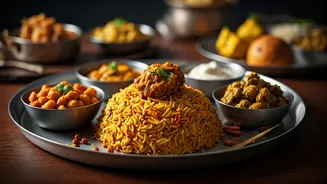
We travel south to the city of Nizams, Hyderabad, a place where food is synonymous with one word: Biryani. [5, 10] But this is not just any biryani. Hyderabadi Biryani is a legacy in a pot, a product of Mughal and Persian influences blending with local Deccani flavours over 400 years. [1, 6, 8] It originated in the royal kitchens of the Nizams, who were renowned for their lavish feasts and refined palates. [5, 8, 10] What makes it a journey is the 'dum pukht' method of cooking, where raw, marinated meat is layered with fragrant, long-grain Basmati rice and slow-cooked in a sealed pot. [1, 5] This process requires immense patience and precision, allowing the meat to cook in its own juices and the rice to absorb every nuance of the saffron, mint, and secret spice blends. [1, 6] With each spoonful, you taste the opulence of the Nizam courts, the richness of a culture that made Hyderabad the center of South Asian arts, and the history of a dish perfected over centuries. [5, 8]
A Coastal Detour: The Shores of Goa
From the grandeur of Hyderabad, our road trip veers west to the sun-kissed beaches and swaying palms of Goa. The cuisine here is a vibrant blend of its Konkani roots and over 450 years of Portuguese influence. [7, 9] The Portuguese introduced potatoes, tomatoes, chillies, and, most importantly, vinegar, an ingredient that gives Goan Catholic cuisine its distinct tang. [7, 9, 16] A plate of Goan fish curry is like tasting the sea itself, with coconut milk tempering the spices in a way that is unique to India's coastal belts. [7, 28] But to truly travel through Goan history, you must taste Vindaloo. The name itself is a journey, derived from the Portuguese 'carne de vinha d'alhos' (meat with wine and garlic). [11, 16] In Goa, the wine was replaced with palm vinegar, and the dish was infused with a fiery blend of local spices. [16] It’s a dish that speaks of trade routes, colonial history, and the beautiful fusion that occurs when cultures meet on a plate. [9, 11]
The Grand Finale: A Feast in Kashmir
Our final destination is the majestic valley of Kashmir, where a meal can become a grand ceremony. The Wazwan is not just a collection of dishes but an elaborate, multi-course feast that is considered an art form and a point of pride in Kashmiri identity. [2, 19] Its origins trace back centuries to the arrival of chefs from Central Asia, who blended their techniques with the rich spices of the valley. [12, 17, 18] A traditional Wazwan can have up to 36 courses, most of which are meat-based, and is served on a large copper platter called a 'traemi'. [2, 12, 19] Dishes like the fiery Rista (meatballs in a paprika-saffron gravy) and the creamy Gushtaba (meatballs in a yogurt gravy) showcase the mastery of the 'wazas' (chefs). [19] The Gushtaba traditionally signals the end of the feast. [18, 19] To partake in a Wazwan is to experience Kashmiri hospitality at its most generous and to connect with a culinary legacy preserved lovingly for generations. [2, 17]