
The Moon's Frozen Gold Rush
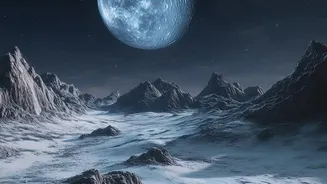
The Moon’s south pole is the focus of a new global space race for one simple reason: its permanently shadowed craters. These are some of the coldest places in the solar system, where sunlight has never reached. This extreme cold has allowed them to act
as cosmic cold traps, preserving water ice for potentially billions of years, likely delivered by comets and asteroids. This isn't liquid water, but frozen deposits mixed with lunar soil (regolith). For space agencies like NASA, ISRO, and others, this ice is as good as gold. Knowing exactly where these deposits are, how deep they go, and how pure they are is the most critical piece of information needed before committing to a multi-billion-dollar lunar outpost.
Solving an Impossible Logistics Problem
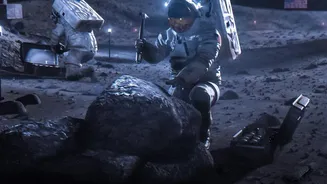
Building a base anywhere is a logistical challenge, but building one on the Moon is a nightmare. Every single kilogram of material, from food to fuel, must be launched from Earth, a process that is astronomically expensive. Water is particularly problematic because it's heavy and humans need a lot of it. Launching all the water needed for a long-term crew is simply not sustainable. This is where In-Situ Resource Utilization (ISRU), or using what's already there, comes in. By harvesting lunar ice, a moon base can become vastly more self-sufficient, breaking its complete reliance on Earth's supply chain and dramatically reducing the cost and complexity of operations.
Water: The Ultimate Lunar Multitool
Lunar water is far more than just a source for drinking. Its true value lies in its versatility. First, it provides the essentials for life support: drinking water and, by splitting the water molecule (H₂O), breathable oxygen. This process, called electrolysis, also yields the second key component: hydrogen. When hydrogen is combined with oxygen, you get a powerful, clean rocket propellant. This means a lunar base could effectively become a refueling station for missions deeper into space, including to Mars. A base that can produce its own water, air, and fuel is one that can truly thrive.
The Race to Draw the Map
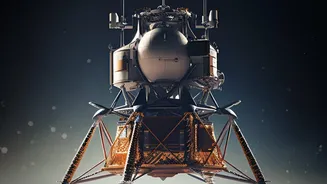
Before any mining can begin, you need a treasure map. That’s why missions from multiple countries are focused on surveying the south pole. Orbiters like NASA’s Lunar Reconnaissance Orbiter and India's Chandrayaan-2 use radar and spectrometers to peer into the dark craters, trying to distinguish the signature of water ice from surrounding rock. More recent studies are even exploring how to use seismic waves from 'moonquakes' to detect ice buried deep beneath the surface. These mapping efforts are designed to answer crucial questions: Where is the ice most concentrated? Is it patchy or in thick sheets? How much regolith do we need to move to get to it? Finding the right spot is everything.
India's South Pole Advantage
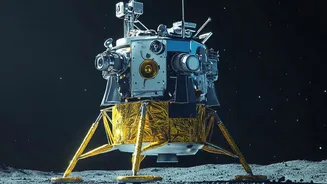
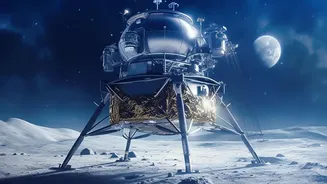
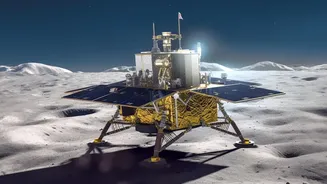
India has placed itself at the forefront of this effort. With the historic landing of Chandrayaan-3 near the south pole in 2023, ISRO became the first agency to successfully soft-land in this challenging and highly sought-after region. The data collected by both Chandrayaan-3 on the surface and its predecessor, Chandrayaan-2, in orbit is proving invaluable. Recent findings from Chandrayaan-2's radar, for instance, have suggested the presence of significant subsurface ice, adding crucial detail to the global map. This pioneering work not only boosts India’s standing in the global space community but also provides vital ground-truth data that helps all nations plan for future landings and resource extraction.