
Long before 'sustainability' became a global buzzword, Indian households perfected the art of recycling. Across the country, worn-out textiles are not discarded but reborn through ingenious and beautiful craft traditions.
Kantha: The Running Stitch of Bengal
In West Bengal and neighbouring
regions, the Kantha tradition breathes new life into old cotton and silk sarees. Women layer several worn-out dhotis or sarees, stitching them together with a simple running stitch, which is the hallmark of this craft. Traditionally, threads were even pulled from old saree borders to be used for the embroidery. This process transforms discarded fabrics into soft, lightweight quilts, wraps, and throws that are both functional and deeply personal. What begins as an act of thrift evolves into an expressive art form, with intricate motifs depicting stories from folklore, nature, and daily life stitched across the fabric. Each Kantha piece, therefore, becomes a canvas of memory and creativity.
Godhadi: Maharashtra's Patchwork of Love
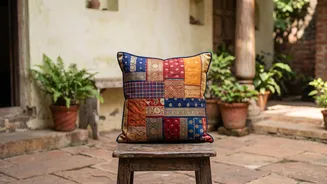
In Maharashtra, the Godhadi is more than just a quilt; it's a multi-layered heirloom of affection and resourcefulness. This craft involves arranging and hand-stitching pieces of old clothing, like sarees and shirts, into a warm and durable blanket. The process is often a communal activity, especially during the summer months when agricultural work is slow. Women gather to layer the fabric scraps and stitch them together, sharing stories as they work. Traditionally made for family members, these quilts are rarely sold, as they are considered a story of love and labour, created to provide comfort and protection for the family. Each Godhadi, rectangular in shape but varying in size for babies or adults, is a unique testament to the ingenuity of rural women.
Sujani: Storytelling Threads of Bihar
The Sujani craft of Bihar is a powerful example of upcycling as a narrative tool. Historically, women in the Muzaffarpur region would layer old, worn-out cotton sarees and dhotis to create soft quilts for newborns. These layers were held together by a fine running stitch that eventually evolved into elaborate embroidered patterns. But Sujani is not just decorative; it's a form of expression. The embroidery often depicts vivid scenes from village life, personal struggles, social issues, and mythological tales, turning a humble blanket into a living archive. The revival of Sujani has also empowered hundreds of women, providing them with a source of income and a voice to articulate their experiences through their art.
Chindi: Weaving Wonders from Waste
The word 'Chindi' literally means 'torn cloth' or 'scrap', and this craft from states like Rajasthan and Gujarat transforms textile waste into vibrant and functional items. Strips of fabric from post-industrial or post-consumer waste are collected, braided, and hand-woven into colourful rugs, mats, bags, and other home essentials. This tradition of frugality and rural ingenuity has created a timeless model of circular design. Known for their durability and riot of colours, Chindi products embody the philosophy that nothing should go to waste, proving that beauty and utility can be woven from what others discard. The craft provides a livelihood for many artisans, particularly women in rural self-help groups.
Panja Dhurrie: Haryana's Woven Legacy
In the villages of Haryana, women have long practised the art of making Panja Dhurries during their free time. This technique uses a tool called a 'panja' (a metallic claw-like instrument) to beat and set the threads in a loom. The raw materials are strips of waste fabric from old clothes, cotton blends, and hand-spun khadi. These fabric strips are woven to create sturdy, flat-woven rugs known as dhurries. The designs often feature bold geometric patterns, motifs of birds, and sometimes human figures. Panja Dhurrie making is a quintessential example of upcycling, representing resourcefulness and the collective creativity of women who turn discarded textiles into striking floor coverings.