




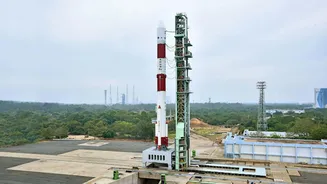
What is the Chandrayaan-4 Mission?
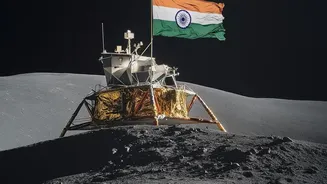
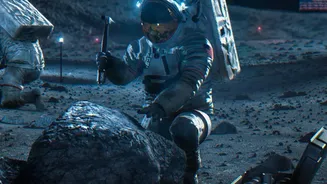
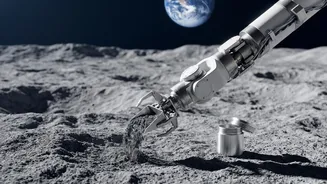
At its core, Chandrayaan-4 is a lunar sample-return mission. This means its primary goal is to land on the Moon's surface, collect samples of lunar soil and rock (regolith), and then successfully return those samples to Earth for scientific analysis.
This is a significant leap in complexity from previous missions. While Chandrayaan-3 proved India's capability to soft-land on the lunar surface, Chandrayaan-4 must demonstrate a round-trip capability, a feat only a handful of nations have ever accomplished. The mission is a crucial stepping stone in India's broader space exploration roadmap, which includes establishing a space station by 2035 and landing an Indian astronaut on the Moon by 2040.
An Immensely Complex Operation
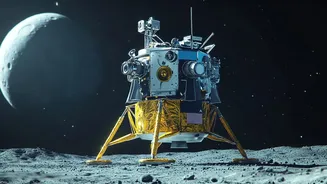
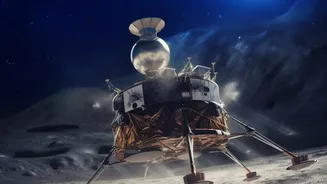
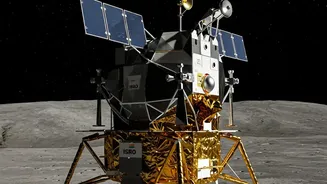
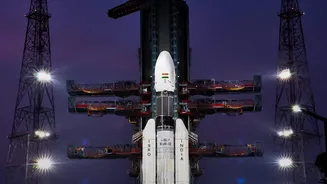
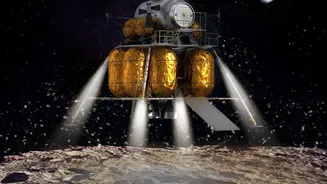
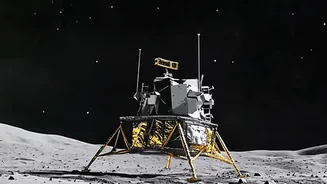
Bringing back lunar soil is exponentially harder than just landing. The mission profile for Chandrayaan-4 is the most intricate ISRO has ever planned. It involves launching multiple modules, some of which will have to be launched separately and docked in space. The mission architecture consists of five key components: a Propulsion Module to travel to the Moon, a Descender Module for the soft landing, an Ascender Module to lift the samples off the lunar surface back into orbit, a Transfer Module to carry the samples towards Earth, and a Re-entry Module to protect the precious cargo as it blazes through our atmosphere. Key new technologies that ISRO must master include launching a vehicle from another celestial body and performing automated docking and sample transfers in lunar orbit.
Why Bring Back Moon Rocks?
The scientific value of pristine lunar samples is immense. Studying them in advanced laboratories on Earth allows for far more detailed analysis than what can be done by a rover. These samples hold clues to the Moon’s origin, its geological history, and the composition of the early solar system. For India, the mission will likely target the lunar south pole, a region of great scientific interest due to the potential presence of water ice in permanently shadowed craters. Analyzing this soil could confirm the presence and accessibility of these resources, which are seen as vital for supporting future long-term human presence on the Moon, potentially providing water to drink, air to breathe, and even rocket fuel.
Joining an Elite Global Club
Successfully completing the Chandrayaan-4 mission will place India in an exclusive group of space-faring nations. To date, only the United States (through its crewed Apollo missions), the former Soviet Union (with its robotic Luna missions), and China (with its Chang'e missions) have managed to bring lunar samples back to Earth. China's recent Chang'e-5 and Chang'e-6 missions, which returned samples from the near and far sides of the Moon respectively, have reignited global interest in such complex robotic missions. For India to develop this capability indigenously marks a new benchmark, confirming its status as a major space power capable of end-to-end interplanetary exploration.
The Foundation for India's Future in Space
Chandrayaan-4 is more than a single mission; it is a technology demonstrator for India's future ambitions. The capabilities mastered here—lunar ascent, orbital rendezvous, automated docking, and high-speed re-entry—are all essential for the ultimate goal of sending Indian astronauts to the Moon and bringing them back safely. This mission directly feeds into Prime Minister Narendra Modi's vision of having a 'Bharatiya Antariksha Station' (Indian Space Station) by 2035 and landing an Indian on the Moon by 2040. By proving these technologies now with a robotic mission, ISRO is methodically building the expertise and confidence needed for the even greater challenge of human spaceflight beyond Earth's orbit.