







For generations, Kolkata has been affectionately called the 'London of India'. This title isn't just a casual comparison; it's a direct reference to a specific period in history when the city was the epicentre of British power in Asia.
The Empire’s Second City
The story begins
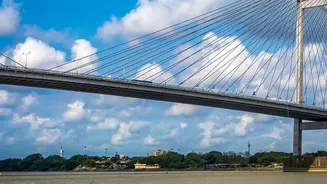
when the British East India Company established a trading post in 1690. Over the next century, Calcutta, as it was then known, grew exponentially. In 1772, it was declared the capital of British India, a status it held until 1911. This elevation made Calcutta the most important city in the British Empire after London itself. As the administrative, political, and economic heart of the Raj, it was consciously developed to mirror the grandeur of the imperial capital. The city's location on the Hooghly River was also compared to London's on the Thames, with both rivers serving as vital arteries for trade and commerce.
A Symphony in Stone and Marble
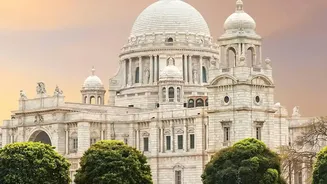
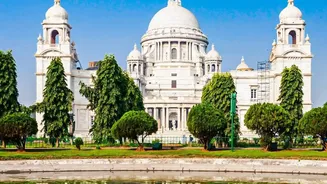
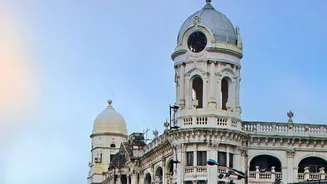
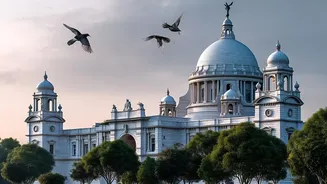
Perhaps the most visible reason for the nickname is Kolkata’s stunning colonial architecture. The British built grand monuments and public buildings in a variety of European styles, including Neoclassical, Gothic, and Victorian. The Victoria Memorial, a magnificent white marble monument to Queen Victoria, is arguably the city's most iconic landmark, blending British and Mughal architectural styles. Other prominent examples include the Indo-Gothic St. Paul’s Cathedral, the neoclassical Raj Bhavan (the former Government House), and the striking General Post Office with its towering dome. These structures, many of which still stand, created a cityscape that strongly resembled the avenues of London.
An Intellectual and Cultural Hub
The comparison went beyond buildings. The British established numerous cultural and educational institutions that mirrored those in London. Calcutta became the intellectual centre of the subcontinent, fostering a unique culture that blended European traditions with Indian philosophies. The establishment of the Calcutta High Court in 1862, the oldest in India, and institutions like the Indian Museum (1814) and the National Library underscored the city's importance. Exclusive social clubs, such as the Bengal Club and the Royal Calcutta Golf Club, the oldest outside of Britain, were also modelled on their London counterparts, further cementing the cultural parallels.
The Legacy of the 'London of India'
While the nickname is rooted in its colonial past, it speaks to a specific chapter in Kolkata's long history. The tram system, the city's planning in older districts, and the enduring presence of colonial-era buildings continue to evoke a sense of that time. However, it's crucial to acknowledge that these architectural marvels were built during a period of foreign rule. They stand as a testament to a complex history of power, influence, and cultural exchange. Today, Kolkata is a city with its own vibrant and distinct identity, profoundly shaped by Bengali culture, the Bengal Renaissance, and its post-independence journey. The ‘London of India’ moniker remains a powerful reminder of the historical forces that transformed a collection of villages into the second city of the British Empire.