



The Golden Grandeur of the South
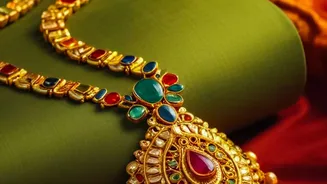
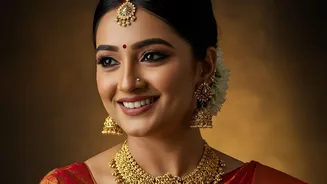
South Indian bridal jewellery is defined by its devotion to gold and tradition. The quintessential style is 'temple jewellery', inspired by ornaments created for deities in temples across Tamil Nadu, Andhra Pradesh, and Karnataka. These pieces, crafted
from rich 22K gold with an antique finish, feature motifs of gods and goddesses like Lakshmi, along with peacocks, lotuses, and mangoes. Key items include the 'Vaddanam' or 'Oddiyanam', an elaborate waist belt worn over the saree, the 'Vanki', a V-shaped armlet, layered 'Haarams' (long necklaces), and the 'Nethi Chutti' adorning the forehead. This jewellery isn't just ornamental; it’s a symbol of prosperity and divine blessing.
The Royal Splendour of Rajasthan
Drawing from its royal Mughal and Rajput history, Rajasthani bridal jewellery is synonymous with opulence. The most famous craft is 'Kundan', a technique of setting precious stones and glass in highly refined gold foil. Equally prized is 'Polki', which uses uncut, unpolished diamonds for a natural, vintage sparkle. A signature piece is the 'Borla', a distinctive spherical maang tikka worn at the hairline. Brides are also adorned with elaborate chokers, long 'Rani Haars', and 'Haath Phool', a delicate hand ornament connecting a bracelet to rings. Often, the reverse side of Kundan pieces features 'Meenakari'—vibrant enamel work—making the jewellery beautiful from every angle.
The Vibrant Traditions of Punjab
A Punjabi bride's look is iconic and deeply symbolic. The most recognisable elements are the 'Chooda' and 'Kaleere'. The Chooda is a set of red and white bangles, gifted by the bride's maternal uncle and worn for a period after the wedding as a sign of her new marital status. Tied to the Chooda are the 'Kaleere', beautiful umbrella-shaped ornaments that are a blessing from her family. Other key pieces include a large 'Maang Tikka' often paired with a 'Passa' or 'Jhoomar' (a fan-shaped ornament worn on the side of the head), a prominent 'Nath' (nose ring), and layered gold necklaces.
The Unique Charm of Maharashtra
Maharashtrian bridal jewellery offers a distinct aesthetic that is both elegant and deeply rooted in local customs. The most iconic piece is the 'Nath', a crescent-shaped nose ring, often made of pearls, which is unique to the region. Brides also wear a 'Mundavalya', a delicate string of pearls or gold beads worn across the forehead by both the bride and groom. Necklaces include the 'Thushi', a choker-style necklace made of tiny gold beads, and the 'Kolhapuri Saaj', a traditional long necklace symbolizing marital bliss. Green glass bangles are typically worn alongside gold ones, representing fertility and new beginnings.
The Artistic Soul of Bengal
Bengali bridal jewellery is a beautiful blend of artistry and symbolism. The most essential pieces for a married woman are the 'Shakha' and 'Pola'—bangles made from white conch shell and red coral, respectively. These are worn with a 'Loha', an iron bangle often plated with gold, signifying marital strength. The bridal look is further enhanced with a 'Sita Haar', a long, layered gold necklace, and a 'Chik', which is a close-fitting choker. A 'Tikli' adorns the forehead, similar to a maang tikka, while large, ornate 'Jhumkas' (bell-shaped earrings) complete the quintessential graceful and elaborate Bengali bridal appearance.