







Your Senses Under Pressure
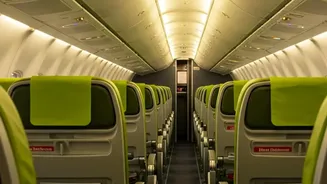
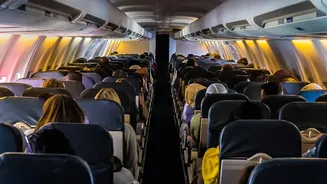
The moment you step onto a plane, your ability to taste and smell begins to change. At a cruising altitude of 35,000 feet, the cabin is pressurized to the equivalent of about 8,000 feet above sea level. This lower pressure, combined with humidity levels
that can dip below 12%—drier than most deserts—wreaks havoc on your sensory perception. The dry air immediately begins to dry out your nasal passages, which is a major problem because smell accounts for up to 80% of what we perceive as flavor. With your olfactory receptors handicapped, it becomes much harder to detect the complex aromas that make food enjoyable.
When Sweet and Salty Go Quiet
The challenges don't stop at your nose. The combination of low pressure and low humidity also dulls your taste buds. Seminal research conducted for German airline Lufthansa found that in a simulated cabin environment, our perception of sweet and salty flavors drops by as much as 30 percent. This is why a dish that was perfectly seasoned on the ground can taste strangely flat in the air. To make matters worse, the constant drone of the jet engines, which can reach 85 decibels, has been shown to further suppress the perception of sweetness. Your dessert isn't less sweet; your ability to taste its sweetness is simply turned down.
Umami: The Flavor That Fights Back
Amidst this sensory assault, one hero emerges: umami. Often described as the fifth taste, umami is the savory, rich, and meaty flavor found in foods like tomatoes, mushrooms, aged cheeses, and soy sauce. While cabin conditions mute sweet and salty tastes, the perception of umami remains stable and, in some cases, is even enhanced. Studies have found that the same loud background noise that suppresses sweetness actually boosts our perception of umami. This is a key reason why so many travelers find themselves craving a Bloody Mary or a simple glass of tomato juice on a flight, even if they rarely drink it on the ground. The high umami content cuts through the sensory fog, delivering a satisfying and robust flavor.
Engineering the In-Flight Menu
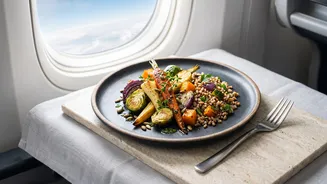
Airlines and their caterers are well aware of this phenomenon and have been engineering their menus accordingly for years. They aren't just reheating bland food; they're engaged in a form of culinary science. To compensate for their passengers' dulled palates, they intentionally add more seasoning and focus on ingredients that are naturally rich in umami. You'll often find in_flight menus featuring dishes with tomato_based sauces, mushroom gravies, parmesan cheese, and soy_infused recipes. These ingredients are chosen not just for their taste on the ground, but for their resilience and ability to deliver a flavorful punch in the uniquely challenging environment of an airplane cabin.