




The Challenge of Looking Up
For most of humanity, the full glory of the night sky is a distant memory or something seen only in pictures. Our planet's atmosphere, the very air we breathe, is a constant obstacle for astronomers. It's like trying to see a detailed painting through
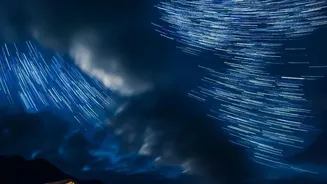
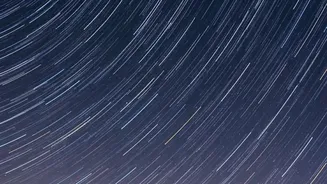
a thick, shimmering curtain of water. Light from distant stars and galaxies has to travel trillions of kilometres, only to be distorted in the final few moments of its journey as it passes through our air. This distortion, known to astronomers as 'seeing', is caused by atmospheric turbulence—pockets of air with different temperatures and densities that bend and scatter light. This is what makes stars appear to twinkle. While poetic, twinkling is the enemy of clarity, blurring fine details and making faint objects invisible. For a truly clear view, you need to get above as much of that turbulence as possible.
The Altitude Advantage
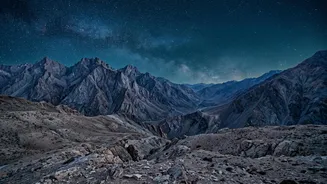
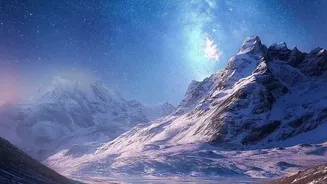
This is where Spiti Valley's geography begins to work its magic. With many of its villages and viewing spots like Langza and Kibber situated above 4,000 metres (over 13,000 feet), you are physically positioned above a significant portion of the densest, most turbulent layer of Earth's atmosphere. Think of it as climbing a ladder to look over a crowd. At this height, the air is thinner, containing less dust, pollution, and haze to obscure the view. The less air the starlight has to travel through, the less it gets distorted, resulting in sharper, more stable images. This is why major scientific observatories are built on high mountains. Spiti effectively turns the entire valley into a natural observatory, offering conditions that dramatically reduce the atmospheric 'seeing' effect and let the stars shine steadily.
The Secret of the Cold Desert
Altitude is only part of the equation. Spiti Valley is a cold desert, a crucial factor for astronomical clarity. Its location in the rain shadow of the Himalayas means it receives very little rainfall, resulting in extremely low humidity. Water vapour in the atmosphere is a major problem for stargazers; it scatters and absorbs light, creating a hazy, washed-out view that reduces contrast and makes it hard to see faint celestial objects like nebulae. The dry, crisp air of Spiti means that the transparency of the sky—its clearness—is exceptionally high. This combination of high altitude and low humidity is rare and creates an environment where the sky is not only stable but also incredibly clear, allowing for breathtaking views of the Milky Way.
An Escape from the Glow
The final, critical ingredient for Spiti's celestial theatre is its profound darkness. The valley is remote and sparsely populated, hundreds of kilometres from the nearest major city. This isolation means it is almost entirely free from light pollution, the pervasive glow from cities that now obscures the stars for over 80% of the world's population. In most populated areas, this artificial skyglow washes out all but the brightest stars and planets. In Spiti, particularly in villages like Langza, Kibber, and near Chandratal Lake, the darkness is absolute. With villages running mostly on limited solar power and little to no public street lighting, the skies achieve a Bortle Scale rating of 1-2, a measure of pristine darkness usually reserved for the world's most remote dark-sky preserves.
A Perfect Cosmic Storm
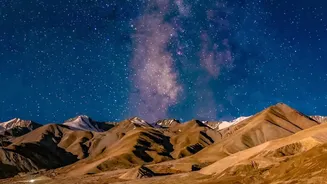
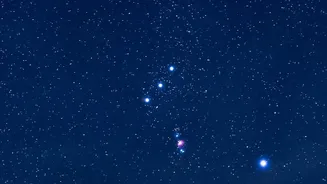
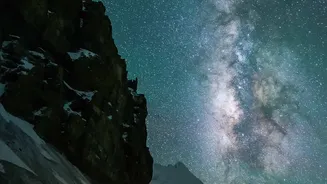
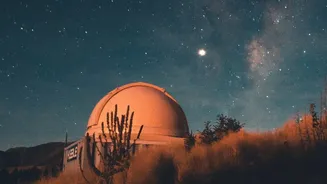
It is the combination of these three factors—high altitude, low humidity, and profound darkness—that elevates Spiti Valley into a premier stargazing destination. Each element enhances the others. The altitude gets you above the atmospheric turbulence, the dry desert air ensures that what little atmosphere remains is transparent, and the lack of light pollution provides a perfect black canvas. This trifecta allows the Milky Way to be seen not as a faint smudge, but as a brilliant, textured band of light stretching across the sky, visible to the naked eye. The growing interest in astro-tourism, including a community-run stargazing facility in Kaza, is a testament to these world-class conditions, allowing visitors to experience the universe in a way that is simply not possible from anywhere else.