





First, What is a Karat?
Before diving into 22K versus 24K, it's essential to understand the term 'Karat' (K). A karat is the unit used to measure the purity of gold. The system is based on a scale of 24 parts. So, if a piece of gold is 24K, it means all 24 parts of the metal
are pure gold. This shouldn't be confused with 'carat,' which is a unit of weight for gemstones like diamonds. The formula is simple: to find the purity percentage, you divide the karat number by 24 and multiply by 100.
24K Gold: The Purest Form
24K gold is the purest gold you can buy, boasting a purity of 99.9%. Because it contains no other metals, it has a distinct, bright yellow colour and is the most valuable form per gram. However, this purity comes with a downside: softness. 24K gold is extremely malleable and prone to bending and scratching, making it unsuitable for most forms of daily-wear jewellery. For this reason, 24K gold is primarily used for investment purposes, such as gold coins and bars, where durability is not a primary concern.
22K Gold: The Jewellery Standard
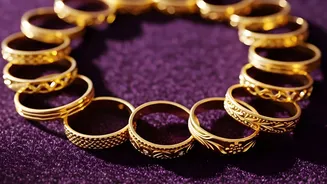
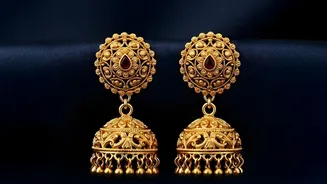
22K gold is what most traditional gold jewellery in India is made from. It consists of 22 parts pure gold and 2 parts other metals, making it 91.67% pure gold. This is why you'll often see 22K gold referred to as '916 gold'. The additional metals, typically copper, silver, or zinc, are added as alloys to increase the gold's strength and durability. This alloy makes the gold hard enough to be crafted into intricate designs and withstand the rigours of everyday wear, something pure 24K gold cannot do. While still possessing a rich golden hue, it is slightly less expensive than 24K gold due to the lower gold content.
Key Differences at a Glance
Choosing between 22K and 24K gold depends entirely on your purpose. For Purity and Investment: 24K is the winner. It's the purest form and considered the best for investment as you get the most gold for the weight. For Durability and Jewellery: 22K is the preferred choice. The added alloys provide the necessary strength for jewellery that will be worn regularly, from bangles to necklaces. For Colour: 24K gold has a brighter, more intense yellow shine due to its purity. 22K gold has a slightly less vibrant but still rich, warm tone. Price: 24K gold is always more expensive per gram than 22K gold because it contains more pure gold.
How to Verify Purity: Look for the BIS Hallmark
To protect consumers, the Bureau of Indian Standards (BIS) operates a hallmarking system for gold jewellery sold in India. Since 2021, hallmarking has become mandatory for jewellers selling 14K, 18K, and 22K gold items. A genuine BIS hallmark on a piece of gold jewellery will include a few key components: the BIS logo (a triangle), the purity grade (e.g., 22K916 for 22K gold), and a six-digit alphanumeric Hallmark Unique Identification (HUID) number. Always look for this mark when purchasing gold to ensure you are getting the purity you are paying for.