



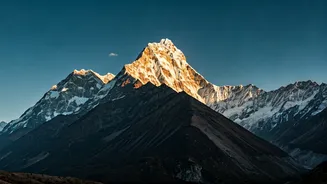


The Science of a Dry Sanctuary
The magic behind Spiti's dry climate is a phenomenon called the 'rain shadow' effect. When the moisture-laden monsoon clouds travel north from the Indian Ocean, they encounter the colossal Himalayan mountain ranges. Forced to rise, the air cools, and
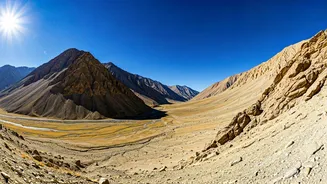
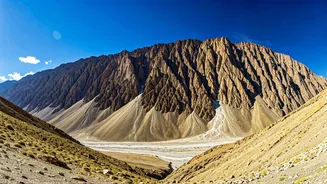
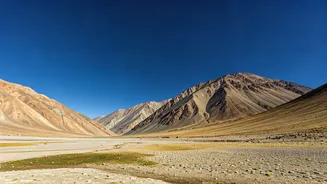
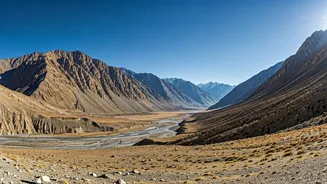
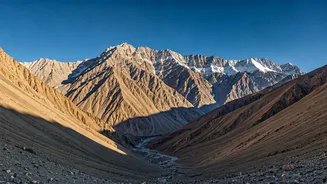
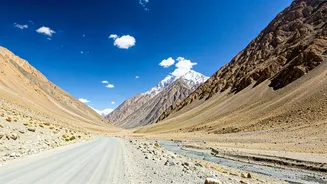
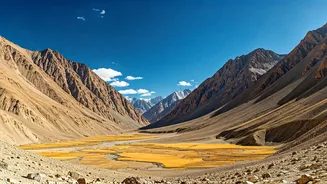
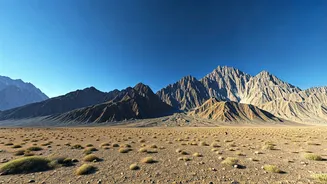
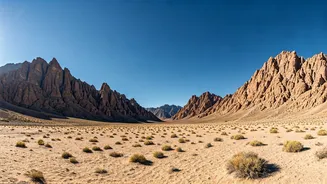
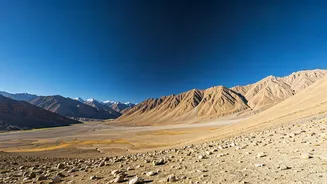
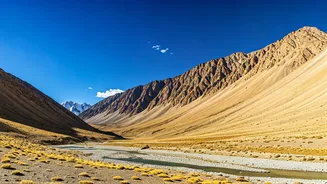
the moisture condenses, dumping heavy rain on the windward, or southern, side of the mountains. By the time the clouds crest these massive peaks and descend into Spiti on the leeward side, they have shed most of their moisture. This leaves the valley arid and sunny while other regions are inundated. Spiti is classified as a cold desert, receiving less than 50 mm of annual rainfall, making it a reliable dry haven during the monsoon months of July and August.
Spiti’s Himalayan Shield
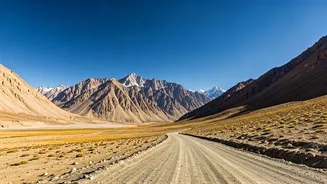
Spiti Valley is geographically shielded by the Pir Panjal and the main Great Himalayan ranges to its south. These towering mountain walls act as a formidable barrier, effectively blocking the advance of the southwest monsoon. While areas like Shimla and Manali on the approach to Spiti receive significant rainfall, the valley itself remains largely untouched. This unique positioning is what creates the starkly beautiful, barren landscapes that define Spiti—a world of high-altitude desert, deep canyons, and windswept terrain that feels a world away from the lush, green slopes of the lower Himalayas. The result is a travel window in July and August when the valley is at its most accessible, with clear skies and comfortable daytime temperatures.
What a Monsoon Trip Looks Like
Visiting Spiti during the monsoon season offers a unique experience. With the rest of the Himalayas often hard to access, Spiti sees fewer crowds, leading to a more serene and personal journey. While the valley itself is dry, you will witness the dramatic effects of the monsoon on your way there, with lush green valleys in Kinnaur and potential water crossings on the roads. The weather in Spiti is typically pleasant, with daytime temperatures in Kaza hovering between 20-25°C, though nights are cold. This season is perfect for exploring ancient monasteries like Key and Tabo, visiting the high-altitude villages of Komic and Hikkim, and witnessing the turquoise brilliance of Chandratal Lake under sunny skies.
Planning Your High-Altitude Escape
While Spiti itself is dry, the journey requires careful planning. The approach roads, particularly from Manali, can be affected by landslides and swollen streams caused by rain in the lower ranges. For this reason, the route via Shimla and Kinnaur is often considered more stable and reliable during monsoon. High altitude is another crucial factor. Acclimatisation is essential, so plan your itinerary to allow for gradual ascent. Pack layers: warm jackets and thermals for the cold nights and mornings, along with sun protection like hats and sunscreen for the intensely strong daytime sun at high altitude. Keep your itinerary flexible and include a buffer day or two to account for any potential road delays.