







The Sun’s Explosive Secret
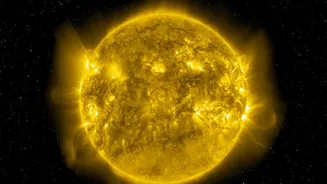
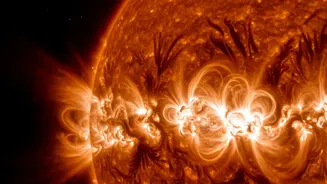
Imagine tightly twisting a pair of rubber bands until they suddenly snap and violently unravel. This is a simplified way to think about magnetic reconnection on the Sun. The Sun is threaded with countless powerful magnetic field lines, which are constantly
moving, twisting, and stretching. When oppositely directed field lines get too close, they can break apart and rapidly reconnect in a new configuration. This process converts immense amounts of stored magnetic energy into heat and kinetic energy, explosively accelerating plasma and radiation out into space. This single phenomenon is the engine behind some of the most dramatic events in our solar system, including solar flares and Coronal Mass Ejections (CMEs). For decades, the exact mechanisms have been a puzzle, but a new eye in the sky is changing that.
India's Eye on the Sun
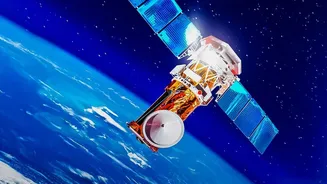
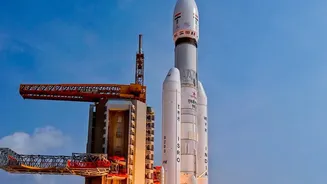
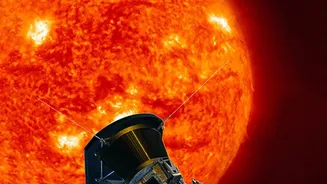
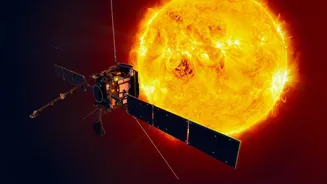
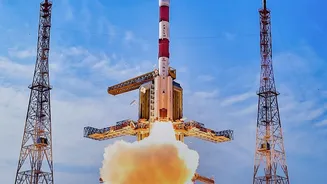
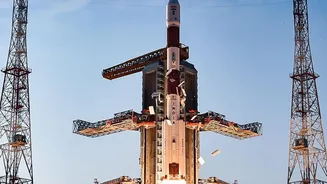
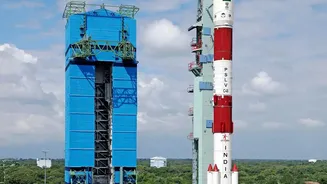
Enter Aditya-L1, the Indian Space Research Organisation's (ISRO) first dedicated solar observatory. Launched in 2023, the spacecraft is strategically positioned at Lagrange Point 1 (L1), a gravitationally stable spot 1.5 million kilometres from Earth. This vantage point gives it an uninterrupted view of the Sun, free from the interference of Earth's magnetic field and atmosphere. Aditya-L1 is equipped with a suite of seven advanced instruments, four for remote sensing the Sun and three for in-situ measurements. Payloads like the Solar Ultraviolet Imaging Telescope (SUIT) and the Magnetometer (MAG) are designed specifically to observe the Sun's atmosphere and magnetic field in unprecedented detail, providing a stream of crucial data back to scientists on Earth.
A Breakthrough Observation
Recent findings from Aditya-L1 have offered profound new insights. During major solar storms in 2024, data from the spacecraft's magnetometer helped scientists observe magnetic reconnection happening within a Coronal Mass Ejection itself, as two CMEs collided in space. The observations, made in coordination with other international spacecraft, showed magnetic field lines snapping and rejoining inside the storm, making its impact much stronger than anticipated. In another first, the SUIT instrument captured small, short-lived bright spots in the hours leading up to a major flare, clustered around the very location the flare would later erupt. These 'pre-flare transients' are believed to be the signature of small-scale energy releases that destabilise the magnetic field, acting as an early warning sign. This provides a direct link between the Sun's magnetic activity and its explosive outbursts.
Why It Matters for Earth
Understanding magnetic reconnection isn't just an academic exercise; it has a direct impact on our technologically dependent world. The solar flares and CMEs powered by this process are the primary drivers of space weather. When aimed at Earth, these eruptions can have serious consequences. They can trigger geomagnetic storms that disrupt our planet's magnetic field, potentially damaging power grids and leading to widespread blackouts, as happened in Quebec in 1989. The charged particles and radiation can harm crucial communications and GPS satellites, affect high-frequency radio signals used by aircraft, and pose a risk to astronauts in orbit. By providing better data on the mechanics of these events, Aditya-L1 is helping scientists build more reliable forecasting models for space weather.