







What is Microgravity and Why Does It Matter?
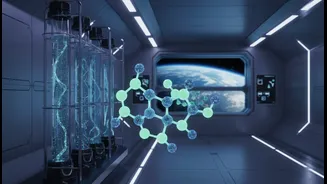
Microgravity is a state of near-weightlessness, like that experienced by astronauts on the International Space Station (ISS). On Earth, gravity influences everything. It causes denser materials to sink and lighter ones to rise, a process called convection,
and it creates sedimentation. In microgravity, these effects virtually disappear. This unique environment allows scientists to study the fundamental behaviour of materials and biological systems in a way that is impossible on the ground. Research in microgravity can lead to breakthroughs in medicine, materials science, and agriculture. For example, it allows for the growth of more perfect protein crystals for drug development, the creation of unique metal alloys, and a deeper understanding of how flames burn without convection.
ISRO's Invitation to a New Generation
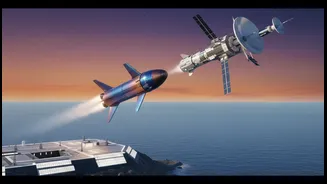
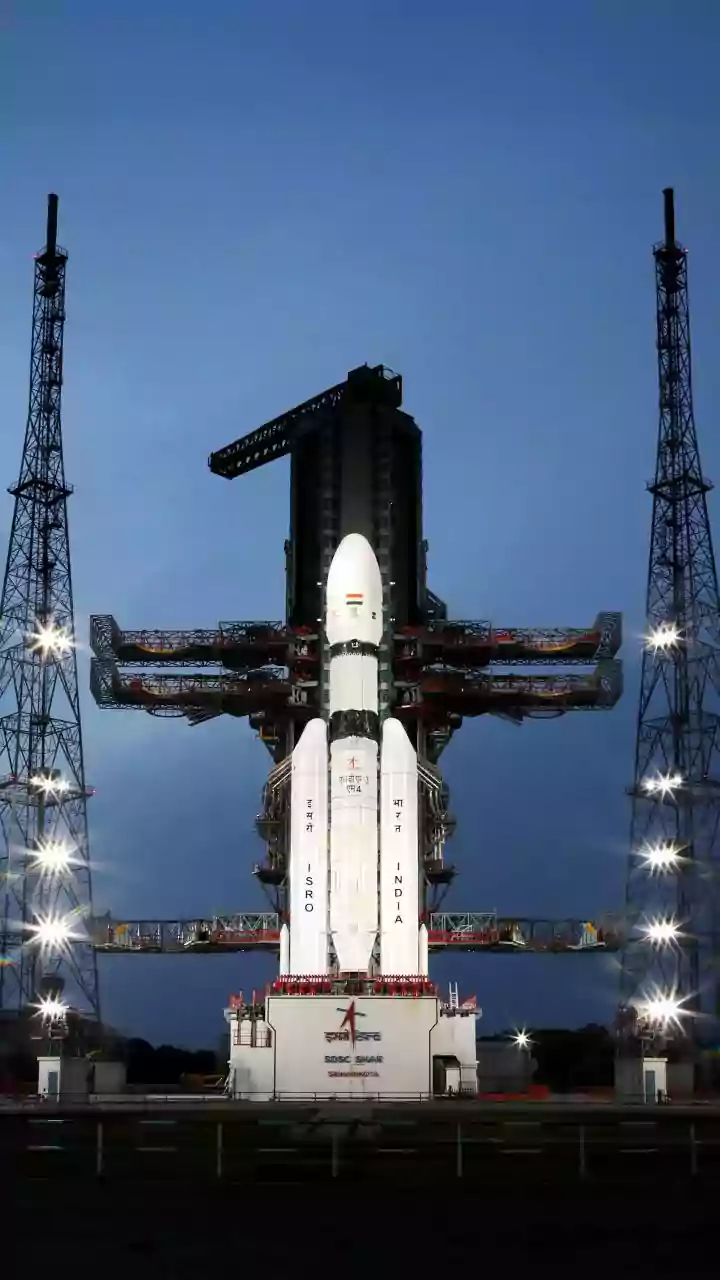
Historically, access to space was limited to a select few scientists and engineers within government agencies. ISRO is changing this narrative. Through a series of structured initiatives, the agency is democratising access to space, particularly for students and academic institutions. A key part of this push is providing low-cost platforms for in-orbit experiments. One of the most innovative examples is the PSLV Orbital Experimental Module, or POEM. This platform cleverly repurposes the final spent stage of a PSLV rocket, which would otherwise become space debris, turning it into a stabilised orbiting laboratory for scientific payloads. This allows student-developed experiments to be launched and tested in space at a fraction of the traditional cost, providing invaluable hands-on experience.
From Classroom Theory to Orbiting Experiments
The path from a university lab to space is now clearer than ever. Through programs like the Indian Microgravity Experiments (IMEx-2026), ISRO is actively inviting proposals from the Indian research community, including students, for experiments in disciplines ranging from space biology to in-space manufacturing. The agency provides mentorship, technical guidance, and launch opportunities. Already, 11 student-built satellites and payloads have been successfully launched under the guidance of the Indian National Space Promotion and Authorisation Centre (IN-SPACe). These projects, involving universities from across the country, allow students to move beyond textbooks and engage with the real-world challenges of designing, building, and operating hardware for the harsh environment of space. This hands-on involvement is crucial for building a skilled workforce.
The New Horizon of Space Careers
This focus on microgravity research is cultivating a new generation of professionals with highly specialised skills. The experience gained from developing these orbiting experiments directly translates into careers that were once niche but are now central to the growing private space economy. Students are developing expertise in fields like space pharmacology, advanced materials manufacturing, fluid physics, and sustainable agriculture for future space missions. These are not just roles at ISRO. As India aims to increase its share of the global space economy, a robust ecosystem of startups and private companies is emerging, all in need of talent with practical space technology experience. Careers can range from being a space systems engineer to a research scientist specialising in the effects of microgravity on biological systems.
A Multidisciplinary Frontier Beyond Engineering
The call for space explorers is no longer limited to engineers and pilots. The field of microgravity research is inherently multidisciplinary. Biologists and medical researchers are needed to study how human cells, plants, and other organisms adapt to space, which is critical for long-duration human spaceflight. Physicists and chemists can explore novel material properties that only reveal themselves in the absence of gravity. This expansion opens doors for students from a wider range of science, technology, engineering, and mathematics (STEM) backgrounds to contribute to India's space ambitions. ISRO's outreach activities, internships, and workshops are designed to foster this collaborative environment, building a self-sustaining ecosystem for space research in India.