




The Quest for Cheaper Spaceflight
For decades, launching a satellite into orbit was like buying a brand-new car for a single trip and then throwing it away. Rockets, the incredibly complex and expensive machines that propel payloads into space, have traditionally been single-use. This
expendable model makes space access prohibitively expensive. This is where a Reusable Launch Vehicle, or RLV, changes the entire equation. An RLV is designed to fly to space, deploy its payload, re-enter the atmosphere, and land back on Earth, ready to be refurbished for another mission. By reusing the most expensive components, ISRO aims to dramatically reduce the cost of launching satellites, with some estimates suggesting a potential reduction of up to 80%. This makes India not just a space-faring nation, but a competitive player in the multi-billion dollar global satellite launch market.
Pushpak's Perfect Landing
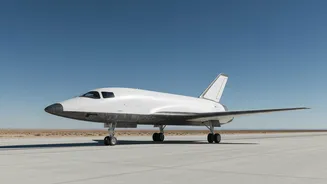
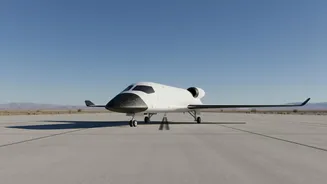
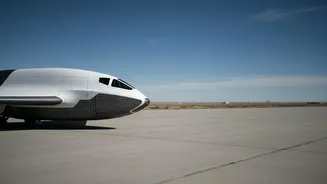
The latest in a series of critical tests is the Landing Experiment, or LEX. In a recent demonstration, the winged RLV prototype, aptly named 'Pushpak', was carried to an altitude of 4.5 kilometres by an Indian Air Force Chinook helicopter and released. From there, Pushpak was on its own. Simulating the return from space, the vehicle autonomously navigated its way to a runway at the Aeronautical Test Range in Chitradurga, Karnataka. It executed complex manoeuvres, corrected its course for wind conditions, and performed a flawless, high-speed horizontal landing at over 320 kmph. This hat-trick of successful landing tests, each progressively more challenging, has validated ISRO's mastery over the critical autonomous landing phase, a make-or-break technology for any reusable spaceplane. Notably, the vehicle and its flight systems were reused from a previous test, proving the robustness of the design.
From Ancient Myth to Modern Marvel
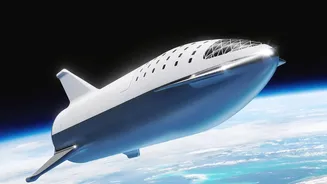
The name 'Pushpak' is a nod to the Pushpaka Vimana, the mythical flying palace or chariot from the Hindu epic Ramayana, capable of travelling between worlds. This naming choice beautifully bridges India's rich cultural heritage with its futuristic scientific ambitions. The modern Pushpak is a technology demonstrator, a stepping stone towards a fully operational Two-Stage-to-Orbit (TSTO) launch vehicle. The current design resembles a spaceplane, combining the complexity of a rocket with the functionality of an aircraft. This winged body approach is ISRO's chosen path, different from the vertical landing rocket boosters popularised by companies like SpaceX, and focuses on horizontal runway landings.
The Economic Game-Changer
The primary driver behind the RLV programme is economics. By making space access more affordable, ISRO unlocks a new world of commercial opportunities. A lower launch cost makes India an attractive destination for international companies looking to send their satellites into orbit. It also makes domestic space applications—from telecommunications and Earth observation to weather forecasting and navigation—more sustainable and expandable. The goal is to bring the cost of sending one kilogram of payload to Low Earth Orbit down significantly, potentially by a factor of ten. This will not only boost India’s share of the global space economy but also spur indigenous technological development and create new high-tech jobs.
The Road Ahead to Orbit
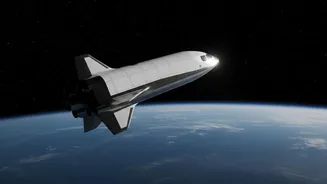
While the successful landing experiments are a massive achievement, they are part of a longer journey. The LEX missions have perfected the landing, but the next major hurdle is the orbital re-entry. The upcoming phase, the Orbital Re-entry Vehicle (ORV) experiment, will see a larger version of Pushpak launched into orbit on a conventional rocket. After spending time in space, it will have to autonomously deorbit, survive the fiery re-entry into Earth's atmosphere, and glide back for a runway landing. This will test crucial technologies like heat shields and hypersonic aerodynamics under real-world conditions. Successfully mastering this stage will bring ISRO one giant leap closer to its goal: an operational, fully reusable Indian launch vehicle.