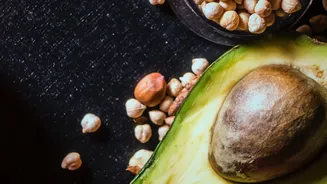



Chickpeas and avocados have become superstars of the modern Indian kitchen, celebrated for their versatility and health benefits. But while both deserve a place on your plate, they play vastly different nutritional roles. Here's a look at how.
The Macronutrient Match-Up
The most
significant difference lies in their macronutrient composition. Chickpeas (or chana) are primarily a source of carbohydrates and plant-based protein. A 100-gram serving of cooked chickpeas offers roughly 8-9 grams of protein and about 27 grams of carbs, making them a fantastic source of steady energy. The protein and fibre work together to slow digestion, which helps promote a feeling of fullness. On the other hand, avocado's profile is dominated by fat—specifically, healthy monounsaturated fat. A 100-gram serving contains about 15 grams of fat and very little protein, at around 2 grams. This makes avocado a source of rich, satisfying calories that support heart health, but it doesn't serve the same muscle-building or high-protein role as chickpeas.
Fibre Content and Digestive Health
Both foods are excellent sources of dietary fibre, but chickpeas have a slight edge. A 100-gram serving of cooked chickpeas provides around 7-8 grams of fibre, which is crucial for maintaining digestive regularity and feeding beneficial gut bacteria. This high fibre content also helps manage blood sugar levels by slowing the absorption of carbohydrates. Avocados are also rich in fibre, offering about 7 grams per 100-gram serving. This fibre aids in preventing constipation and contributes to a feeling of satiety, which can assist with weight management. The key difference is that the fibre in chickpeas is paired with complex carbs and protein, while the fibre in avocados is delivered alongside healthy fats.
The Vitamin and Mineral Divide
When it comes to micronutrients, each food shines in different areas. Chickpeas are nutritional powerhouses for certain minerals and B vitamins. They are an excellent source of manganese, a mineral essential for bone formation and metabolism, and are particularly rich in folate (vitamin B9), which is vital for cell growth and brain function. They also provide significant amounts of iron and magnesium. Avocados, in contrast, are celebrated for their high potassium content—even more than a banana—which helps regulate blood pressure. They are also packed with Vitamin K, crucial for bone health, and Vitamin E, a powerful antioxidant that protects cells from damage and supports skin health.
Caloric Density and Usage
On a gram_for_gram basis, the calorie counts for cooked chickpeas and raw avocado are surprisingly similar, with both hovering around 160_165 calories per 100 grams. However, the source of these calories dictates their role. The calories in chickpeas come from a balanced mix of carbs and protein, positioning them as a substantial base for a meal, like in a chana masala or a hearty salad. Avocados are much more calorie_dense due to their high fat content. This makes them an ideal 'add_on' to boost the richness and nutrient value of a dish—think a few slices on toast or mixed into a salad—but a larger portion can quickly increase the calorie count of a meal.
Better Together: The Perfect Pairing
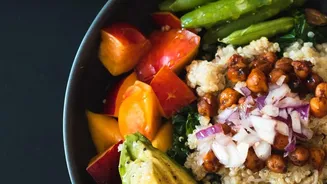
Instead of viewing them as competitors, it's best to see chickpeas and avocados as perfect nutritional partners. The protein and carbohydrates in chickpeas provide structure and sustained energy, while the creamy fats from avocado add richness and fat_soluble vitamins. This complementary nature is why they work so well together in dishes. For example, a chickpea salad sandwich with mashed avocado instead of mayonnaise provides protein, fibre, and healthy fats all in one meal. Topping a bowl of hummus with diced avocado adds creaminess and a boost of potassium and Vitamin E. By combining them, you create a more nutritionally complete and satisfying meal that leverages the distinct strengths of each.