




Our Cities Are Getting Hotter
If you live in a major Indian city, you’ve felt it. The combination of dense concrete buildings, dark asphalt roads, and human activity creates what is known as the 'Urban Heat Island' effect. These surfaces absorb and retain the sun's heat, making the ambient
temperature in a city significantly warmer than in surrounding rural areas. This retained heat radiates into our homes, particularly apartments on the top floor, turning them into ovens long after the sun has set and forcing air conditioners to work overtime.
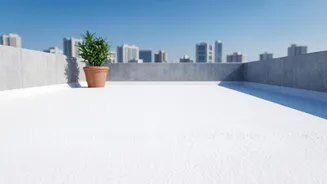
The Simple Power of White Roofs
The core concept behind white roof coatings is surprisingly simple and intuitive. Think about wearing a black t-shirt versus a white one on a sunny day. The black shirt absorbs more sunlight and feels much hotter, while the white shirt reflects the light and keeps you cooler. Cool roofs apply this same principle to buildings. By coating a roof with a highly reflective material, we can bounce a significant portion of the sun's energy back into the atmosphere instead of letting it get absorbed into the building structure. This simple change can dramatically lower the temperature of the roof's surface.
What Makes Them 'Bio-Engineered'?
While a simple coat of white paint can offer some reflectivity, modern roof coatings are far more advanced. The term 'bio-engineered' often refers to coatings that incorporate renewable, plant-based materials in their formula, moving away from purely petrochemical-based products. For example, some advanced coatings use polyols and resins derived from soy or castor oil as their backbone. These formulations are designed to be sustainable while delivering high performance. More importantly, these are not just paints; they are thick, elastomeric coatings engineered for durability. They create a protective membrane that can expand and contract with temperature changes, resisting cracks and providing a waterproof barrier in addition to their cooling properties.
The Science of Staying Cool
The effectiveness of these coatings is measured by two key properties: solar reflectance and thermal emittance. Solar reflectance (or albedo) is the ability to reflect sunlight. While a typical dark roof might absorb up to 95% of solar energy, a high-quality cool coating can reflect 80-90% of it. Thermal emittance is the material's ability to radiate away any heat that it has absorbed. A good cool roof has high values for both, meaning it reflects most of the sun’s energy and efficiently sheds the little heat it does absorb. This combination can lower a roof's surface temperature by as much as 50°F (or about 28°C), drastically reducing the amount of heat that transfers into the apartment below.
Real-World Benefits for Apartment Dwellers
For residents, this science translates into tangible benefits. Studies and pilot projects, including several in Indian cities like Ahmedabad, Hyderabad, and Chennai, have shown that cool roofs can lower indoor temperatures by 2°C to 5°C. This can be the difference between a sweltering, uncomfortable room and a livable space. The most immediate impact is on energy consumption. With less heat penetrating the building, air conditioners and fans don't have to work as hard, leading to a reduction in peak cooling demand by 11–27%. This not only saves households money on their electricity bills but also reduces the strain on the city's power grid during heatwaves. Beyond cost savings, it improves indoor comfort and protects the health of vulnerable populations, especially the elderly and children, from heat stress.
Are There Any Downsides?
No solution is perfect, and there are factors to consider. The initial cost of a high-quality elastomeric coating is higher than simple paint, although this is often offset by energy savings over time. Performance also depends on maintenance; the roof needs to be kept relatively clean, as dust and dirt can reduce its reflectivity. In some cases, the high reflectivity can cause glare for taller, neighbouring buildings. There's also a 'heating penalty' to consider in colder climates, where a reflective roof might slightly increase heating costs in the winter. However, for the majority of India where cooling is the dominant concern for most of the year, the summer savings typically far outweigh any winter penalty.