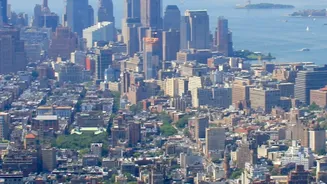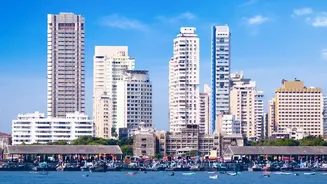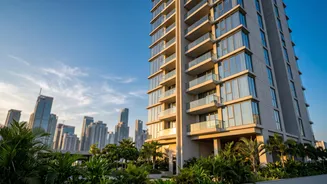




Gauging the Demand: Who is Buying?
The demand in Mumbai's 2026 property market is primarily driven by end-users—individuals and families buying homes for long-term stability, not quick speculative gains. Recent data shows sustained interest, with property registrations in August 2026 rising
11% year-on-year. This activity reflects strong buyer confidence, supported by the city's robust employment base in finance and technology and a general preference for homeownership. Buyers are increasingly selective, prioritising practical layouts, connectivity, and developer reputation. There is also a notable shift towards higher-value homes, with the Rs 1-2 crore segment growing in market share. This indicates that while the market is active, it is maturing, with buyers focusing on quality and long-term livability.
Decoding Prices: Growth vs. Stability
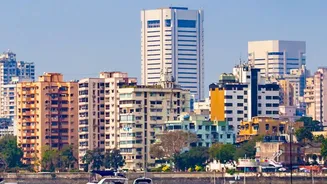
Average residential prices in Mumbai saw a moderate increase of about 4% in the first half of 2026. However, this city-wide average can be misleading. Mumbai is not a single, uniform market; it's a collection of micro-markets, each with its own price dynamics. For instance, prime areas like South Mumbai and the Western Suburbs command premium rates of ₹35,000 to over ₹75,000 per square foot, while extended suburbs and the Navi Mumbai region offer more accessible price points, ranging from ₹18,000 to ₹32,000 per square foot. Experts predict steady, measured appreciation of 5-8% annually in many corridors, driven by fundamentals rather than speculation. Price movements are strongly linked to local factors, so a blanket prediction of a market crash is unlikely to materialize.
The Infrastructure Litmus Test
Infrastructure is arguably the most significant catalyst shaping Mumbai's property landscape in 2026. The expansion of the Metro network, along with major road projects, is redefining connectivity and influencing buyer preferences. Locations near operational or upcoming metro lines are attracting stronger buyer interest, as commute time and daily convenience become primary decision-making factors. This is particularly evident in the suburbs and peripheral areas like Navi Mumbai, Panvel, and Thane, which are seeing renewed demand. When assessing a property, look beyond the building itself. Evaluate its proximity to current and future transport links, as this has a direct and sustained impact on property value appreciation.
Redevelopment: The New Supply Engine
In a city with scarce vacant land, redevelopment has become a critical source of new housing. For the first time, sales from redevelopment projects have overtaken new launches, with their share of total sales rising to 15% in the 2025-H1 2026 period. These projects offer buyers access to modern homes with better amenities in established, well-connected neighbourhoods like the Western Suburbs. This trend provides an alternative to moving to peripheral areas, allowing families to upgrade their lifestyle within a familiar location. For a buyer, this means evaluating not just greenfield projects but also the growing inventory of high-quality homes emerging from urban renewal schemes.
Your Assessment Checklist
To navigate the current market, focus on a property's specific merits rather than trying to time the market perfectly. First, assess the location's micro-market fundamentals. Is it supported by strong social infrastructure and improving connectivity? Second, scrutinize the developer's track record for quality and timely delivery. Third, analyze the price. Don't just rely on the average rate per square foot; compare the total cost, usable carpet area, and included amenities against similar properties in the vicinity. Finally, ensure your own finances are in order. A property purchase should enhance your financial stability, not strain it. If you have a long-term plan and can comfortably afford the EMIs, 2026 can be a good time to buy.