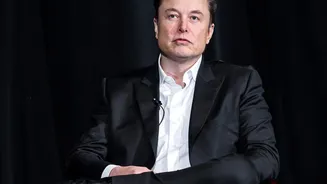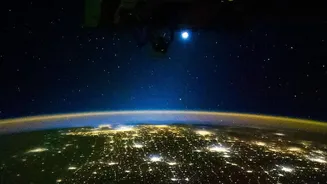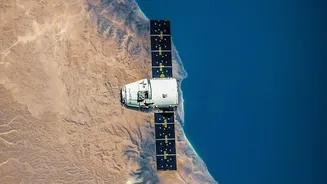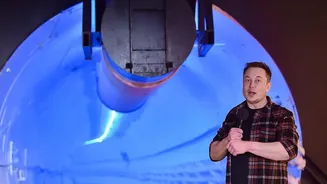






Just as the artificial intelligence boom pushes terrestrial infrastructure to its limits, Elon Musk is looking skyward. He's proposed moving AI's enormous computational needs into orbit, a radical solution to an escalating energy problem on Earth.
The AI Power Drain on Earth
The
engine of modern artificial intelligence isn't just code; it's raw power. The massive data centers required to train and run advanced AI models are consuming electricity at an astonishing rate. Forecasts from groups like the International Energy Agency and Gartner project that data center energy consumption will surge dramatically by 2030, driven almost entirely by AI workloads. This explosive growth is creating bottlenecks on the ground, with tech giants facing multi-year waits for grid connections and a scarcity of land and water for cooling these power-hungry facilities. It's this terrestrial resource crunch that forms the foundation of the argument for a seemingly science-fiction alternative: moving the whole operation into space.
A Vision of Orbiting Brains
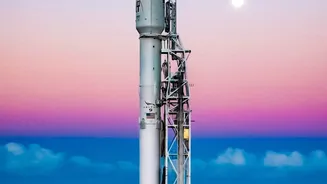
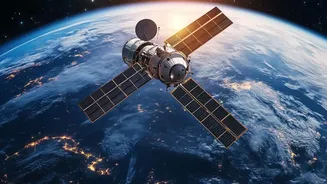
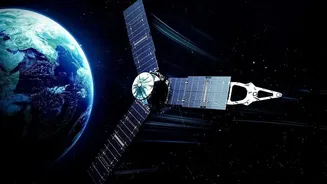
Elon Musk's vision, tied to his ecosystem of companies like SpaceX and xAI, is to bypass Earth's limitations entirely. The concept involves launching specialized satellites that function as orbital data centers. These would be powered by near-constant sunlight, avoiding the day-night cycle and weather that constrain terrestrial solar farms. In theory, these 'Starmind' satellites would link together with high-bandwidth lasers, processing data in orbit and beaming results back to Earth via the existing Starlink network. Musk has made bold predictions, suggesting that orbital AI compute could become cost-effective within a few years and that its capacity could outpace new ground-based facilities by 2029. This entire strategy, however, is critically dependent on the success of SpaceX's heavy-lift Starship, which is needed to make launching the required mass of hardware economically viable.
Hurdle 1: The Physics Problem
While the idea is compelling, the engineering challenges are immense. The two biggest physical obstacles are heat and radiation. High-performance computer chips generate a tremendous amount of heat, which on Earth is managed with air and liquid cooling systems. In the vacuum of space, there is no air for convection. Heat must be dissipated through radiation, which is a far less efficient process and could require massive radiator panels. Musk has countered that cooling is 'much easier' in space, but this remains a point of major debate without proven, large-scale orbital tests. Furthermore, space is filled with radiation that can corrupt data and damage sensitive electronics that aren't specifically 'hardened', adding another layer of complexity and cost.
Hurdle 2: The Money Problem
Even if the physics can be solved, the economics are daunting. Currently, building a data center in orbit is estimated to be significantly more expensive than an equivalent facility on the ground—by some analyses, at least three times the cost. The single biggest factor is the price of launching payloads into orbit. While reusable rockets from companies like SpaceX have drastically reduced launch costs, they are still far from the target price point—around $200 per kilogram—that analysts believe is needed to make orbital data centers financially competitive with their terrestrial counterparts. Until launch costs fall dramatically, likely through the full reusability of a vehicle like Starship, the financial case for moving AI's core infrastructure to space remains challenging.
While Musk is the most vocal proponent, he isn't alone in exploring this frontier; Google has its own research initiative called 'Project Suncatcher' to test the feasibility of orbital AI. These projects are still in the early experimental stages. Google's first prototype, for example, could only power one of its four AI chips for about 20 minutes at a time. Many experts view orbital data centers as a very long term proposition, with some suggesting it will be well into the 2030s before they could approach cost parity with ground based options. Others, including OpenAI's Sam Altman, have called the idea 'absurd' in the near term while acknowledging it could become viable in the distant future. For now, the push toward space is less a concrete plan and more a powerful signal of the extreme pressures the AI boom is placing on our planetary resources.