



What is Galangal?
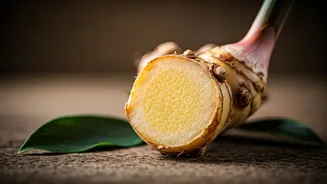
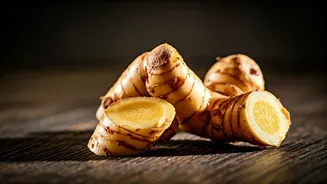
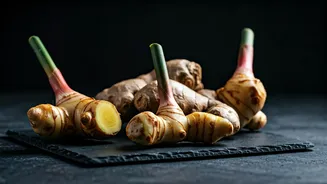
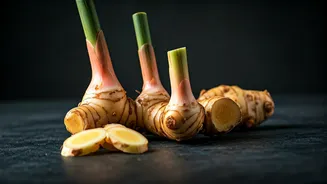
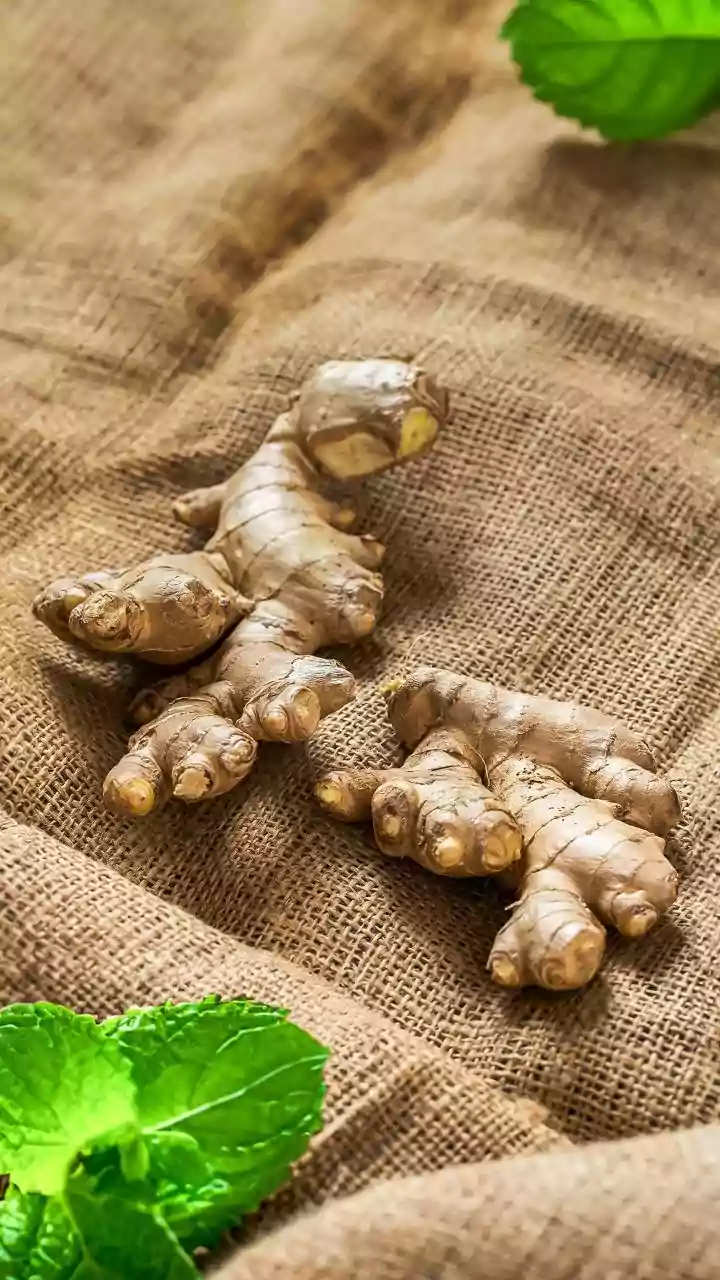
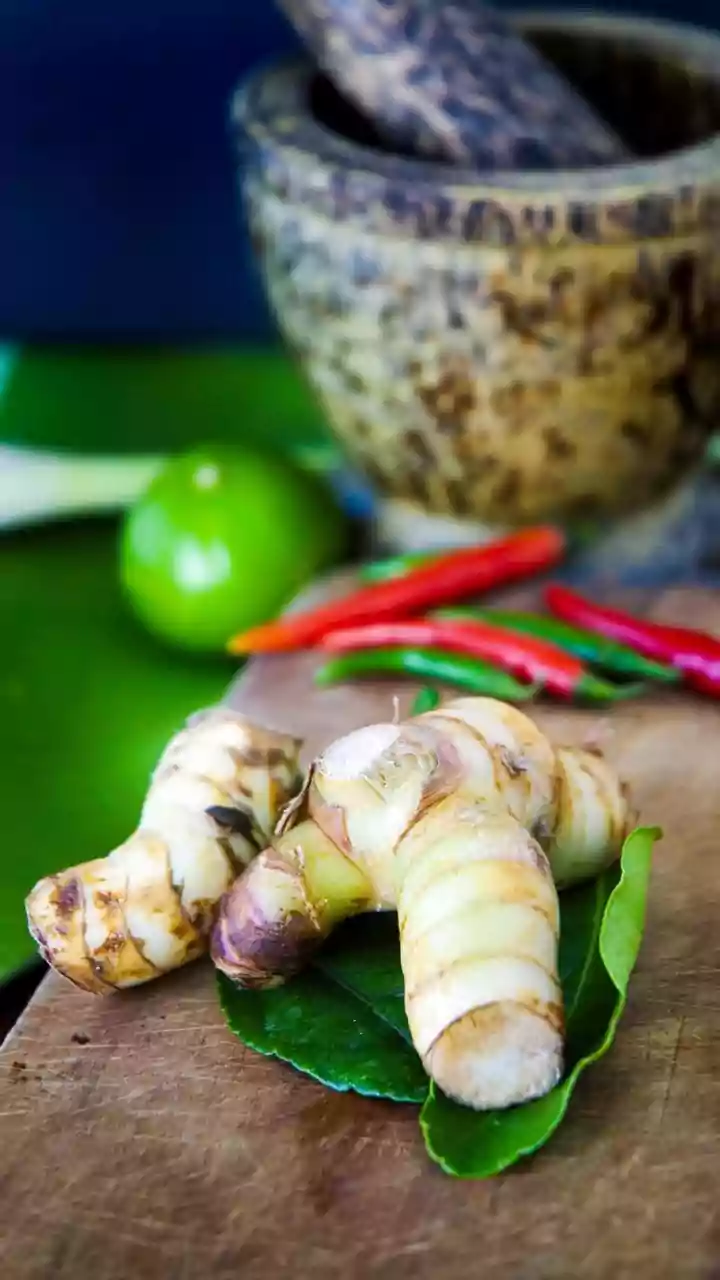
Galangal is a rhizome, or underground stem, belonging to the same family as ginger and turmeric. Often called 'Thai ginger' or 'Siamese ginger', it's a staple in Thai, Indonesian, and Malaysian cooking. Visually, it can be mistaken for ginger, but there
are clear differences. Fresh galangal has smoother, paler skin, often with a pinkish hue, and its flesh is much harder and denser than ginger's. Its firm, almost woody texture means it needs to be sliced thinly or pounded into a paste for cooking.
The Flavour Debate: Not Just Another Ginger
The most crucial distinction between galangal and ginger is the taste, and they are not interchangeable in recipes. While ginger provides a warm, pungent spice with a hint of sweetness, galangal delivers a completely different profile. Its flavour is sharp, peppery, and citrusy with distinct earthy and pine-like notes. Some describe it as a mix between ginger and cardamom. This unique taste is why it's a key component in famous dishes like Thai Tom Yum soup and Tom Kha Gai, where it imparts a refreshing, aromatic complexity that ginger cannot replicate.
How to Buy and Prepare Galangal
When buying fresh galangal, look for firm rhizomes with smooth, unblemished skin. Young galangal is preferred for its less woody texture. Because of its hardness, a sharp knife is essential for slicing it. For many recipes, like soups and broths, galangal is sliced and added to infuse its flavour, but the tough pieces are typically not eaten. For curries and marinades, it is often pounded into a paste, usually with other aromatics like lemongrass and chillies. You can also find galangal dried or in powdered form, though fresh is always best for a vibrant flavour.
Bringing Galangal into Your Kitchen
Integrating galangal into your cooking opens up a world of authentic Southeast Asian flavours. It is fundamental to many Thai curry pastes, including red and yellow curries. It balances the richness of coconut milk in soups and adds a zesty kick to seafood dishes. Don't be afraid to experiment. Try adding a few thin slices to your next fish curry to neutralize any 'fishy' smell, or pound it into a paste for a flavourful chicken satay marinade. Its sharp notes can also be used to create refreshing drinks, like a galangal and limeade.
More Than Just Flavour
Like its relatives, galangal has been used for centuries in traditional medicine. It is rich in antioxidants, particularly polyphenols, which help protect the body's cells from damage. Studies have explored its anti-inflammatory properties, which may help in reducing pain associated with inflammation. It has also been noted for its antimicrobial and antifungal qualities, which is perhaps why foods made with curry pastes that include galangal tend to last longer. Some research also points to its potential benefits for digestive health and boosting circulation.