


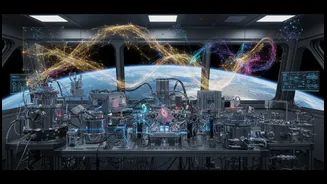



An Icebox at the Edge of Physics
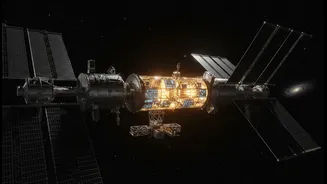
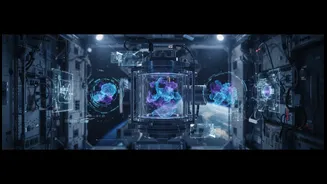
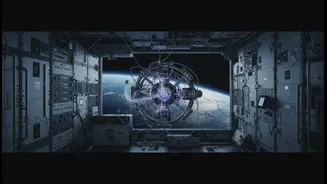
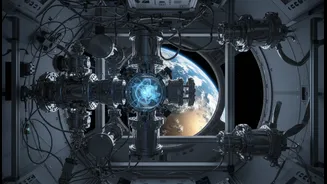
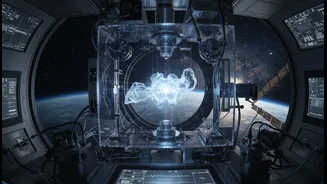
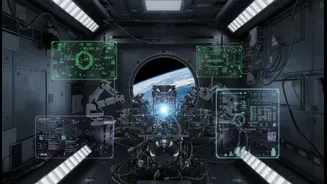
Since 2018, NASA's Cold Atom Lab (CAL) has been a one-of-a-kind physics research facility aboard the International Space Station. Controlled remotely from Earth, its job is to cool atoms down to temperatures colder than any naturally occurring place in the cosmos—we're
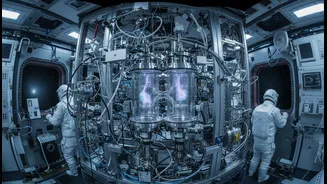
talking just a fraction of a degree above absolute zero, or about minus 273 degrees Celsius. To do this, scientists heat strips of metal like rubidium or potassium to create a gas, then use precisely tuned lasers and magnetic fields to slow the atoms down, effectively chilling them to a near-complete standstill. This whole complex, room-sized laboratory setup has been compressed into a compact system that astronauts can install in an experiment rack.
The Fifth State of Matter
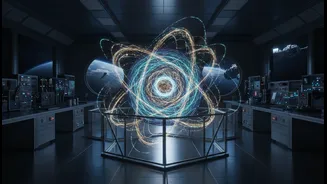
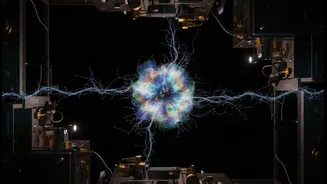
When atoms get this cold, they stop behaving like individual particles and enter a bizarre state of matter predicted by Satyendra Nath Bose and Albert Einstein nearly a century ago: a Bose-Einstein Condensate (BEC). Distinct from solids, liquids, gases, and plasmas, a BEC is a quantum state where thousands of atoms act like a single, giant 'super-atom' or matter wave. In this state, the strange rules of quantum mechanics, usually hidden at the subatomic level, become visible on a macroscopic scale. This allows scientists to observe quantum phenomena like superposition (being in multiple places at once) and entanglement more easily than ever before.
Why Microgravity is Crucial
While scientists can create BECs on Earth, gravity is a constant problem. The force pulls on the delicate atomic clouds, causing them to fall and dissipate within milliseconds, limiting observation time. In the microgravity of space, these condensates can float, undisturbed, for much longer—up to 10 seconds or more. This extended free-fall allows for more precise and prolonged experiments, letting the quantum matter waves expand and evolve in ways impossible to achieve on the ground. The CAL has already been upgraded several times since its installation, with astronauts installing new hardware to enhance its capabilities for studying these ultra-cold atoms.
The Dawn of Precision Sensing
The long-term goal of the Cold Atom Lab isn't just to study weird physics; it's to harness it. These ultra-cold atoms are incredibly sensitive to their surroundings, making them perfect for a new generation of 'quantum sensors'. By manipulating these matter waves in a process called atom interferometry, scientists can measure tiny fluctuations in gravity, acceleration, and time with unprecedented precision. The technology being proven on the CAL could lead to future spacecraft that can navigate deep space without GPS, create hyper-accurate maps of Earth's gravitational fields, or even search for mysterious phenomena like dark energy and dark matter.
From Fundamental Physics to Future Tech
The research conducted on the Cold Atom Lab represents what some scientists call 'Quantum 2.0'. The first quantum revolution gave us lasers, microchips, and MRI machines. This next phase involves directly manipulating quantum states to build new technologies. The lessons learned from CAL are a crucial step toward building reliable quantum technology that can operate in space. The experiments are not only testing the fundamental laws of the universe, like Einstein's theory of general relativity, but are also laying the groundwork for future applications in quantum computing and communications that could revolutionise life on Earth and beyond.