



A Star from the Dawn of Time
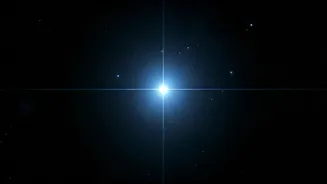
The discovery sounds like science fiction: astronomers using the Hubble Space Telescope detected light from an individual star that existed when the universe was just 7% of its current age. Nicknamed Earendel, an Old English word for "morning star," this
celestial body is the most distant single star ever seen. Its light began its journey to us a mere 900 million years after the Big Bang. To put that in perspective, the light from Earendel has been traveling for 12.9 billion years to reach us. Until this discovery, the most distant objects we could resolve individually at this range were entire clusters of stars, not a single point of light. The find was a massive leap back in time, far surpassing the previous record-holder, a star named Icarus, whose light took 9 billion years to reach Earth.
How Was This Even Possible?
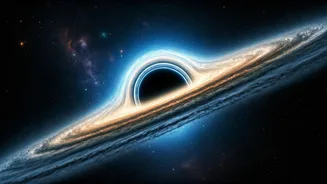
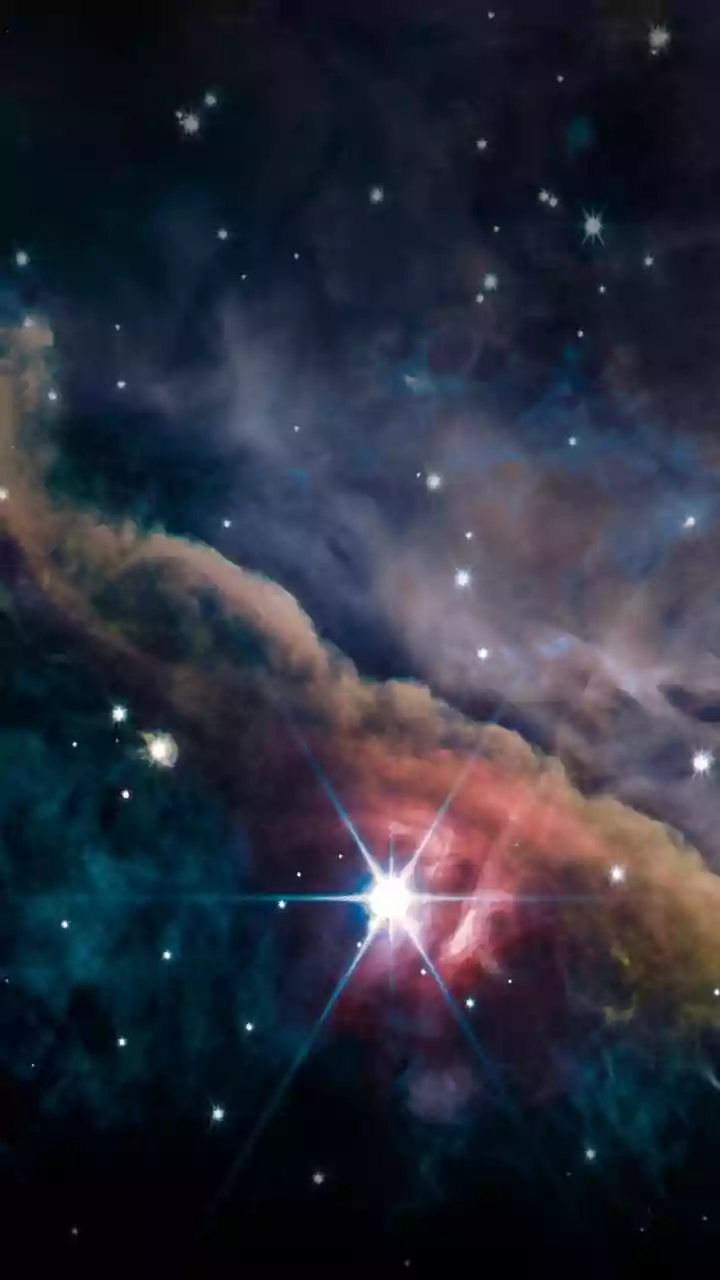
Detecting a lone star at such a mind-boggling distance would normally be impossible. Even a star millions of times brighter than our own Sun would be too faint to see. Earendel's discovery was only possible thanks to a fortunate cosmic alignment and a phenomenon predicted by Albert Einstein called gravitational lensing. In this case, a massive cluster of galaxies, known as WHL0137-08, sits directly between Earth and Earendel. The immense gravity of this cluster warps the very fabric of space and time, acting like a powerful natural magnifying glass. This cosmic lens amplified Earendel's light by a factor of at least 4,000, making it pop out from the general glow of its home galaxy, which itself was smeared into a crescent shape nicknamed the "Sunrise Arc."
A Window to the Cosmic Dawn
So, why is finding one ancient star such a monumental achievement? Earendel offers a unique window into an era of the universe that is largely unknown: the cosmic dawn. This was the period when the very first stars and galaxies were forming. Astronomers believe Earendel is a massive B-type star, more than twice as hot as our Sun and about a million times more luminous. Crucially, by studying its light, scientists hope to learn about its chemical composition. The very first stars, known as Population III stars, are theorised to have been made of only the raw ingredients created in the Big Bang—primordial hydrogen and helium. While Earendel is likely not one of these first-generation stars itself, it is remarkably close, forming before the universe was filled with the heavier elements forged by successive stellar generations. Studying it provides a direct probe of the building blocks of the first galaxies.
Why It Still Matters Now
Since Hubble first spotted Earendel, the more powerful James Webb Space Telescope (JWST) has also turned its gaze upon the ancient star, confirming its existence and adding more detail. JWST's observations have even hinted at the presence of a cooler, redder companion star. While newer discoveries from Webb often grab headlines, it’s vital to remember the foundational importance of Hubble's find. Earendel wasn't just a lucky shot; it was a groundbreaking demonstration of what was possible, paving the way for targeted follow-ups with next-generation technology. This discovery is more than a record-breaker. It’s a tangible link to our cosmic origins, a reminder of the universe's vastness and history. In a world saturated with information, taking a moment to appreciate a single point of light that has traveled for nearly 13 billion years connects us to the fundamental human drive to explore and understand where we came from. That profound connection deserves our attention.