






The Concrete Jungle's Fever
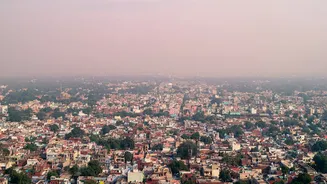
An Urban Heat Island (UHI) occurs when a city experiences much warmer temperatures than surrounding rural areas. This happens because buildings, roads, and other infrastructure absorb and retain the sun's heat more than natural landscapes like forests
and fields. Materials like concrete and asphalt soak up heat all day and then radiate it slowly through the night, preventing the city from cooling down. This effect is worsened by the lack of green spaces and the waste heat generated by vehicles and industries. As a result, urban residents, especially those in densely packed neighbourhoods, are living in environments that are several degrees hotter, a phenomenon that doesn't fade when the sun goes down.
The Tier 2 Challenge
For decades, India's growth story was centred on its major metros. But now, Tier 2 cities like Pune, Lucknow, Jaipur, and Chandigarh are the new hubs of economic expansion. This rapid, often unplanned, urbanisation presents a unique set of challenges. As these cities grow, green spaces are replaced by concrete, and infrastructure like public transport and waste management struggle to keep up. This panicked growth can lead to the same problems that plague Tier 1 cities: pollution, overstretched services, and, crucially, a intensifying UHI effect. Municipal authorities in these cities often lack the resources to enforce sustainable planning, making them vulnerable to creating the very 'concrete jungles' that trap heat so effectively.
How Heat Steals Your Sleep
The connection between temperature and sleep is deeply scientific. To initiate and maintain sleep, your body's core temperature needs to drop slightly. When your bedroom is too warm, it interferes with this natural process, leading to restlessness, more frequent awakenings, and less time spent in deep, restorative sleep stages. Studies show that for every one-degree Celsius increase in night-time temperature, there's a measurable decline in sleep quality. This isn't just about comfort; chronic poor sleep affects everything from your mood and productivity to your overall health. The warm nights caused by the UHI effect mean that for millions in Tier 2 cities, the very environment they live in is actively working against a good night's rest.
The Case for Cool Air
This is where air conditioning becomes more than a luxury; it becomes a tool for health and well-being. By creating a controlled, cool environment, an AC unit directly counters the primary obstacle to restful sleep on a hot urban night. It allows your body to achieve the necessary temperature drop required for deep sleep, insulated from the radiating heat of the city outside. For many, especially the elderly or those with health conditions, the ability to maintain an optimal sleeping temperature (around 18-20°C) is essential. In the context of an inescapable UHI, air conditioning provides a personal solution to a large-scale environmental problem, ensuring that the body can get the restorative sleep it needs to function.
Beyond the Air Conditioner
While AC is an effective immediate solution, it's also energy-intensive. Thankfully, there are complementary strategies for staying cool. Long-term urban solutions involve smarter city planning with more green spaces and the use of reflective 'cool roofs'. On a personal level, passive cooling techniques used in traditional Indian architecture are making a comeback. Simple steps like using blinds to block daytime sun, ensuring cross-ventilation to flush out hot air at night, and incorporating indoor plants can make a significant difference. Other options, like duct air coolers, offer a more energy-efficient way to cool an entire home compared to multiple AC units. These strategies, combined with the judicious use of air conditioning, offer a more sustainable path to comfortable living.